Category: The Lightbox

  • Celebrating Michael Ayrton: a centenary exhibition

    Celebrating Michael Ayrton: a centenary exhibition

    Michael Ayrton (1921-1975) Study on the theme of Temptation of St Anthony, 1943, Ink, pastel, watercolour and gouache. Image courtesy of The Ingram Collection Copyright: Estate of the artist

    Painting is a weapon of the mind by which man may exorcise his fears, a tool by which he may order his experience, a chalice which he may lift to celebrate the glory of his life or a sacrifice he may make in prayer for a glory he does not yet know. Michael Ayrton

    by Carla Scarano D’Antonio

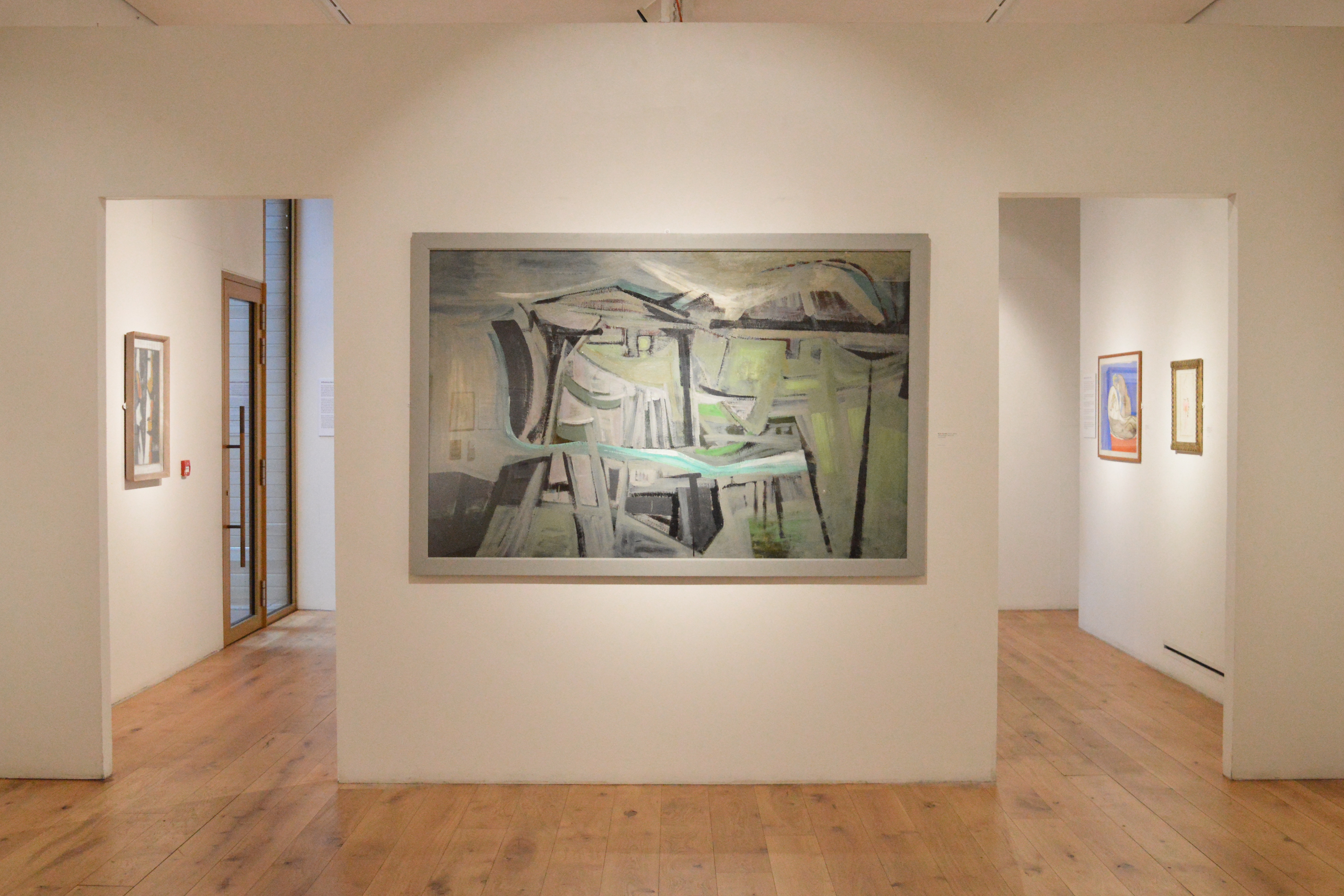
    The exhibition at the Lightbox in Woking dedicated to the British painter, sculptor, printmaker and designer Michael Ayrton commemorates the centenary of his birth. Soon after the second world war he was an important and successful artist, but his work has rarely been explored since then. During his artistic career, he investigated the English countryside as well as Greek myths, the effect of mirrors and mazes and the mysteries of transformation. He also published novels and collections of essays, and was a teacher and lecturer and a broadcaster for BBC school television. His work was widely exhibited after the 1950s in the UK and the US. The exhibition at the Lightbox is presented in partnership with the Ingram Collection and displays drawings, sculptures and paintings as well as examples of the stage designs Ayrton realised for Gielgud’s Macbeth in 1942.

    He described himself as an ‘image maker’, and myths played a crucial part in his work because he considered them to be true. He lived in a period when abstractionism dictated the art world, but the method he used was rooted in drawing and figurative art. Although some of his landscapes have a complex quality and mix different media, such as acrylic and oil paintings with collage, they are never entirely abstract. In the early days of his career, he was considered a neo-romantic, a style of art that he developed in his imaginative portraits, such as the portrait of Hector Berlioz, and in the dramatic series of paintings dedicated to St Anthony in which deep shadows and the use of reds and blues highlight the theatrical quality of the saint’s temptations as well as his Promethean quality.

    Ayrton travelled to Italy in the late 1940s and in the 1950s, where he had the opportunity to study works by Masaccio, Piero della Francesca, Giovanni Pisano and Donatello. These artists deeply influenced his artwork with the statuary quality of their figures that was drawn from classical art. In 1953 he moved from painting to sculpture and explored Greek myths, especially those of the Minotaur, the theme of Dedalus and Icarus and Demeter and Kore’s story. He visited Greece several times and took inspiration from places, ancient sculptures and classical themes. All of these aspects created a multifaceted view that is reflected in his vision and in his artwork. For example, in Dedalus and Icarus’s story, the father, Dedalus, is the maze maker, the creator of the labyrinth and the artist to whom Ayrton feels deeply related. On the other hand, Icarus, Dedalus’s son, is considered to be the hero who challenged the gods and wished to fly high but failed. In Ayrton’s novel The Testament of Dedalus, the father comments: ‘[He] was my son and he has no talent […] his flight was mine.’ This shows the artist’s multifaceted view that explores different sides of the myth.

    The Minotaur is the figure Ayrton mostly identifies with, as in ‘Point of Departure: self-portrait as the Minotaur’ (1970), a sculpture that reflects the duality of the half-beast, half-man creature. Ayrton describes him as ‘a desperate Everyman’ who is in ‘perpetual conflict’ with his own nature and ‘failed to destroy the foe he was’, creating a constant tension that might eventually trigger transformation.

    Ayrton’s figures are often enclosed in mazes, reflected in mirrors and surrounded by walls. Flying away seems to be an illusion, as in the bronze sculpture of Icarus (‘Icarus: rising variant’, 1965), whose thwarted effort is represented in the yearning of the body to rise high while it is weighed down by his huge, heavy wings.

    According to Ayrton, “to practise an art is primarily to discover one’s relationship with reality” and to communicate this experience to others. He had a particular curiosity concerning reality and art, and he achieved his ambitious goals through a constant exploration of the world around him which was mediated by his experience of stories and myths. This investigation remained in part mysterious and unresolved in a balance between historical truth and illusion.

    Besides being influenced by ancient Greek art, Italian Renaissance sculpture and paintings, and the work of Degas, Ayrton also met and worked with Henry Moore and William Turnbull, two outstanding sculptors of his time. The figure of a pregnant Demeter is central in his thinking and his career too, and ‘Demeter Pregnant’ is one of his most famous works. She emphasises the acceptance  of the cycle of life that is connected to the seasons – that is, to death and rebirth. The variety of themes and products he addressed and his diverse approach received controversial feedback from art critics.

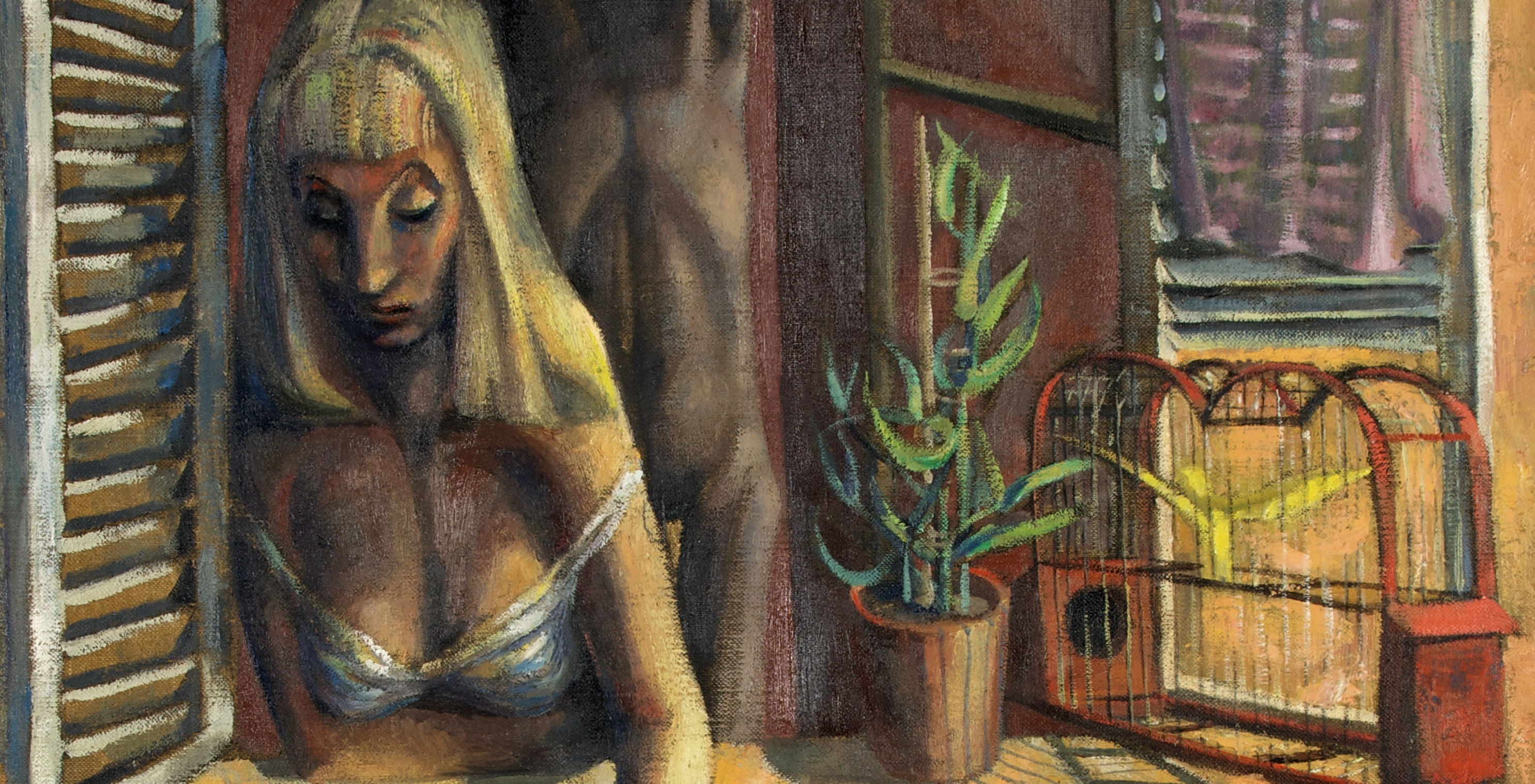
    His interpretation of the Mediterranean world is represented well in the exhibition through ‘Roman Window’ (1950) and ‘Catalan Caged Birds’ (1955). The statuesque quality of the figures and their juxtaposition in each composition show the lesson Ayrton learned from the Italian masters and at the same time celebrate the ordinariness of the people living in suburban areas at the time.

    This is a fulfilling exhibition that aims to give a comprehensive view of Ayrton’s career through his drawings, still life pieces, portraits and sculptures, highlighting the most important traits of his multifaceted artwork.

    Celebrating Michael Ayrton: a centenary exhibition: 29 May–8 August 2021, The Lightbox, Woking

    Michael Ayrton (1921-1975) Maze Music, 1972, Bronze with a dark brown patina. Image courtesy of The Ingram Collection. Copyright: Estate of the artist

  • The Ingram Collection: The St Ives School

    The Ingram Collection: The St Ives School

    Barbara Hepworth (1903-1975) Fenestration of the Ear (The Microscope) 1948 Oil & pencil on gesso-prepared board Copyright Bowness 2019

    Carla Scarano D’Antonio enjoys the range of work of a thriving artistic community exhibited at the Lightbox gallery in Woking


    ‘I believe that the understanding of the material and the meaning of the form being carved must be in perfect equilibrium’  Dame Barbara Hepworth


    The Upper Gallery at the Lightbox in Woking displays substantial examples of significant paintings of the St Ives School from the Ingram Collection, one of the largest collections of modern British art in the UK, and founded in 2002 by the entrepreneur Chris Ingram. The exhibition features the work of some artists who were born and lived in St Ives, though most of the painters of the group chose to move there, attracted and inspired by the coastal beauty, the impressive scenery and the picturesque fishing environment. The area was the centre of this thriving artistic community from the 1920s and, unsurprisingly, in the past, it had attracted artists such as Turner and Whistler. Moreover, after the extension of the Great Western Railway to west Cornwall in 1877, the coast was easily reachable.

    The St Ives School combined figurative art with modernist ideas influenced by English and continental avant-garde movements. A significant figure was Alfred Wallis, whose work is not on display at the exhibition. He did not train in an art school and had been a sailor, and was admired by the professional artists of the group for the ‘primitive’ quality of his work.. He ignored perspective and painted landscapes from memory, a world of sails that had disappeared by then. Painting on cardboards from scratches, he always maintained a distinctive character in his pieces. This is what most of the artists of the St Ives School aimed to achieve, though they expressed it in a more sophisticated way compared to Wallis. In fact, they combined modern artistic theories, influenced by Russian constructivism, Cubism and abstract art, with the experience of the natural beauty and the working life of the Cornish coastline, with its unique quality of light reflected off the water.

    Their choice to live and work in St Ives necessarily merged with their pictorial background and with what was happening in the wider art world. This is represented at different levels in the pictures on display that highlight in turn the influences of the Impressionists, of Constructivism, Cubism and the developments of abstract landscapes. Interesting examples are the paintings by Winifred Nicholson, Laura Knight, Barbara Hepworth, Ben Nicholson, Wilhelmina Barns-Graham, Roger Hilton, Bryan Wynter and Bryan Pearce, just to name a few. Only one or two pictures are on display for each artist but they give a good idea of the variety and versatility of this artistic community.

    ‘Woman playing a piano’ (1930) by Winifred Nicholson blends the figurative rendering of the chair and the piano with the impressionistic transparency of the woman’s dress. Her profile is barely sketched but her hair has a detailed texture. This merging of different pictorial styles reveals the exploration of different techniques pursued by the artists of this school.

    A similar approach, though in a different direction, is in the works of Barbara Hepworth and Ben Nicholson. She was a famous sculptor born in Yorkshire (her studio and sculpture garden are one of the most popular sites in St Ives), who moved to Cornwall in 1939 with Nicholson. They worked side by side and were leading figures in the artistic field and in the St Ives community. Both represented Britain at the Venice Biennale, respectively in 1950 and in 1954. Ben Nicholson’s deconstructed shapes evoke Cubism in the simple almost monochromatic figures. The juxtaposition of the objects of his ‘Still Life’ (1926) and of ‘Green Jug’ (1978) evokes classical figures in an abstract rendition.

    Wilhelmina Barns-Graham (912-2004) Untitled 1 (View of St Ives) 1943 Pen ink and watercolour on paper Copyright Wilhelmina Barns-Graham Trust 2019


    An apparently more naive approach is in Wilhelmina Barns-Graham’s ‘Untitled 1 (View of St Ives)’ (1943), in pen, ink and watercolours, an exquisite picture that catches the colours, rocks and buildings of the Cornish town in a unique, immediate approach. In a different way, Roger Hilton’s pioneering work and his essential, provoking paintings testify the variety of talents of the St Ives School. The ‘Standing Female Nude’ (1973) and ‘Peacock’ (1973) reveal an intentionally disruptive vision in the broken lines and dotted colours as well as in the sexual undertones. Cubist deconstruction is also present in the ‘Still Life’ (1946) in watercolours and ink by Bryan Wynter, a well-crafted work that combines and interweaves lamps, bottles, candles and trays in an interesting intersection of shapes. It is an effective experiment testifying to the sophisticated exploration the members of this school were engaged in.

    A very different approach is in one of the best pieces of the exhibition, ‘Three Pears’ (1987) by Bryan Pearce. He suffered from phenylketonuria (PKU), which affected his metabolism and, if untreated, could lead to mental disorder. His mother encouraged him to draw and paint, and ‘Three Pears’ is a good example of his precise and yet original work. The pears are positioned in the centre of the picture depicted in a perfect shape. They are not ‘real’ pears but evoke forms, flat and juicy on a brown and white plate surrounded by a striped tablecloth in a light blue background. They reveal the essential, serene vision of the artist and his capacity to create a parallel world that is archetypal and yet modern; it defines structures, reassures and conveys aesthetic pleasure.

    ‘Primitive’ and abstract merge in this interesting exhibition, highlighting the beauty of the Cornish coast that not only inspired breathtaking landscapes but also contributed with its atmosphere and natural beauty to the development of a thriving group of artists, all distinctive in their versatile and variegated works.

    The Ingram Collection: The St Ives School, 6 April – 23 June 2019, The Lightbox, Woking  £5 Day Pass or £7.50 Annual Pass | Under 18s Free


  • Impressionism: The Art of Life at the Lightbox in Woking

    Impressionism: The Art of Life at the Lightbox in Woking

    Lightbox Impressionists 3 Renoir

    Pierre-Auguste Renoir, A Garden in Montmartre, 1890 – 1899 Image © Ashmolean Museum, University of Oxford

    Carla Scarano enjoys and discusses works by Renoir, Pisarro, Cézanne, Sisley, Signac, Degas, Rodin and others


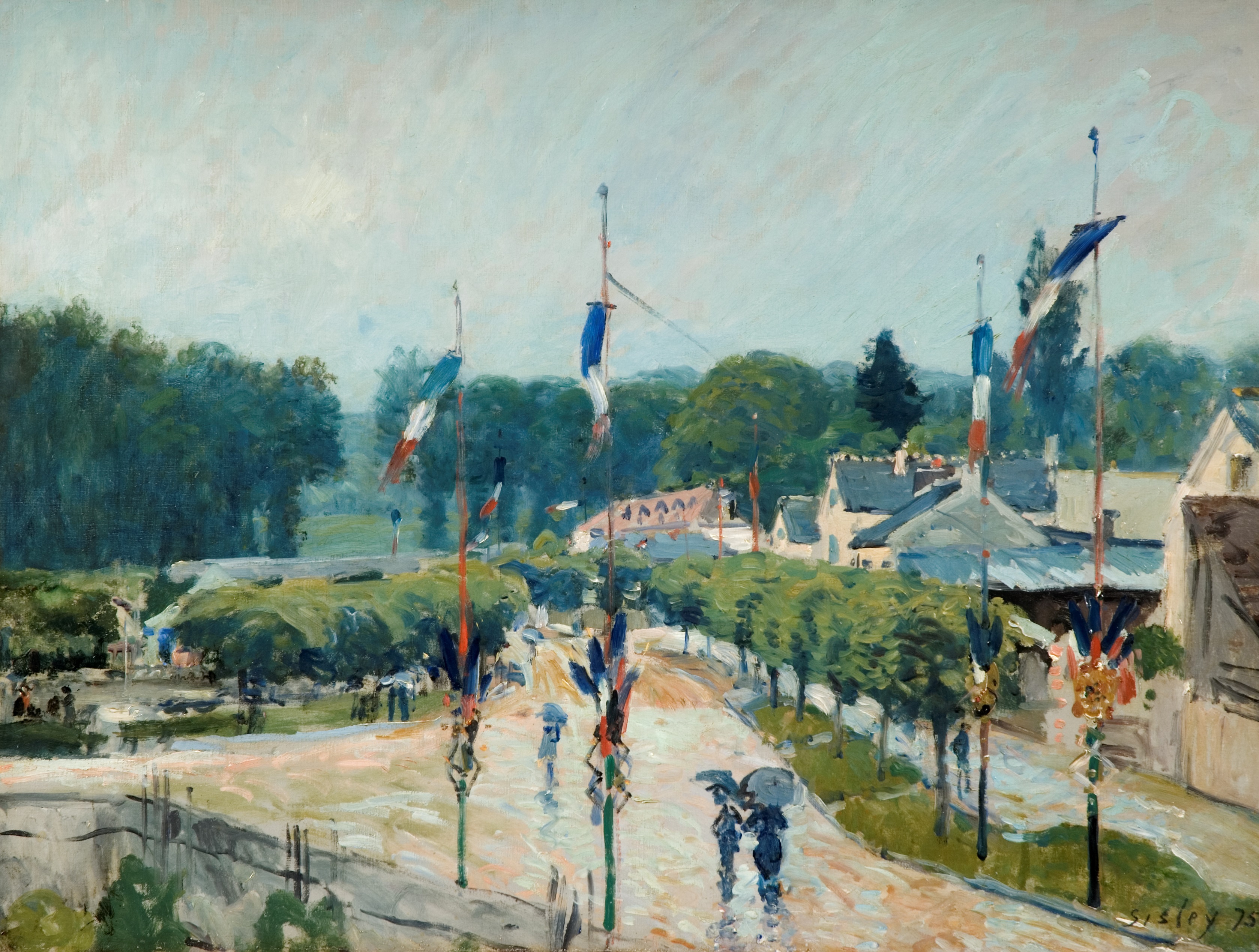
    A well-chosen number of works of the Impressionists is displayed at the Lightbox  ranging from Renoir, Pissarro, Cézanne, Sisley, Signac, Degas, Rodin and others. The clear captions and explanations condense effectively the themes, development and techniques of this famous French movement, and contribute to a successful understanding of the works on display.

    Though famous names, like Monet and Morisot, are missing, the works selected are not the usual well-known paintings we can admire at the National Gallery or at the Louvre, but unique, engaging pieces that allow a culturally engrossing experience.

    The Impressionists’ priorities were to paint en plein air (outdoors) and depict what they saw. They represented scenes of everyday life in contrast with the historical and mythological paintings of the Academy. A new, modern quality was the main characteristic of their works both in the themes and in the forms and colours. They represented what they saw, not idealised perfect shapes. For this reason, the contours might be distorted by the light or the atmosphere of the scene, or the colours chosen were different from what the viewer expected. In their work we find domestic scenes representing women sewing, combing their hair or rubbing their back, or work places. This gave a new dimension to the ordinary; the everyday life of common people came to the foreground without the obsolete, epic aspect of the works of the Academy. Their approach to painting was naturalistic; they never totally broke with past traditions, which instead occurred with the avant-gardes after them. Nevertheless, their work was considered unfinished and sketchy by their contemporaries, precisely an ‘impression’, not a real, complete picture.

    The exhibition well represents these characteristics in every aspect. The simple gesture of a dancer putting on her stockings in a Degas bronze sculpture expresses movement in its unstable position. It is familiar and ordinary, and reinterprets classical motifs. A similar solution is in the bust of ‘Woman rubbing her back with a sponge’ recalling a Greek Venus but in the context of a quotidian gesture. The lithograph of Mrs Cha-U-Koa dancing with her lover by Toulouse-Lautrec is evidence of the fascination these artists had for the world of cafés and cabarets. It also emphasises the movement of the people dancing in the marks that delineate their dresses.

    Rendering the bustling Paris life or a countryside landscape was a challenge the Impressionists accepted by depicting what they saw. They did not arrange the figures in artificial poses but referred to the immediacy of a snapshot as in Pierre Bonnard’s ‘Boulevard’, or to a ‘real’ space as in Paul Signac’s ‘River Landscape on the Seine’, where factories loom in the background and the transparency of the river emerges in the foreground. There is no idealisation in this scene, everything is factual; but it also reveals the painter’s personal view in its marks and choice of colours.

    Scenes of intimate, domestic life, such as the beautiful ‘Madame Pissarro sewing beside a window’ or Renoir’s ‘Woman nursing a Child’, reveal again the immediacy of the quotidian and the rendering of forms and colours from a personal angle where the effect of the light is fundamental and the emotions of the sitter are caught in an instant. A similar ephemeral moment is in Éduard Vuillard’s still life, ‘The Blue Inkwell on the Fireplace’, where the arrangement of the different objects is both casual and effective.

    An impressive statue by Rodin, ‘Crouching Woman’, is on display as well. It represents a restless figure in a reclining pose recalling the Parthenon friezes Rodin studied at the British Museum. For him they seemed alive, in motion, conveying a creative force that he wished to attain in his work. The emotions are expressed in the tension of this body which is missing an arm, like an ancient Greek statue mutilated by the wear and tear of time. It was a way to see a subject from different perspectives and combinations, similarly to Degas’ dancers, and it also emphasises the sense of movement. This challenged the concept of the work of art as a unique product, its heroic and epic status, so praised and cherished by the academies. It was a more down-to-earth vision of the subject.

    The Impressionists’ paintings are still very popular and fascinating for today’s audience because of their fresh way of depicting modern life in ordinary scenes avoiding the monumental or the heroic, focusing instead on transient moments which are felt as more genuine though temporary.

    In the Lightbox Upper Gallery, from 13 October 2018 to 6 January 2019, there is also the exhibition dedicated to Elizabeth Frink from the Ingram Collection, which displays her drawings, paintings and sculptures. The artist lived in Dorset and in London and expressed her art mainly in large sculptures representing masculinity in its courage but also violence and potential fragility. The war influenced her work with its uncertainties and destructions reflected in the figures of the fallen horses and in the heads, or in the ‘Spinning Man’, where the vulnerability of the subject is revealed in its slumped pose and in its stupor facing a possible end.

    There are also talks, workshops and tours associated with these exhibitions at the Lightbox, giving to the public the opportunity to develop further their understanding of theses outstanding artists.

    Impressionism: The Art of Life is displayed at the Lightbox until 13 January 2019

    LIghtbox Impressionists 2 Vuillard

    Edouard Vuillard (1868-1940), Le Salon c.1910, oil on card laid on canvas, 615 x 680mm. Image courtesy of The Henry Moore Foundation acquired 1984