Category: Tricia Mcnamee

  • Materuni Falls

    Materuni Falls

    Woking Writers Circle hopes you enjoy Tricia’s second instalment of her Tanzania Adventures, as much as we did:

    I’d said to my friend that I wasn’t keen to visit the Serengeti or wildlife parks. Human life interests me more. I’m not averse to natural features especially waterfalls. I was lucky enough to visit Victoria falls in 2023, all thanks to my sister. My friend also likes falls so she arranged a trip, with a local guide she knew, the day after returning from Zanzibar.

    We sat waiting for our guide, knap sacks ready. B arrived apologizing for being late, we had coffee and discussed the day. It sounded great, waterfall, coffee farm, food in a Chagga village and back.

    The day was warm and sunny, the mist hung over Mount Meru (the nearest one) and further on clung to Mount Kilimanjaro (the shy one) obscuring the summit. (A) told me she had only seen the summit a couple of times in the year she had been here.

    B drove us through the bustling market, then turned off to a quieter road. He told us we were approaching Maji Chai.

    “Why do you think it is called that?” Realizing that chai means tea, we suggested something to do with that.

    “Nearly right, look at the colour of the river (it was reddish brown) the water is contaminated by minerals from Mount Meru. The name translates as ‘Tea Water”. He was very knowledgeable about the culture and history of the area.

    About one hour later we turn off the main road, gradually ascending, luckily there was plenty of foliage and no steep drops. We were about the same elevation as the first base camp on Kilimanjaro, but outside the national park, I do keep forgetting that falls are quite high up.

    We left the car and set off along a track, its only 7km to the falls, but quite hard going in places. In the shade it was muddy, in the sun quite withering.

    B explained about the Chagga tribe and the Materuni village that we would visit after the falls.

    B showed us how to make a sun hat from a banana leaf, he kept asking us to guess what the plants were, we were not very good at it, but it was fun. The people here are so much more in touch with nature.

    As we descended, several scrambler bikes whizzed past, local guys driving, tired tourists riding pillion. I looked at B.

    “Oh they give you a ride up the hill, sometimes it’s too much on the way back.”

    Not on your life I thought.

    We were approached by some children who had chameleons. A really wanted to look at them.

    We stopped at the lower reaches of the falls, its about 80 m high. I dipped my feet in the water, so cool and refreshing. I swapped my trainers for sandals and B offered to carry my rucksack, which made walking lots easier. I’m starting to feel my age.

    As we sat admiring the peace and tranquillity, several youngsters in blue school uniforms passed by, and then there were more. One hundred and fifty to be precise, several teachers and a nun. As the walk towards the falls was getting slippery, the nun was down to the bottom like a mountain goat, made me feel old.

    B and my friend helped the teachers make a chain so the kids could get down to paddle on the rocks. I held all the bags. It was great to see the rapture as they paddled, sadly it would never pass a UK risk assessment, more’s the pity.

    We decided that it was too slippery to go closer to the falls.

    We went back a little way downstream, and had a swim. I tried to teach B to float, but the current was strong. We packed up hurriedly to beat the rush of children. I decided to walk barefoot , much easier. I felt more agile, in touch with the earth.

    When we arrived at the steep incline, I wondered if I could manage it, just then the BODABODA (bikes) arrived . I looked on in horror.

    “You’ll be fine, just hold on tight, put your chin in the back of his neck, honestly you’ll be ok.”

    I went for it, spurred on by B’s positivity. Clinging on for dear life as he swerved around ruts, twisting and turning around the rugged track. I nearly squeezed the life out of the poor boy. Hairy, but any exhilaration I felt left me as we approached a steep descent.

    “ Stop, stop!”

    “You ok, you burn yourself?”

    “No, no, I’ll walk down.”

    He starred at me perplexed.

    “Ok”

    Then I stepped back and noticed that I did burn my ankle on the exhaust.

    We arrived at the Materuni village, which J described as an authentic village where tours and trips were developed to try to help people and remove the temptation of drug use. His brother had succumbed and he wanted to help the young people. There were several dwellings and a cow shed, all the people, adults and children made us feel very welcome. B knew them well and engaged in some banter regarding one of the girls.

    We were taken to a table outside but in the shade, and treated to a traditional Chagga lunch. Soya beans and rice, brown and white, soup, potatoes and local veg, meat curry. All fresh and homemade, it was lovely. I’ve never eaten whole soya beans. One of the young guys joined us, his name was Goodluck, as his mother finally got the son she wanted.

    Then we went to see the coffee preparation. They had Arabica plants, we were shown the whole process, starting with the pods and the hand machine that removes the skin, the washing, where the bad pods rise to the surface and are skimmed off. The drying, which takes about 1-2 weeks. Once dry they use a large pestle and mortar to remove the husks, they then shake the husks away and these are used for fertilizer.

    Next came the roasting, a man with dreads half way down his back, stirred the beans and moved the metal pot around over the open fire. We sang traditional songs. They tend to roast coffee medium here believing that it retains more natural goodness. Then back to the pestle and mortar. They made it look easy and I had a go but it definitely was not.

    Tasting time! They poured coffee into small China cups and were impressed I drink my coffee black. Which is what they do. More pure.

    Finally time to go. We walked back to the car, there was an old couple sitting outside a hut, she was stirring a pot. B explained they were making the local brew. We did have some of the banana beer with lunch, more like liqueur, very strong. This is called Mbege, it is a beer made from the ‘ndizi Ngombe (cow banana) and sprouted millet powder, it is a time consuming process and is made by the women.

    They beckoned to us.

    “Go on they are inviting you to try some”

    It tasted ok but the grainy scum floating on the top. Yuk!

    We thanked them.

    As we drove down we noticed that the sky had become very clear. We stopped and were met by a very old man who was looking for something. The shy mountain had come out of hiding and was visible in all her glory right to the top. I felt very privileged.

    The hour and a half journey there turned into a 3 hour journey back. We hit all the market traffic. I’d never driven out in the night when I had been in Namibia, car hire firms usually stipulate no night driving except in a town. Mind you it definitely wasn’t quiet. People finishing work, packing and loading cars and trucks full of unsold produce. Shops and bars and restaurants.

    As it got later the clothing changed and an assortment of partying and nightlife was on display. Vibrant, colourful snippets of life. B wanted to take us to a local café when we got back to Arusha, we were both tired, but needed to eat, so we agreed.

    Gradually the road became quieter as we neared Arusha. We drove into town and through some back streets. The café had lots of tables outside.

    I was going to try chips mayai, a local specialty which was basically an omelette with the chips in it. I wasn’t sure at first, but it works. I also had some chicken and salad with different spices and breads.

    We finally got back to A’s about 10 pm. A twelve hour day.

    I slept well that night.
  • Shrek the musical

    Shrek the musical

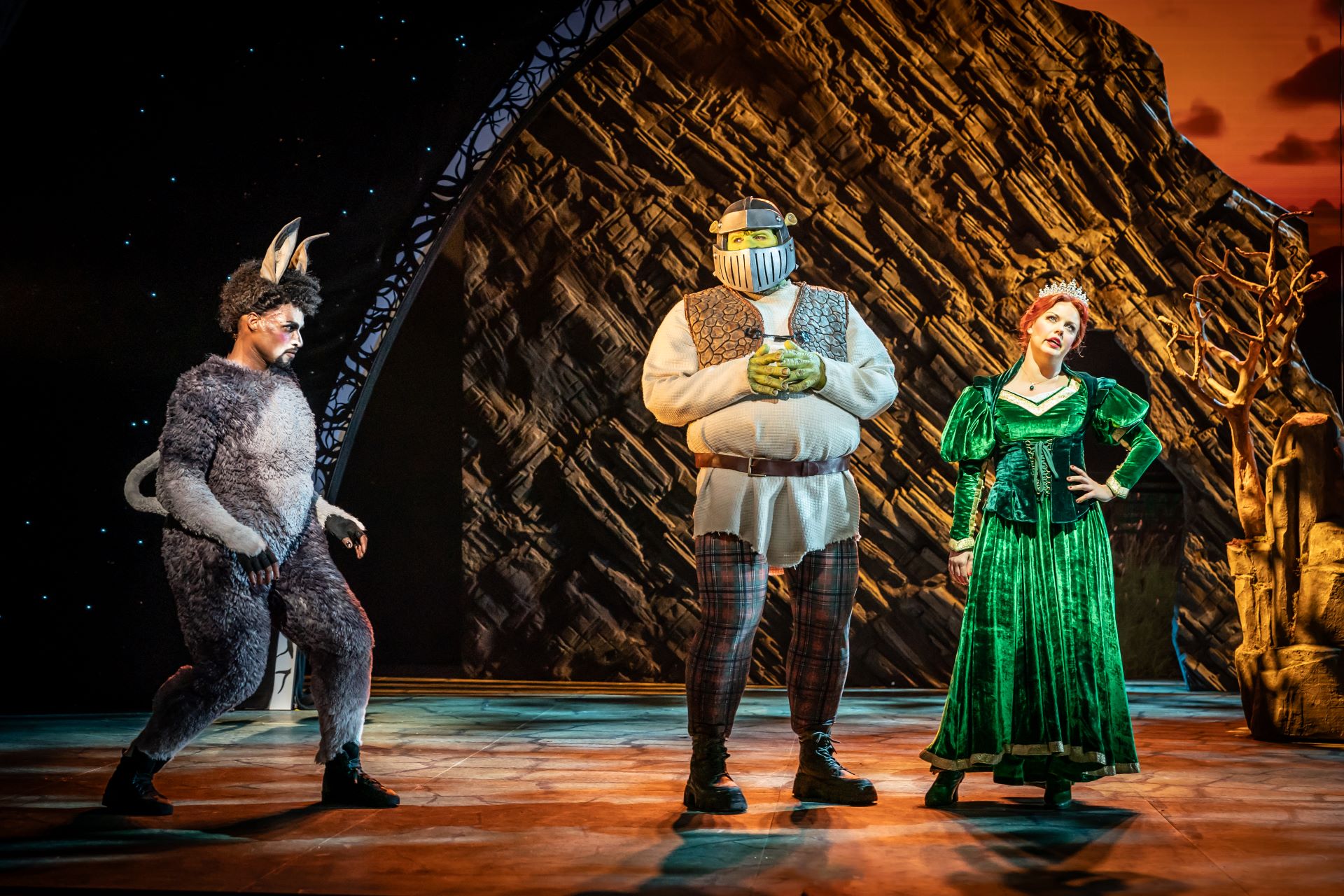
    Shrek The Musical is a toe tapping, foot-stomping whirlwind of a show. Shrek (Antony Lawrence), by Ogre custom is sent to find his own way at 7 years old. Shunned by everyone for his terrifying size and ugliness he decides to live in solitude away from people in a swamp until a host of fairy tale characters descend, having themselves been banished  for being freaks by evil Lord Farquaad (James Gillan) of Duloc.

    Anxious to regain his peaceful swamp Shrek sets off to Duloc and is befriended by a talkative donkey (Brandon Lee Sears) on route. Lord Farquaad sets Shrek the impossible task of rescuing princess Fiona (Joanne Clifton) to reclaim his home, the swamp.

    The adventure of Shrek is a heartwarming tale with a great moral message.

    Be proud to be yourself. It’s not how you look on the outside, it’s who you are on the inside that counts. The freak flag  song says it all.

    David Lindsay- Abaire’s words and Jeanine Tesori’s music worked in perfect harmony with Nick Winston’s brilliant choreography. The variety of  dance styles was greatly entertaining. The blue Duloc dance and the rat tap dance were especially crowd favorites.

    Philip Witcomb’s sets and costumes embodied the magical world of the story book.

    Craig Forrest-Thomas’s make up looked stunning. The Orchestra played their hearts out.

    Brandon Lee Sears was every inch the irritating, chatty lovable donkey and was skillfully able to bring the songs and dances to life, especially with his hip action.

    James Gillan appeared to enjoy playing the villain and the role itself suited him well. ‘The villains get the best lines“ and he was silly, selfish, and spoilt in equal measure.

    Cherece Richards (graduated from Italia Conti this summer) with a phenomenal start to her career. With her amazing voice the dragon number became a real showstopper. The dragon puppet was equally amazing.

    Antony Lawrence (Trained at Guildford School of Acting) was utterly convincing as Shrek. His comic timing and physical acting was superb. Loved the farting and burping scene with Fiona. The chemistry between him and Joanne Clifton (Fiona) was conveyed very strongly.

    Joanne provided us with humor, great acting, a lovely voice, and amazing dancing especially at the end. I loved the three ages of Fiona singing together full of feeling and harmony.

    The final song, I’m a believer had the whole audience on their feet clapping, singing and dancing by the end.

    A truly magnificent performance. According to 9-year-old Lily, “the best night ever , I’m telling my friends they must buy tickets now.”

    Shrek The Musical is at New Victoria Theatre, Woking from Mon 30 Oct – Sat 4 Nov 2023.

  • Life of Pi 

    Life of Pi 

    LIFE OF PI, a captivating theatrical experience based on Yann Martel’s Man Booker Prize-winning bestseller of the same name, is the story of a young man, Pi (Divesh Subaskaran), navigating his way through life’s challenges. Growing up as a Hindu in his father’s Zoo, Pi develops an affinity towards the animals. When the zoo acquires a Tiger Pi attempts to look into its soul and unknowing of the perils of his actions is only just saved by his father.

    We follow his exploration of faith, spirituality and the physical world, coping with decisions that fundamentally change his life. Upon his father’s decision to move the family to Canada, Pi becomes accepting but unhappy. On their travel, the boat is shipwrecked only Pi and some of the animals survive. 

    We see first hand the difficult choices faced by all on the lifeboat as they battle through the trials thrown at them. In the end only Pi and the tiger survive the 227 day journey to safety. 

    The production seeped energy and felt physically powerful. Divesh Subaskaran captured all aspects of Pi’s character, and his performance in his first professional role was completely believable. I felt his thirst. 

    The puppetry design from Finn Caldwell and Nick Barnes was fantastic and the puppeteers with their incredible skills made the movements feel very lifelike. 

    The carnivorous French cook, mamaji’s swimming obsession and the very officious Mrs. Okamoto left a lasting impression. 

    This journey of self-discovery is told in an artistic, magical  almost surreal way, illustrating Martel’s perspectives on spirituality and the physical world. We have all faced difficulties on the road to resilience. 

    A captivating, thought provoking and visually creative performance. 

    Well worth a visit. 

    Life of Pi is at New Victoria Theatre, Woking from Monday 2nd October, 2023 to Saturday 7th October, 2023.

  • Northern Ballet’s Cinderella

    Northern Ballet’s Cinderella

    PHOTOGRAPH: BILL COOPER

    The Northern Ballet are one of my favourite dance companies. So, I was full of anticipation for their latest version of Cinderella. How would they transform this timeless classic about unjust oppression and triumphant reward?

    This version is choreographed and directed by David Nixon OBE, with an original score by Philip Feeney. Given the pedigree of those involved I was expecting a dazzling, mesmerising retelling of this well-loved folk tale. The setting is Moscow, with costumes that embody the spirit of Russia, especially the headwear. Act one begins with a family celebration for the young Cinderella’s birthday. Rachael Gillespie (young Cinderella) dances the adoring daughter and youthful friend to the young prince Mikhail (Kevin Poeung) with great effect.

    Her stepsisters tease her, throwing her shawl over a bridge. As her father tries to retrieve it tragedy strikes, and he is killed. Cinderella’s stepmother blames her and takes out her grief on her stepdaughter. When the family move, she makes a servant of Cinderella. Minju Kang personified the grief-stricken wife and sternest of stepmothers. Her lines were amazing and her walks both delicate and menacing at the same time. The dances with her own daughters, Natasha (Kyungka Kwak) and Sofia (Ayami Miyata) showed us a loving but pushy parent. Natasha and Sofia are portrayed as spoilt and self-centred, mirroring each other’s movement; their petit allegro sections are playful and pleasing to watch.

    Antoinette Brooks-Daw (Cinderella) captivates the audience with her depiction of the isolated and lonely young woman, who misses happier times, which the reflective scene emphasised well. Sean Bates (Prince Mikhail) was very convincing as the man beset by pushy women seeking to become his wife or mother-in-law. The ball dance with Cinderella was so tender and affectionate, and his distress at losing her evident. However, when the stepmother presents Cinderella in rags, he laughs at the thought that this could be his dance partner at the ball. After the derision she is met with, I am not so sure I would have been jumping into his arms.

    My personal highlights were the winter market, with its colourful scenery and character dances. Look out for the bear. Here we are introduced to the magician (Mlindie Kulashe) who also danced the role of her father. The skating scene at the lake was delightful, well choreographed and beautifully danced. It was as though they were gliding on ice. The transformation of Cinderella for the winter ball was indeed magical, and the fur coats becoming Huskies was clever and imaginative.

    The choreography delivered a subtle subtext, conveying the relationships in a more serious way. The scenery was very effective, adding to the momentum of the pieces. The music was fabulous and took you on a journey through the varying moods, creating tension, romance and playfulness, all in the right degrees.

    Well worth seeing, a dance extravaganza for all the family. This production certainly lived up to my high expectations.

    [Patricia McNamee, September 2019]

    Northern Ballet’s Cinderella  is at Woking’s New Victoria theatre from Wednesday 18 September to Saturday 21 September, with matinees on Thursday and Saturday

    Cinderella 4 Kevin Poeung and Antoinette Brooks-Daw in David Nixon OBE's Cinderella. Photo Emma Kauldhar
    Kevin Poeung and Antoinette Brooks-Daw in David Nixon OBE’s Cinderella. PHOTOGRAPH: EMMA KAULDHAR

  • Annie

    Annie

    Annie 4 Photo by Paul Coltas

    I have to confess that I am an Annie virgin. I have never read the cartoons or seen the film, despite really liking 1930s musicals. The first stage production opened in Broadway in 1977, ran for nearly six years and has rarely been off the stage since. It’s obviously popular and well-liked – but what could the cast of the touring production at the New Victoria theatre have to entice people out in the pouring rain on Monday night?

    This is the story of Annie, a gutsy orphan in 1930s America, at the time of the Great Depression. We first see Annie with her friends at the state orphanage. They are ill-treated and worked very hard, while the Horrible Miss Hannigan pockets the profits.

    Annie escapes and sets off to search for her parents, she befriends a dog, finds happiness in a homeless community, is chased and caught. , until a chance meeting brings her into contact with billionaire Oliver Warbucks who wants to help. Plans are very nearly scuppered by Miss Hannigan’s despicable brother and his wife until the FBI and even the American president get involved.

    The first thing I realised was that I knew many of the songs. How does that happen? Well, I think it’s down to the fabulous music by Charles Strouse and the memorable lyrics by Martin Charnin. Among my personal favourites are It’s The Hard-Knock Life and Tomorrow.

    So, what else makes this 2019 production, fresh from the West End, a must-watch show? Strictly Come Dancing judge Craig Revel Horwood portrays the very drunk Miss Hannigan with finesse, and the dances with Rooster (Richard Meek) and Lily (Jenny Gayner) were full of fun and frivolity. Freya Yates (Annie) sings and dances like a true professional, capturing the hearts of the audience as well as that of the billionaire Warbucks with her fresh-faced philosophy. Amber resumed her role as Sandy the dog, what a star!

    Alex Bourne (Warbucks) was very believable as the billionaire whose life is changed forever, while his secretary Grace (Carolyn Maitland) sang and danced beautifully. The choreography was excellent throughout. We were treated to some inspired tap dancing and Charleston routines thanks to Nick Winston. The costumes were colourful and very 1930s. All the cast members put on a good show but Molly, played by Honey-Rose Quin,, who was full of energy and sang well, deserves a special mention. A feast of pure escapism that will leave you feeling full of hope and joy. This show is a real treat for all the family, a ray of sunshine in our cloud-filled sky.

    [Tricia McNamee, June 2019]

    Annie is on at the New Victoria theatre, Woking , from Monday 10 June to Saturday 15 June at 7.30pm, with matinee performances on Wednesday and Saturday at 2.30pm.


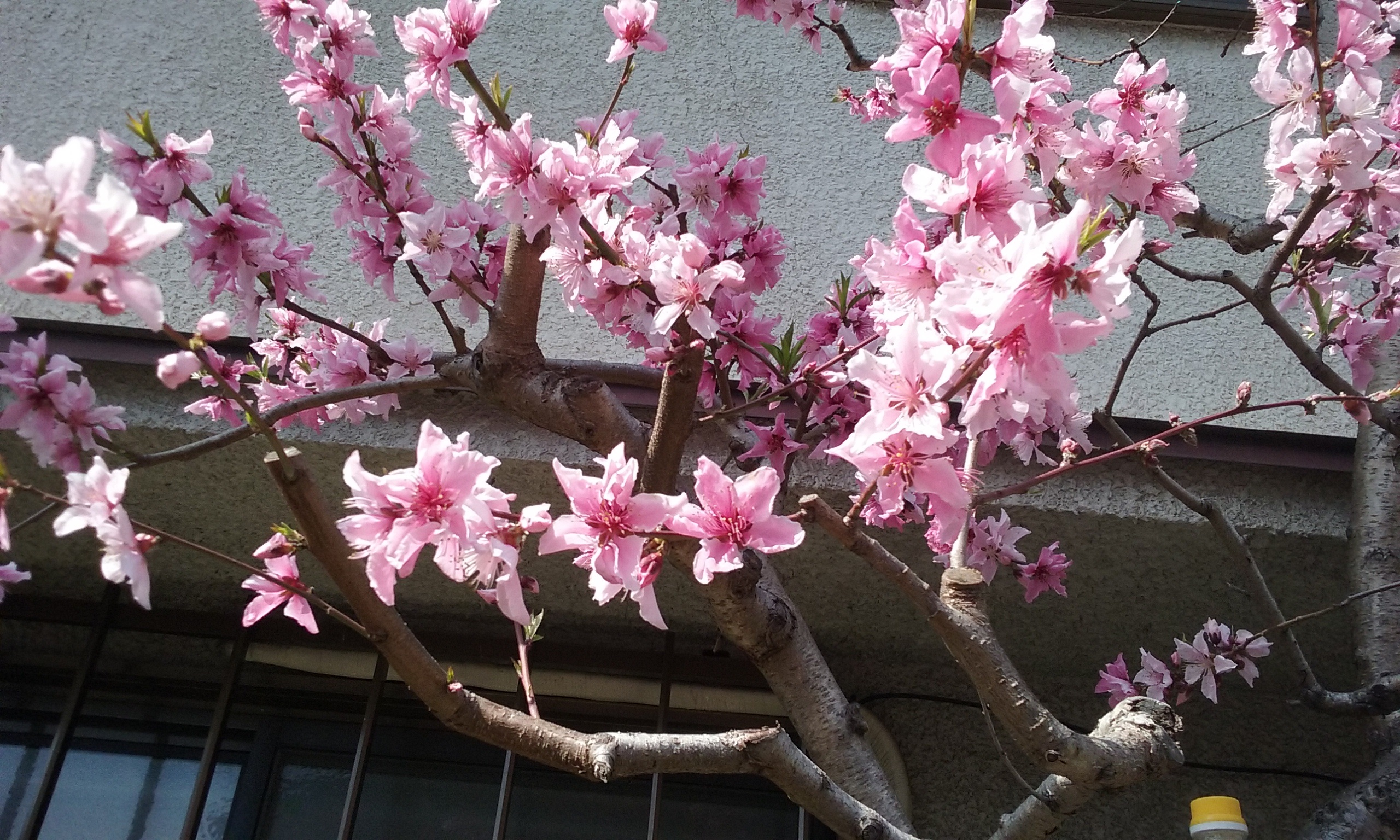
  • Cherry blossom time: how WWC members bloomed in response to a homework theme

    Cherry blossom time: how WWC members bloomed in response to a homework theme

    cherry blossom carla

    Each month members of Woking Writers Circle respond to a “homework” subject set the previous month by producing a piece of work with the subject as the theme. Some more than others, it has to be said. It’s not compulsory, of course! But in April Carla Scarano D’Antonio’s offerings on haiku and the Japanese haiku master Basho inspired the homework theme of “cherry blossom”, one of Japan’s national symbols. And that in turn resulted in a remarkable amount of work read out at our May meeting. So much so, that we thought we’d like to share the results on our website.


    The first poem is by Carla herself. Although she did not read it out at May’s meeting, it does mention cherry blossom. Carla says: “It is a sequence I was working on for a while and completed at a workshop with Jean Sprackland at the Poetry School a few weeks ago. She gave us a map (mine was from north Devon) and told us to choose some landmarks and write about it in a sort of journey.”


    MENTAL MAPPING, LANDMARKS

    by Carla Scarano D’Antonio


    Locked crocuses, blade petals

    Lower Slade stretching

    in the frost.


    Daffodil bulbs

    in Homebase plastic nets

    crave for the moon.


    Purple and white hyacinths

    in flower pots

    along the rage of the pool.


    Holiday Village hosts

    scarlet camellia bush,

    unreliable desire.


    Fanciful magnolia tree

    rooted at the Industrial Estate

    like a scarecrow.


    Wisteria grips

    at the Green Park Farm walls,

    starving love.


    Antique hawthorn

    snow flakes freezing in the sun

    frogs chanting in the Moor.


    Lee Hills melting in rain

    cherry blossoms

    fading in glory.


    The violated rose bush

    grew wider at Ilfracombe College,

    its perfume thicker.


    Higher Slade paved with

    chemical blue hydrangea

    rainbow colours.


    Tricia Mcnamee’s ‘Cherry Blossom/Broken Hearts’ comes in two versions. Both comprise four haiku plus a final couplet. The phrase ‘mono no aware’ – a sensitivity to ephemera – features in both.


    CHERRY BLOSSOMS/BROKEN HEARTS (1)

    by Tricia Mcnamee


    Song of young Japan

    Winter Sakura, flowering

    Painted on war planes


    Drunk, toxicity

    Blooms like life ephemeral

    Kamikaze flights


    Nepal to Iran

    Exquisite beauty rises

    As warriors fall


    Karmic cherry blossom clouds

    Abundant petals tinged pink

    Mono no aware


    As the seasons set apart

    Tree that stole a nation’s heart


    ‘Mono no aware’ is a Japanese term for a sensitivity to ephemera, and the awareness of impermanence


    CHERRY BLOSSOMS/BROKEN HEARTS (2)

    by Tricia Mcnamee


    Karmic cherry blossom clouds

    Abundant petals tinged pink

    Painted on war planes


    Drink, eat like green tea

    Blooms ephemeral as life

    Kamikaze flights


    Nepal to Iran

    Exquisite beauty rises

    As warriors fall


    Song of young Japan

    Winter Sakura, weeping

    Mono no aware


    As the seasons cycle starts

    Women folk with broken hearts


    Greg Freeman’s poem also mentions kamikaze pilots. There are also references to Cherry Blossom shoe polish in the shining boots of first world war soldiers and the rough leather of the GIs’ boots, to which the Americans attributed their lack of success at impressing Japanese girls.


    cherry blossom 3CHERRY BLOSSOM

    by Greg Freeman


    Unknown soldier abandoned in the mud

    and blood; his boots, miraculously,

    still gleaming. Leather guarded

    against weather. Demand

    blossomed on the western front.


    Boots on the ground. GIs found

    that Tokyo girls they took a shine

    to weren’t swept off their feet.

    Blamed their lack of polish,

    their rough, scuffed look.


    But it was much, much more than that,

    not just what it said on the tin, its

    fish-plate opener, the superficial sheen.

    Occupying Japanese soldiers

    often planted cherry trees.


    Temperate zone of the northern

    hemisphere. Drinking sake under

    the branches. Militaristic plotters

    assumed the name. Suicidal pilots

    painted them on the sides of planes.


    The blossoms symbolised clouds

    in a nation’s culture. O, what

    a cloud. And such brightness.

    Just shadows left on walls.

    The ephemerality of lives.


    Heather Cook has two poems relating to the cherry blossom theme. The first, ‘Cherry Blossom’, seeks to capture a fleeting memory of her mother sitting under cherry trees. The second poem, ‘The Virgin of El Panecillo’, tells of tourists visiting a huge aluminium statue above Quito and being disenchanted. The statue was upstaged by a man polishing shoes – you’ve guessed – with Cherry Blossom polish!


    CHERRY BLOSSOM

     by Heather Cook


    I leave her sitting on the bench,

    small and fragile in her floral dress.

    Above her head the blossom froths,

    releasing petals in confetti drifts.

    She’d wanted me to go,

    but as I climb the hill

    I sense her worrying,

    her thin hands fluttering.

    I wave. For moments all I see

    Is blossom, pale and shifting,

    but then a doll’s hand lifts;

    I cannot see her face,

    but know she’s smiling.

    A sense of endings overwhelms

    and I return, to gather memories

    while there’s time.


    THE VIRGIN OF EL PANECILLO –

    A WOMAN CLOTHED WITH THE SUN

    by Heather Cook


    cherry blossom 5Coaches click, tick and cool by dusty trees.

    We have been disgorged to seek the Virgin

    and be back by twelve.

    Up close, the woman clothed with the sun

    cannot be seen, cannot be understood.

    Our guide is fraught: we must not stray;

    we must stay in our groups.

    She flares at rivals, waves them off:

    ‘Only blue stickers! You are stickered red!’

    We are blue stickered. There is comfort in belonging.

    Unable to see more than the snake the Virgin treads on,

    attention wanders; splinter groups rebel

    and shuffle off in search of plastic Virgins.

    Below, in leafy shade, an old man polishes shoes,

    watched by a boy and a sandy dog.

    The man’s hand moves in slow circles,

    massaging the leather; he spits, buffs, smiles.

    He has no teeth.

    ‘Best Cherry Blossom!’ he calls, ‘best in the world!’

    Sun strikes the dancing Virgin

    and the sky flashes. It’s five to twelve.


    Liz Lennie used an intriguing approach at our WWC meeting, writing individual lines of a poem, ‘Sakura for Carla’, on separate strips of paper. These were handed out and put together in different configurations by those present. Each line contained a complete thought, so each poem ‘worked’. This is Liz’s own version:


    SAKURA

    by Liz Lennie

    for Carla


    Cherry blossom time!

    Bare twigs burst with bright bloom

    My heart lifts – and flies


    Petals fall, my thoughts rise

    And I write in gratitude

    For life and for love


    These words, me to you

    Ripple over a deep pool

    To reach every shore


    Alan Dale’s short story ‘Signed Off’ features cherry trees and a couple under threat from bailiffs. There is humour  but also sadness in this story.


    SIGNED OFF

    by Alan Dale


    “They look lovely at this time of year, don’t they?” Stifling a sob, Jill glanced at Matt.

    “I know, love.”

    They contemplated the rows of cherry trees, their trunks beckoning, like ballerinas’ legs, under a wind-teased billowing of pink.

    Matt sighed, placing a hirsute, brawny arm around her shoulders. “We did our best, love. We can’t sell cherries at Stoughton’s new price and they’re the only important customer now, ‘cos of the volume they take.”

    “Matt, I feel those trees are calling to us. It’s as if they know what’s going to happen to them, once we’ve gone.”

    “Folk’ve got to live somewhere. I’d do anything to stop all this, but…”

    Gravel scrunched, tyres squealed, a car door clumped. Rapid footfalls pounded. The kitchen door exploded open.

    “Liam – we weren’t expecting you ‘till Thursday,” said Matt. Everything OK?” Liam opened his mouth to reply, saw his mother’s devastated expression and swallowed. Matt felt the silence smothering them all.

    “I’m OK,” said Liam quietly,  “and once you’ve heard this, both of you will be – trust me.”

    “Go, on,” said Matt.

    “I’ve found a company who’ll give you a loan, keep you afloat and sort the debts.”

    Matt and Jill gaped at each other.

    “Guy I work with, on the equities desk – turns out his uncle’s a director of Fructigro.”

    “Isn’t that one of the big agribusiness outfits?” said Matt. His wife grimaced.

    “No, Dad, you’re thinking of Futurecitrus. They’re massive, but Fructigro’s a relatively small company – they’re growers, like you. Anyway, we talked and I explained, without going into too much detail, if you get my drift, where you were, financially. Now, what they need is a reliable source of really class, established rootstock, for grafting. Bottom line – you let them have grafting stock, you get the loan. I mentioned the sum you’ve both been after – no problem.”

    “Thanks, son. I really appreciate that.” Matt gulped. “I know we haven’t always seen eye to eye, since you chose the city rather than following me, here.”

    “Forget it.” Liam shrugged.

    “When can I meet their boss, to discuss details, so we could sign up to this?”

    “He’s in Hawaii for three weeks. I could fix something after that.”

    “Yeah, the only thing is, I really ought to…”

    “Matt, the bailiffs’ll be here at eight o’clock tomorrow.” Jill’s face was becoming crimson. “For God’s sake, think. Someone must be able to deal with this, if he’s away.”

    “Give me five with Rupert, Dad.” Liam was already jabbing at his phone. “Rupes – Liam – how goes it? Did she – told you, didn’t I? They always go for that. About this Fructigro thing – it’s now balls out, mega urgent, yeah?”

    Gill winced. Matt gave a spluttering snigger.

    “Right, email me the contract and declaration, he’ll sign and give bank details. I’ll scan and patch it straight back. No they haven’t. Don’t go there, mate, OK? And could you then get Tobes to transfer the cash, so’s they can stall these bastards off? Top man. Go.” He hung up, grinning at his parents.

    “All sorted – Dad, you sign and include your bank details, you’ll have the cash in the morning. You can tell the bailiffs its coming and stall them.”

    “Matt, do you think we should give these people our bank details like that – email’s not secure, is it?” Jill had calmed to a cherry red, but her brows were drawn right down, a sign Matt recognised from years of marriage.

    “You said think – I think we’ve no choice.” He turned to Liam. “Thank you, son. What was that declaration I heard you mention?”

    “Oh, all that says is ‘we only supply traceable British products, cultivated for Fructgro’.” Liam shrugged.

    “You know what these lawyers are like – still, it looks good and covers you, I guess.”

    “Oh, I see – that’s OK, isn’t it?” said Jill, looking up at Matt.

    “Yes, that’s fine. It’ll be true, so no harm done, far as I can see.”

    *

    A week passed, in which the bailiffs were dealt with, while creditors were mollified. The following Monday, a van and lorry arrived, as arranged. Several men got out and unloaded hacksaws, gloves and various other tools. Matt greeted the florid, portly foreman, and led them all into the orchard, to take their first grafting cuttings. Matt noticed that they all wore jackets with a cherry tree logo, but no wording. He went back indoors, glad of a chance to sit down. Several hours later, their laden lorry had departed.

    *

    That weekend, he and Gill went away for a weekend break. “Let’s have a walk over that field – look, there’s a public footpath,” said Matt. Woods to their right led to a chain link fence.

    Matt stopped in his tracks. A path led off the main track, to a set of high, barbed wire-topped gates. A huge cherry tree logo, identical to those on the visiting Fructigro staff’s jackets crowned one of the extensive, white concrete buildings that stretched away into the distance.

    “What the hell?” muttered Matt.

    “Oh, my God,” whispered Jill.

    “What?”

    “That logo…”

    “Yes, I noticed that – the men wore it, the other day, didn’t they?”

    “Yes, but Matt, look, this place is huge – Liam said it was only a small company – small growers, he said, that’s right – you remember.”

    “Probably their offices and stores.”

    “I don’t think so. Look at all those glass cabinets and all that stainless steel piping in there.” Jill was breathing heavily now. “Hang on, what’s that, over there?”

    She walked over to the gate and picked up what looked to Matt like the remains of an estate agent’s ‘For Sale’ sign.

    “What’ve you got there?” he called.

    Silently, Jill turned the tattered, splintered sign board to face him.

    Fructigro Out – NO GM Cherries! he read.


    PICTURES OF CHERRY BLOSSOM TREES BY CARLA SCARANO D’ANTONIO


    Copyright remains with the authors