Tag: writing

  • MINUTES OF WOKING WRITERS’ CIRCLE MEETING AT RED LION, HORSELL ON 15TH OF JANUARY 2026

    NEWS:

    1. There has been no update yet on the NatWest bank account application. Simona has followed this up and expects to receive an update on the status next week.
    2. Keith shared that he has entered two poems into a competition: one written as a tribute to Dylan Thomas, and another centred-on definitions of creation.
    3. Heather and Dave announced that they will be launching their respective new books at the Paper Moon Bookshop in Guildford on the 12th of March. All members are warmly invited to attend.
    4. It was also noted that one of Dave’s poems has attracted interest for adaptation into a song, highlighting the breadth and versatility of creative talent within the group.
    5. The Reading Group will meet on the 17th of February, where members will be discussing Staying On.

    READINGS:

    NATHAN read a poem titled “Where You Are.” Keith observed the use of contradictory lines, noting that while they might seem opposing on the surface, they worked very effectively together. He felt the length of the poem was appropriate and suggested a few edits to the ending to move it away from realism and towards a more poetic and impactful close, which Nathan took on board. Dave enjoyed the poem, commenting that each line opened up a new vista to explore. Liz described the poem as beautiful and enthusiastically “pro-found” (pun intended), agreeing that the repetition added weight and resonance. Simona noted that while the poem is subtly held together by an overarching narrative, the individual stanzas leap between different images. She acknowledged, however, that this sense of fluidity may come down to personal preference.

    Nathan also shared a haiku, which he had titled “Set Course,” though he noted the title was not strictly necessary. Keith appreciated the inclusion of scientific jargon and found it particularly enjoyable. Simona questioned the choice of the word “forged,” suggesting it grounded the poem on a less cosmic scale than the rest of the imagery implied.

    DAVE read two poems titled “Dream Scapes I” and “Dream Scapes II.” Liz found the first poem profound and tragic, praising the language and highlighting phrases such as “forgotten god” and “language.” She also noted the effective use of words with layered meanings, particularly “arms.” Nathan felt the poem echoed the simplicity and universality of Imagine and enjoyed the sense of recurring dreams running through it. Simona praised the second poem for its skilfully implied meaning, and both she and Nathan remarked on its melancholic tone, with an underlying sense of tragedy. The group agreed that each reader took something different from the second poem, and this openness of interpretation was widely appreciated.

    KEITH read two poems he has entered into a competition, for which the group wished him good luck. The first, “Nothing Gentle About This Night,” was delivered with great force and had a strong impact on the room. Simona praised the poem’s defiance and power, while Liz queried the use of the word “taciturn.” Keith’s second poem, “Creation,” left a deeper impression, with Simona commenting that it made her acutely aware of herself as the reader. Keith also shared a third poem, “America Today,” which sparked discussion within the group. While opinions varied, there was agreement that the final two lines were particularly lyrical and that the metaphor was very effective.

    LIZ shared a poem inspired by a jam advent calendar, describing it as a “jam moment.” Drawing loosely on themes from The Road Not Taken, she explored the idea of obsession and the notion that all roads ultimately lead to jam. Simona felt that the third section of the poem truly captured the journey and was her favourite part, though she noted that it took some time to arrive there and that the connection between the opening section and the rest could be strengthened. She also praised the craftsmanship of the metaphors throughout. Dave felt the poem appeared to be pursuing two competing goals, which developed into separate themes, and suggested this may have resulted in the poem being longer than necessary. He proposed that the piece could be split, noting that the two strands seemed to compete for attention and that the bridge between them might need rethinking. Keith suggested that having printed copies might help the group better visualise the journey Liz was taking the reader on.

    Next Meeting 19th February 2026

    Volunteers for jobs to be assigned via email

    Chairperson: Sarah

    Minutes: Simona

    Milk and Biscuits: TBC

    Wine: TBC
  • MINUTES OF WOKING WRITERS’ CIRCLE MEETING AT ST MARY’S CHURCH HALL, HORSELL ON 20TH NOVEMBER 2025

    Present: Simona, Liz, Sarah, Keith, Dave, Cathy, Natasha, Heather,

    Apologies: Alan, Tricia, Nathan, Harry, Teddy

    NEWS:

    1. Simona advised that subscriptions would be invited as soon as new bank details had been confirmed, but that meanwhile the financial position of WWC was healthy.
    2. Nathan had submitted an entry to a poetry pamphlet competition. Well done, Nathan.
    3. Dave’s poetry book, Poems in a Bottle, will be published on 5th December 2025 by Austin Macaulay. Dave will be the featured poet at the Woking Write-Out-Loud meeting on Thursday 27th November. (This will be the last meeting at the Fiery Bird.)
    4. Write-Out-Loud meetings will be held on Mondays at the Lionsheart Bookshop from January 2026. There will be no meeting in December 2025.
    5. Liz reported that the previous book considered by the Book Group, The Midnight Library, by Matt Haig, was enjoyed by all, earning a score of 8 out of 10. The Group is currently reading, Milkman, by Anna Burns.

    Readings:

    Keith had followed the Homework invitation to produce a piece in a foreign language, with his poem, Viva La Espana. This was much appreciated, with the humour around incorrect use of words – in this case ‘chicken’ – enjoyed by all. Keith’s second poem, Marloes, told the story of pilots flying out from this airfield during the 2nd World War, with some skilfully etched contrasts. In particular, the sudden activity when the bell rang after all the waiting, and also the unknown dangers awaiting the pilots which made them wonder if they would ever return to the ‘natural beauty’ of the base.

    Heather read her poem, The Light-Catcher, which described an unexpected visit from a ‘fickle and fey’ friend, who nevertheless brings laughter and joy when she turns up. The poem was enjoyed and the title seemed to fit. Heather had been thinking about the glass ‘dream-catchers’ (thanks, Liz!) when she came up with the title.

    Simona introduced her extremely powerful poem, Obsession, by explaining that she gets obsessed with certain songs and lyrics, an experience which was shared by other members of the group. In this case, the band was Sleep Token and their song, Hypnosis. All agreed that the poem succeeded brilliantly in conveying the trapped feeling of the writer, with its unrelenting language, including phrases such as, ‘fabricated reality’ and ‘fractured realities’.

    Dave talked about becoming obsessed with turning poems into lyrics and read a break-up verse/song. There was an interesting discussion about the synergy of music and lyrics and Dave outlined his considerable experience of collaborating with musicians representing totally different genres, including Rastafarian and country-style. The relationship between the creative arts is a vigorous and fascinating one, each having drawing inspiration from the other.

    Cathy read a piece capturing the humour and adventures of a trip she made with her mother to Munich. This was a hugely enjoyable and well-written piece which was greatly appreciated by all. Cathy deftly incorporated a fair amount of German conversation, but meanings were always clear from the context without the need for translation, which would have interrupted the story’s flow. There were some laugh-out-loud remarks from Cathy’s mother, who apparently had previously joked about having Semtex in her pocket when visiting Ireland during the Troubles, and in Germany thought an English map of Munich should show the street names in English. Simona suggested producing an audio version. A brilliant piece of writing!

    Sarah, continuing the multi-media theme, showed a beautiful video of clouds to accompany her prose-poem, Metal Bird. Sarah explained that she had not flown for many years due to caring responsibilities and experienced anew the wonder of flying when she was able to get away. This was a lovely piece of writing with a dream-like quality. Heather particularly enjoyed the thought that ‘usually we’re looking up’, but on a plane ‘we’re looking down’. The lovely singing to an ABBA song that followed confirmed what a talent we have in the group!

    Liz read her poem, Autumn, which she has entered into a Godalming writing competition. Everyone enjoyed this poem, with the thought-provoking idea of ‘lessening’ rather than loss. There were lots of interesting details, such as the leaves dropping and going into the ground to the mycelium layers beneath, highlighting the circle of life. Clever Liz had also managed to highlight ‘Godalming’ in the version she sent in – well done, Liz! Liz also produced verses in Romanian, German and Slovak, read by Simona, Cathy and the poet. The poem was a clerihew featuring ‘The Heavy Bear’.

    Next Meeting 18th December 2025

    Bring a Christmas carol you have written or another Christmas piece. There will be festive refreshments, and Simona will write out to members separately about this.

  • MINUTES OF WOKING WRITERS’ CIRCLE MEETING AT ST MARY’S CHURCH HALL, HORSELL ON 16th OCTOBER 2025

    Present: Tricia, Heather, Keith, Dave, Nathan, Natasha, Adi, Liz, Sarah, Simona, Catherine, Harry, Teddy 
    Apologies: Alan 

    NEWS 

    1. The Book Group will meet next Monday to discuss The Midnight Library, with a potential new member joining. 
    1. Heather joyfully announced the successful publication of her poetry pamphlet, sharing her gratitude and a few details about the journey to print. 
    1. The Fiery Bird venue has received another award for its community support, though it is sadly set to close in January. 
    1. Introductions were made for Teddy, who joined the group for the first time. 

    READINGS 

    Natasha read an excerpt beginning “Sparrowhawk, I know’. The group praised the vividness of her imagery and the emotional power of the reveal. Heather admired the rich description in the opening but suggested trimming adjectives to sharpen the prose. Dave noted that sensory experiences differ from person to person and that omission can sometimes enhance impact. Catherine enjoyed the twist but felt the explanation afterwards could be pared back. She also commented that referring to women as “girls” might read as infantilising, though the group agreed parents often continue using that term for their children. Tricia praised Natasha’s natural instinct for capturing animal consciousness. Adi appreciated the imaginative expressions, though found some slightly distracting, while Sarah noted how Natasha’s writing continues to develop with depth and confidence. 

    David shared two poems: “Extinction Blues” and “Modern Love.” The first conveyed a strong sense of desperation, with Harry admiring the musicality of the second stanza. Tricia sought clarification on some imagery in the opening, while Simona found the shifting perspectives a little confusing. Catherine mentioned an overuse of references to eyes, which compounded that sense of disorientation. Harry suggested reworking a few lines to enhance rhythm and poetic flow. The second poem, “Modern Love,” was warmly received — Tricia appreciated the sentiment, Heather found it clever, and Keith and Tricia both remarked that it served as a refreshing antidote to David’s previously more sombre work. 

    Keith read “Swing Thoughts from Abroad,” a humorous meditation on thoughts during a golf game, and “A Rose is Not Always a Rose by Any Other Name.” Catherine particularly enjoyed his inventive rhyme for “glaucoma.” Tricia noted his trademark wit and a playful duality in his portrayal of womanhood. 

    Adi presented “No Fall, No Rise.” Simona suggested that one of the central questions could be cut to maintain flow. Tricia observed that Adi’s style, almost abstract in its precision, conveys movement and flux effectively and perhaps reflects his background. Heather praised the repetition for its musical emphasis, and Liz remarked that Adi’s lyricism feels effortless. Adi explained that he writes intuitively and had not yet edited this piece. 

    Special Guest: Auntie Dawn delighted the group with a performance piece described as both witty and heartfelt. Adi called it beautiful; Harry enjoyed its humour; and Keith encouraged her to write a poem exploring the mind. Heather praised its honesty and craftsmanship, while Catherine found it marvellous and funny. Nathan likened it to Bob Dylan’s more whimsical songs, and David described it as “beautiful and funny at the same time.” Natasha noted its warmth and lack of bitterness, and Teddy said her reading style added real personality. Tricia called it an amazing poem and expressed a wish to meet her in person. Liz particularly appreciated the well-placed use of the word “sod.” 

    Heather read “Winter in London.” Keith admired the imagery and Tricia liked the way she used “pretending” to reflect seasonal denial. David described it as a poem that “packs a punch,” and the group agreed that it captured the essence of urban winter beautifully. 

    Catherine shared an original play, which sparked an engaging discussion involving Harry, Keith, and Tricia. Harry praised the effective use of dramatic irony, while Simona noted she always learns something new from Catherine’s writing. The suspense was handled well, and Tricia commented on the contrast between the family’s day-to-day worries and the daughter’s broader anxieties — a contrast Heather found especially thought-provoking. Keith called it “really interesting,” highlighting the realism of the characters’ interactions. 

    Sarah also presented a short play, structured as a video conversation. The twist was executed brilliantly, surprising and delighting the entire room. The group responded with high praise for both concept and delivery. 

    Liz read a poem begun at the Repair CafĂ© event, which she completed during the week. The piece reflected on mending — both literal and emotional — and the unravelling that sometimes can’t be repaired. Heather described it as beautifully crafted, while Tricia said it felt deeply authentic. Harry noted that its realism made the ending hit with a “gut punch.” David praised her ability to evoke the atmosphere of the room, and Sarah loved the imagery of “threading together” as both action and metaphor. 

    Teddy read two poems, “Light-Life” and “Threes.” Heather admired the phrase “beautifully obsolete,” and David said his favourite stanza stood out with quiet strength. Sarah said she could read “Light-Life” again and again, and Heather noted its layers of meaning. “Threes” was warmly received for its sense of closure and simplicity — Tricia found the ending evocative, Nathan praised its clean aesthetic, and Sarah highlighted its childlike perspective, rare and refreshing. 

    Harry concluded with two poems: “I Yearn for London Underground” and “Uncanny Finale.” Simona found comfort in the first, while David described it as unsettling yet powerful. Heather was intrigued by the poet’s fear of the overground. Tricia questioned the phrase “in a rush-hour blaze,” noting that “blaze” suggests fire or inferno and might need rethinking. The group appreciated his use of ouroboros. The second poem, “Uncanny Finale,” drew attention for its theatrical framing. Keith praised its stagecraft, while David questioned the inclusion of a “faux opera.” Keith interpreted it as commentary on life’s performative nature, and Tricia encouraged more exploration of the performing arts motif. Heather and David liked the singing imagery, Liz enjoyed the rhythmic “sag and stagger,” and Heather agreed that while the “faux” aspect might sound pretentious, it added texture to the piece. 

    Other Business 

    The next meeting’s homework is to write a poem in a language that is not your first language. 
    Minutes: Heather 
    Chair: Harry 
    Wine, Biscuits & Milk: Simona 

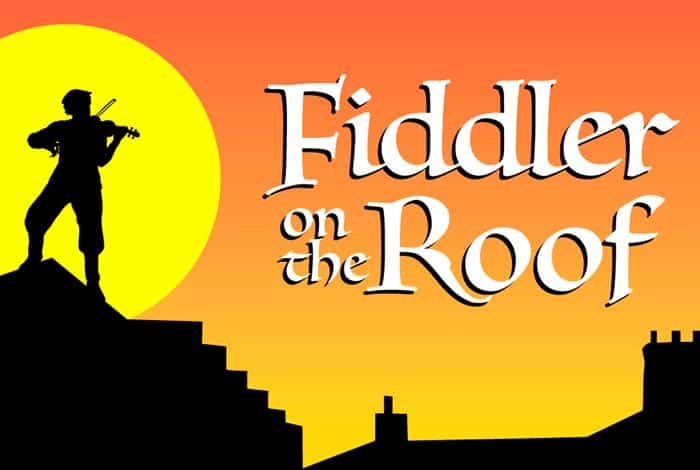
  • Fiddler on the Roof, Barbican Theatre, 17th July

    Fiddler on the Roof, Barbican Theatre, 17th July

    This review may turn out to be a total waste of time as the run of this brilliant production finished on Saturday, 19th July. BUT it was such a triumph – I didn’t spot a single empty seat at this matinee performance – that a further run at a different venue has to be a possibility. After all, before it came to the Barbican theatre, Fiddler delighted audiences at Regents Park Open Air venue.

    Directed by Jordan Fein, choreographed by Julia Cheng and designed by Tom Scutt, this glorious musical involved its audience from the very start. Many of the songs were familiar, including If I were a Rich Man, Sunrise, Sunset, but were given new and engaging life by an exuberant cast. The dancing too was, quite simply, breathtaking – for the audience, as well as the performers! I couldn’t tell you who I saw in the leading roles as they were definitely not household names and I didn’t splash out on a programme, but they were unbelievably believable in each and every role.

    Catch it if you can!

    Heather Cook

  • MINUTES OF WOKING WRITERS’ CIRCLE MEETING AT ST MARY’S CHURCH HALL, HORSELL ON 17th JULY 2025

    PRESENT: Liz, Natasha, Catherine, Alan, Harry, Nathan, Sarah, Simona, Keith

    APOLOGIES: Heather

    NEWS:

    1. The Summer Party will take place during the August meeting. Members are encouraged to bring and read short, fun, summer-themed pieces. A separate email will be sent to coordinate food and drink contributions. Everyone is warmly encouraged to attend.

    2. The Annual General Meeting (AGM) will be held during the September meeting. During this session, the group’s financial situation will be reviewed and voted on. Nominations for available committee roles should be submitted ahead of the Summer Party in August.

    READINGS:

    NATASHA shared a short story titled “It Takes a Village.” Simona praised the context and setup but suggested the piece would benefit from less telling and more showing, along with stronger tension building. Harry felt Natasha’s descriptive writing excels in texture and noted her strength in developing real, believable characters, though he observed some overuse of pronouns. Alan recommended incorporating more dialogue to help express the protagonist’s emotions more vividly.

    SIMONA presented a flash fiction piece under 500 words, intended to evoke an unsettling morning experience. Harry appreciated the internal dialogue, describing it as believable, though he critiqued the use of capitalisation and found the onomatopoeia a bit weak. Keith felt the tension was effectively sustained and remarked on the story’s ambiguity between the real and the surreal. Sarah commented that the story captured something familiar but framed it in a way that felt disorienting. Alan saw an intentional leaning into themes of schizophrenia. Liz praised the immediacy and concise delivery, noting that the initial relaxed tone gave way to tension in a well-balanced manner.

    CATHERINE read her poem “Hey Google,” written in iambic pentameter. Inspired by her interactions with AI and poetic form, the piece cleverly mimicked an AI-generated style. She also compared it with an actual AI-generated poem, which was widely criticized for its lack of depth and weak metaphors. In contrast, Catherine’s poem was considered creative and entertaining. Harry particularly enjoyed the final lines, which captured the essence of an artificial voice in a witty and impactful way.

    NATHAN presented a dark nursery rhyme on the theme of “Feeling Small,” written as a personal challenge. Alan remarked that the poem seemed to call for illustrations, while Keith admired Nathan’s courage in exploring a new style. Liz welcomed the shift in his writing approach. Nathan also read a haiku titled “Return.” Liz found the final line possibly too cryptic, which sparked a lively group discussion on its meaning.

    KEITH shared three thematically linked poems centered on deities. The first, “Deities,” questioned accepted notions of faith and was received as thought-provoking. The second poem, “Pharaoh Poet,” speculated on why Tutankhamun’s tomb remained untouched for so long. The third, “When Dinosaurs Got Together,” humorously explored how sentient dinosaurs might have perceived religion. Harry noted the Nietzschean undertones, especially in the first poem, and related to its commentary on atheism. Cathy found the inconsistent rhyming patterns in poems two and three a bit distracting, while Simona enjoyed the playful imagination behind the dinosaur poem.

    ALAN read his short story “Heavy Presence.” Harry complimented the realistic, quippy dialogue, which he felt carried the strength of the piece. Simona mentioned she liked the name of the dog, and Catherine found the story grounded and believable due to the natural flow of the dialogue.

    LIZ read a poem she wrote at age 17, which Simona described as having an archaic tone yet a light touch. Catherine agreed with this impression. Liz then shared two found poems created during a workshop, inspired by a library and its contents. Simona found the imagery, especially around the use of cards, hard to connect with. Keith and Harry observed that the found poetry format has limitations and noted some lines felt clichĂ©d. Catherine appreciated the exercise as a creative prompt but felt the final pieces didn’t stand strongly on their own without explanation.

    HARRY concluded the session by reading a poem which he intends to include in his upcoming anthology, titled ‘The Beating Drums’. Keith expressed some disappointment that the poem depicted a quiet acceptance of death instead of a defiant, rallying spirit. Alan asked what motivates the characters to carry on, to which Harry responded that it’s the raw sense of life itself—the one force keeping them moving forward. Catherine appreciated the ironic contrast between the image of beating war drums and the quiet resignation, noting that the poem handled this theme effectively. Liz also thought it was powerfully written and well executed.

    Next meeting: Summer Party, 21 of August, St Mary’s Church, Horsell.

    Homework: Rewrite an overused line, ‘every cloud has a silver lining’, in a more artistic/poetic and original way, in less than 50 words.

  • MINUTES OF WOKING WRITERS’ CIRCLE MEETING AT ST MARY’S CHURCH HALL, HORSELL ON 19th JUNE 2025 

    PRESENT: Simona, Liz, Nathan, Harry, Sarah, Keith, Tricia, Natasha, Heather 

    APOLOGIES: Alan, Catherine, Hilary 

    Welcome and Introductions: 

    We were delighted to welcome Natasha to the meeting. Natasha had previously attended a WWC meeting, but had not met everyone, so introductions were made. Natasha writes mainly short stories and book reviews. 

    Competition News: 

    Heather circulated a summary of current competition opportunities (attached for those unable to attend) and will continue to do so on a monthly basis.  

    NEWS: 

    1. Nathan had won 3rd prize in the Poem Stellium Mental Health Awareness Week Poetry Competition with his poem, Bridge of Freedom and received an Honourable Mention in the Dark Poets Competition. 
    2. Harry was commended for his poem, Learnings from 25 years of ADHD in the Binstead Prize, South Downs Poetry Festival. 
    3. Liz provided an update on the Book Group’s activities. Isabel Allende’s book, Violeta, had been enjoyed by Tricia. The next book to be considered by the Book Group will be Fingersmith by Sarah Waters. 
    4. Liz reported that the Ambassadors Theatre had announced a new open mic event, the first of which takes place on Monday 30th June. Entry is free and the event takes place from 7.30pm to 10.30pm. 
    5. Write Out Loud’s monthly open mic poetry event will take place on Thursday 26th June at 7pm at the Fiery Bird, Woking. 

    READINGS: 

    Nathan read his prizewinning poem, Bridge of Freedom, which was greatly appreciated. In fact, Nathan’s audience couldn’t understand why he hadn’t been awarded 1st prize. It was interesting that this poem had a regular rhyming scheme which added to its power without in any way limiting its emotional range and depth. The poem finished strongly with a stand-alone final line. Nathan also read a trademark haiku – Tainted, which was enjoyed, while there was recognition of the discipline imposed on content by the strict haiku ‘rules’. Nathan said that he often writes a haiku to relieve writer’s block and was encouraged to write a short article on this subject for the WWC website. 

    Nathan had also written a poem inspired by thoughts shared with him by Simona on the subject of Home and what makes somewhere (or possibly someone) feel like home, in particular considering the totally different sensory experiences associated with town and country. Simona read this beautifully evocative and moving poem. 

    Keith read a prose piece, The Summer of 69, (Bryan Adams) which provided a vivid picture of his time in the Butchery department at Butlins, Bognor Regis (the ‘last resort’) before starting Art College. Everyone enjoyed Keith’s lighthearted but acutely-observed memoir and in particular the characters that populated it, brought to life so vividly by Keith’s spirited delivery. The New Victoria theatre better watch out! There were some lively and memorable anecdotes within the piece, including the baked beans episode which resulted in a child finding and inflating a Durex at breakfast time. 

    Heather’s poem, Dusky Pink Dress, was a rather muted affair by comparison, but was generally enjoyed for its dreamy nostalgic quality and imagery. 

    Tricia had used the Homework topic of Scent to inspire her poem. The poem began with exploring a cat’s world of scent and considered the different world inhabited by humans, where scents such as coffee would be a significant attraction for many. The poem cleverly and persuasively conveyed the navigation of different worlds by scent and was enjoyed by all. 

    Liz had also been inspired by the Homework theme and had written a beautiful and perceptive poem, Roses, about the roses in her front garden. It was noted that not once did she describe the colours of the roses, other than ‘the red bud’, leaving listeners to form their own picture. The scent of the flowers was conveyed sensitively and skilfully as passers-by and others paused, breathed and found a measure of peace. 

    Sarah contributed a beautifully written piece about a visit to Jane Austen’s house at Chawton and about the marriage proposal that Jane received and initially accepted, before turning down her suitor, Harris. Sweet peas (not called that then) with their implied fragrance featured prominently throughout Sarah’s piece, particularly in Harris’ proposal letter, where thoughts were aired about the wedding arrangements. All agreed that this was lovely, gentle writing, entirely appropriate to the subject matter.   

    Harry read two very different poems, Burning of the Witch, and Iambic Escape. The first poem is an informal sonnet and follows the iambic pentameter structure, but was also a very powerful piece which certainly made one listener feel quite uneasy! The sentence, ‘I’ll chase your eyes’ was the stuff of nightmares for this sensitive soul! There was an interesting discussion about witchcraft and associated rituals. Harry’s second poem came as light relief – a tongue-in-cheek mockery of the poet’s yearning to perfect his use of the iambic pentameter and thus honour his poetic forebears. Very clever and very amusing. 

    Date of Next Meeting: Thursday 17th July at 7.30pm 

    Homework: A poem written in Iambic Pentameter.

    Chairperson: Harry 

    Minutes, Milk & Biscuits: Simona      

    Wine: Nathan 

  • MINUTES OF WOKING WRITERS’ CIRCLE MEETING, ST MARY’S CHURCH HALL, HORSELL ON 17th OF APRIL 2025

    PRESENT: Simona, Liz, Alan, Nathan, Cathy, Harry, Heather

    APOLOGIES: Tricia, Sarah, Hilary

    NEWS:

    1. Simona will email about an opportunity presented by the Bylines Network publication.
    2. Liz reported that WWC Book Group was reading 2 books: Orbital and Night Train to Lisbon.
    3. Liz has entered the Write Out Loud competition. She has also taken part in 3 workshops.

    WRITING COMPETITIONS:

    It was agreed that for a period of 3 months, the Minutes would include a section on current writing competitions, to see whether WWC members found this useful. No attempt would be made to provide a comprehensive list, or to give full details of each competition as these are available on the relevant websites. WWC members might find it helpful to obtain the monthly magazine, Writers’ News, which runs its own competitions and provides information about many other opportunities.

    1. Frome Festival Short Story Competition: For unpublished short fiction between 1000 and 2,200 words. Closing Date 31st May.
    2. Yeovil Literary Prize: Various categories, including Poetry and Short Stories. C/D 31st May
    3. Personal Memoir Competition: For unpublished, original memoirs up to 1,500 words. C/D 31st August.
    4. Ware Poets Open Poetry Competition: For poems up to 50 lines, any subject. There is a special Sonnet Prize. C/D 30 April
    5. Winchester Poetry Festival: For poems up to 40 lines, any subject. C/D 31st July

    READINGS:

    Simona read a short story, featuring Alys, who is a woman with a mission. The piece could stand alone, but the intention is that it will be part of Simona’s book. It was rich in technical detail, but this was conveyed in such a way as to make sense to the non-techies in the group. There was great admiration for the writing style, which maintained tension and pace throughout. All agreed that it was a remarkable piece of work.

    Heather once again lowered the tone with her poem, Support for the Partners of Poets, written after being driven to several recent poetry events by her long-suffering partner. She also contributed 2 clerihews (inspired by Nathan’s ground-breaking venture at the March meeting), one of which featured Hieronymous Bosch; the second, Picasso.

    Nathan’s wonderfully romantic, dreamlike poem, Wanderer, was in stark contrast to the previous offerings and was greatly appreciated. Suggestions were made regarding the ‘clutch at straws’ usage in verse 2 and the puzzle simile at the end of verse 2, but everyone relished the beauty of the language and images created in this remarkable poem. Nathan also presented a trademark Haiku, Echoes, which was admired by all. The last line, ‘The past carries on’ was compelling in its truth and simplicity.

    Cathy had followed the Homework suggestion which had been to write in a different genre from the usual one favoured by the writer. This she had done to great effect in a short poem, employing spare language to convey the stark facts known about a person’s life: Baptism, Marriage, Burial. Every 10 years, the Census recorded scant facts such as status, occupation, but nothing else about a person’s life survived beyond family memories. This was a moving and beautifully constructed piece.

    Alan contributed 2 pieces, in very different styles. The first very short story, Moonshine, featured 2 prisoners peeping out and seeing the moon. The whole story took up less than half a page of A4 and was told entirely in dialogue. This was a clever piece with the usual punchline delivered with a satisfying thud. The second story, Petrified Witness, was very different from Alan’s usual style, conveyed in an exchange of letters which faithfully reflected the style of Victorian polite society. This was a longer story which allowed for development of character and some telling references to the prevailing customs of the day, as in Miss Bingham’s allusion to reading mathematics at Cambridge not being ‘an avenue…open to our sex’. This story also had the power to shock, possibly more so because of the mannered style of the letters. Both pieces were greatly admired.

    Liz began by inviting views about whether she should write a wellbeing piece, possibly focussing on the pleasure to be had while shopping in Woking. She had departed from her usual genre by writing a children’s poem inspired by a walk round Winkworth Arboretum with her family. The young boy was fascinated by dinosaurs and all agreed that Liz’s rhyming poem captured the child’s excitement and wild imagination. Some suggestions were made about the imaginary dinosaurs that were hiding conflicting with the idea of digging, a possible solution being to dig for dinosaur bones in a sandpit. This was a very enjoyable piece.

    Harry’s poem, My Friend and the Racist, signalled a complete change of mood. The language was real and the inclusion of swear words gave credibility to the uncomfortable scene described. The emotions felt were powerfully conveyed and the regrets of the writer, as in the racist inviting the writer to punch him, followed by, ‘I didn’t – I wanted to./ I wish I did.’ The inclusion of reference to the racist putting down his ‘black dog’ worked well and the final lines about the writer feeling ‘sorry for his dog’ provided a neat and thoughtful end to a powerful and disturbing (in a good way!) poem.

    Next Meeting: Thursday, 15th May at 7.30pm

    Chair: Cathy

    Minutes: Simona

    Wine: Nathan

    Milk and biscuits: Simona

    Homework: Letters

  • Art, Music and Literature – The medium is the message, a blogpost by Keith Elliot

    Art, Music and Literature – The medium is the message, a blogpost by Keith Elliot

    I have been thinking about the series of haikus presented a few meetings ago, and one of my poems which were both supposed to be picture prompt responses. I realised that unless you see the picture it is difficult to know whether the poem is describing the picture or your personal response to it. Ultimately if it is a poem then it must be judged on its literary merit, irrespective of the source of inspiration.

     As both a painter and a writer of poetry I believe that the “medium is the message” (Marshall McLuhan). It may be a clichĂ©, but a picture can be worth a thousand words.

    One of the haikus highlighted the Return of the Fighting Temeraire amongst others. Now if you have never seen the painting or cannot visualise it, I could describe the painting as thus:

     A ship of the line that fought at the battle of Trafalgar being slowly hauled by a blacken steam tugboat to be dismantled. The placid sea and sky are set against a vivid burst of the setting sun ablaze in reds and yellows that blend, almost water colour like into the composition

     Now in contrast if I express how I react to the painting I would express the following:

    I see and feel many ambiguities expressed by Turner. Am I seeing a nostalgic reminiscence of past glories and the end of an era of sail? Am I seeing the dawn and realisation of a new industrial age of steam., the future? Is the bright blood red sky and water in direct contrast to the shadowy almost ghostly outline of the ship a reminder that she was an instrument of death too? A final glorious sunset or a sunset to recognise the gore and her final grave?

    I believe that any work of art has to be judged and appreciated in the medium that it is created. The work must stand alone to succeed. If it does not communicate idea(s) or feelings by the medium you use, explaining it defeats the purpose.

    Art, Music and Literature – The medium is the message

    There is a wonderful scene in the film ‘Goodwill Hunting’ where Matt Damon (Will) is with his therapist, played by Robin Williams sitting on a bench overlooking a park lake.

    The scene demonstrated that Will is not as superior as he thinks because of his incredible knowledge and intellectual powers. He can absorb data and solve complex problems that defeats even the greatest minds. He is humbled by Williams who says ‘you’re just a kid, if I ask you about love no doubt you could recite me a sonnet but you’ve never seen a woman with love in her eyes.’

    A great and poignant movie that encapsulates the struggle between intellectual and emotional knowledge. The same struggle that exists in all art forms. Creativity fights for centre stage in the medium that it is presented but ultimately it is the medium that defines the message of the art. Why is that so?

    For centuries, painting and drawing was representative of a 3D world on a 2D surface. The impact of this art was immediate as your eyes and brain received all the information simultaneously. The artist and the viewer were communicating in the same language so only the symbolism was open to interpretation. All that changed after photography liberated the artist from representative imagery. Movements such as Impressionism, Cubism and Abstract Art arose and often created conflict between artist and viewer because the language of the medium had changed. Just go to  Tate Modern to see and experience this.

    The purest abstract form of art is music, but it only exists in time. It can only be listened to in sequence. The listener is at the command of the medium (music in this case). However, that changed when recording technology arrived and the music could be amplified and listened to repeatedly at leisure. We now debate the difference between live performance, vinyl recordings versus digital.

    Finally, we come to the written word. It is potentially the only medium where 99% of its uses is practical and pragmatic: to communicate actions, ideas and information. Nowadays, we are subject to social media and e-mail. Intellectually, we recognise that the shorter the message the greater the action required. In summary: a sentence means action; a paragraph means action and information. Anything longer, information of declining value to the reader.

    Is this so with literature?

    The written word has 2 forms of messaging which can exist solely or jointly unlike other art forms. At school I read Shakespeare’s plays, but listening to Laurence Olivier reciting ‘now is the winter of our discontent’ form Richard the Third is the difference between understanding and experiencing human the condition.

    So, when I read a poem, it is not the same as hearing it read to me. I can re-read it should I choose. I control the medium. Indeed, the media may give me a totally different message form the original content. For example, ‘Don’t stop’ has a totally different meaning if there is a pause between the two words.

    When I hear a haiku, I often think that this format purports pretentiousness masquerading as profundity. It alludes to the same rules as a short e-mail at the emotional level./

    There were once rules that defined how poetry should be written. The expectation was rhyme and rhythm. No more it seems but is this important?

    Well, the only thing that really matters is knowing about how the medium impacts the message and the message you intend to convey by the medium you choose.

    Keith Elliot,

    November 2024

  • MINUTES OF WOKING WRITERS’ CIRCLE MEETING, ST MARY’S CHURCH HALL, HORSELL ON 20th OF FEBRUARY 2025

    APOLOGIES: Nathan, Heather, Alan
    PRESENT: Katherine, Tricia, Tony, Liz, Sarah, Keith


    A round of introductions and a run though of how the meetings are managed, took place for Tony, a visitor for this month.


    NEWS:

    1. We started with the good news that Heather will likely be returning in March.
    2. Tony shared that his new book was self-published last November.
    3. The book group recently read Blindness by JosĂ© Saramago. Tricia described it as an interesting book, while Liz felt it was challenging to read, calling it “hell.” The next meeting will take place on Monday, February 27th, and Liz can be contacted for further details.
    4. The Farnham Literary Festival is taking place in March, featuring an open mic event. Slots for the event are still available.

    READINGS
    Keith shared a blog article he wrote, inspired by Liz’s previously presented series of haikus capturing her experience of the ‘Frameless’ exhibition. Keith’s piece encouraged readers to reflect on the medium of writing itself. Simona praised it as well-written and engaging. Tricia suggested a few improvements, and Katherine commented that non-English poetry may not always adhere to the expectations of rhyme and rhythm, which sparked a discussion on cultural perspectives in writing.


    Sarah reflected upon Carla’s poetry, a former WWC member, who sadly passed away in early March 2023. Sarah spoke about how Carla’s presence and poetry inspired her and how she had attended a Woking stanza hosted by Carla, when the task was to write about feeling tired and Sarah read this piece. Simona highlighted that the context chosen for the poem was well-placed. Sarah went on to read one of Carla’s poem’s entitled ‘Violetta’ about the joy and hope of a baby granddaughters future. The group also recalled Carla’s wonderful poems about Italian food and Keith read the poem ‘My way of cooking pasta’ and he succeeded in delivering this with panache. The poems were from the book ‘Workwear’ by Carla Scarano. A review of the book can be found on this link:
    https://www.writeoutloud.net/public/blogentry.php?blogentryid=127186


    Tony read an excerpt from his self-published book, which touched on his social observations. Simona noted while well written, it felt somewhat mechanical and impersonal, making it harder to connect with the topic.


    Tricia presented a piece titled “NO!”, based on the homework set in the previous meeting. Keith humorously mentioned that Tricia moved from Genesis to Exodus in under two minutes through her piece. Katherine provided some suggestions to enhance the flow.


    Liz delighted the group with a heartfelt Valentine’s poem, which was well-received. She then read a poem she wrote at the age of 20, which was later published. Keith noted that while the poem described the wind, it didn’t convey the emotions behind it. Liz then read a reflection on her creative journey, appreciating the nostalgia. Simona enjoyed Liz’s vivid and heartfelt journey down memory lane.


    Katherine read a short story describing a prison cell, where the protagonist is tied to a stake, potentially facing execution. The story explored themes of religion, martyrdom, and the dilemma of whether to become a martyr or live to continue spreading teachings in the face of zealotry. Keith inquired about the inspiration for the story, and Katherine revealed that she wrote it for a competition. Liz found the piece “absolutely amazing.”


    Next meeting to be held on the 20th of March 2024. Tricia and Keith have sent apologies in advance.
    Homework: The Dreaming
    Chairperson and nibbles: Sarah
    Minutes, Wine: Simona

  • On The Edge

    Nathan, the youngest member of our Writers Circle, is a poet whose work lingers long after the final word has been read. Having honed his craft for many years, his poetry, while yet to be formally published, shows the kind of promise that suggests a literary breakthrough is imminent. His writing is unflinching, often exploring dark and uncomfortable themes, leaving readers with a visceral unease that is both haunting and compelling. The imagery within his poems is striking and raw, plunging into the depths of human experience and emotion with a fearless intensity. This is a poet who does not shy away from the difficult or the disturbing, and it is only a matter of time before the world takes notice of his powerful and provocative voice.

    Below is a poem which Nathan gracefully agreed to share. Read to the end for a ‘sweet’ treat in the form of a haiku:

    The Boy on the cliff stares above, watching the circling birds, as they soar.

    Liberated. Alive. singing.

    And the Boy wonders, if he can fly?

    Can he be free of the fences that confine him?

    He stretches his arms his arms out and waves them up and down, mimicking the motions of their wings.

    He pushes a whistle, to copy the bird song. His lips dry out, not after too long. Reaching the breathless strained blows of hopelessness.

    The Boy on the cliff looks below, his eyes following the running river.

    Wriggling. Rolling. Splashing.

    Thinning out, the further he looks.

    As the river flows, undisturbed, the clear blue reflects the sun and bounces up to meet his eyes.

    Wishing to swim with the sun, but doesn’t really know how, he merely stares and dreams.

    Perhaps just to bathe in the streams is enough?

    He stretches his arms out and rotates them forward, forward, forward, just as They taught.

    Then, he wets his lips, to whistle a constant tone, mimicking the running river. Until again, his lips run dry.

    The Boy on the cliff, noticing a gap between the fences, takes a chance and slips away.

    Now truly outside, now at the edge, he feels the wind against his back, as if urging him to choose.

    The Boy on the edge,

    Looks up

    Looks down

    As They sound the siren and call him back, he stretches his arms out and he whistles…

    To fly with the birds?

    Or

    To bathe in the streams?

    Nathan’s haiku is titled: Embers of Love

    The embers of love

    Red hot and float through the sky

    Hoping to burn me