Category: Greg Freeman

  • ‘All The Lonely People’ by Greg Freeman

    ‘All The Lonely People’ by Greg Freeman

    woking statues 10


    ALL THE LONELY PEOPLE

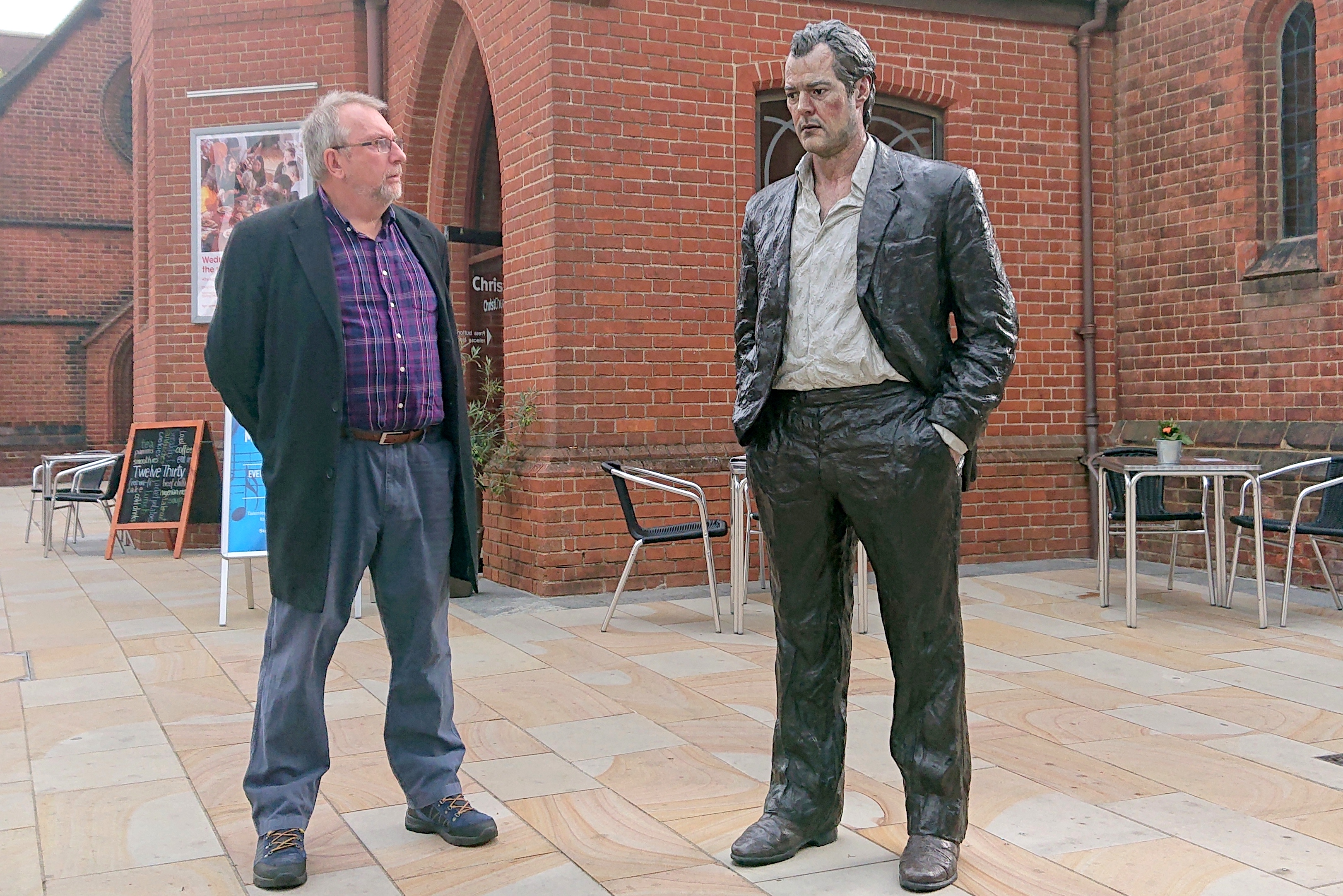
    Sean Henry’s sculptures in Woking town centre

    by Greg Freeman


    1 Woman (Being Looked At)

    All eight foot something and then

    some, glowering over shoppers

    at the entrance to the mall.

    Sideways look, window gazing,

    or trying to evade the stares.

    Is that a half-smile? Midriff-revealing

    top, the shortest of shorts.

    Cast work aside, dashed out

    in her break. He hasn’t shown.

    When will she learn?

    She feels a fool, so exposed.

    Last time she does something like this.

    Five minutes longer, no more.

    Tries to pretend she’s not waiting.

    Bit of a Plain Jane, her father once called her,

    when he thought she wasn’t listening.


    Sean Henry Greg


    2  Standing Man

    Perhaps a coffee in the church café

    before it closes. Cheap if not cheerful.

    Never wanted the job in the first place.

    Maybe should have worn a tie?

    You always muck it up.

    Language, remember where you are.

    That woman hanging around

    in the precinct, might you

    chat her up? Not your type,

    too tall, too young. You’re no

    oil painting, you short-arse,

    your glory days long gone.

    But still … Forget it, best go home,

    get it over with, never grovel,

    but don’t blurt out the first thing in your head.

    Maybe you could write a novel.


    woking statues 2

    3  The Wanderer

    I’ll always get work. May not

    look much but I pack a punch.

    The places down this road,

    you should see them late.

    They spill out into the street.

    So, a job on the door.

    Hair cut? I like it this way.

    This town used to have a reputation.

    Less money around, the games they play

    on social media. Who knows?

    Don’t tell me my way of life

    is dying. There’ll always be fools

    out for trouble on a Saturday night.

    My hero? Ian Dury, since you ask.

    Looked great, and had a way with words.

    And Dion and the Belmonts, I suppose.


    woking statues 8

    4  Seated Man

    Nothing in or out of the station

    since God knows when. A jumper

    further up the line. Some

    commuters tut-tut loudly,

    mutter No consideration.

    What makes them do it?

    It’s the drivers you feel sorry for,

    need time off to recover.

    Time. What does it matter?

    If not today, then tomorrow.

    All by myself on platform one.

    People looking, schoolkids laughing.

    A working man with skills no longer wanted.

    Tried to keep up appearances, now

    I just don’t care. Everyone needs a destination.

    Makes you want to … no, don’t go there.


  • Putting Woking on the poetry map

    Putting Woking on the poetry map

    Members of Woking Writers Circle have been putting Woking and West Byfleet on a poetry map of England and Wales. An exciting, four-month project, Places of Poetry, was launched at the beginning of June, and is open to all poets to place poems about a particular location on a digital map. It is so detailed that you can even pin a poem on a particular street. Already well over 1,000 poems have been placed on the map, according to the organisers. WWC member Greg Freeman has posted two poems – ‘The Basingstoke Canal’, which he has located in West Byfleet, and ‘A Foreign Wood’, about the former Muslim war cemetery, which is now an Islamic peace garden just outside Woking. Fellow poet Heather Cook has posted a poem called ‘Fast to Woking’, which begins: “Why must the train be fast to Woking, / carrying workers home to tea? / Why can’t it slow by Vauxhall Station / or hoot a toot at Battersea?” Greg said: “It’s lovely to see that Heather has posted one of her poems up there. I must confess that I have enthusiastically posted more than 25 of mine all over England, from Berwick to the Isles of Scilly. I would urge other poets who have written poems about a particular place to post theirs, too. The more the merrier … with such a detailed map, there is room for everyone.”

    Places of Poetry 2

  • Social insecurity: Alan Ayckbourn’s Neighbourhood Watch at Lancaster Hall, Send

    Social insecurity: Alan Ayckbourn’s Neighbourhood Watch at Lancaster Hall, Send

    Neighbourhood Watch 2

    by Greg Freeman

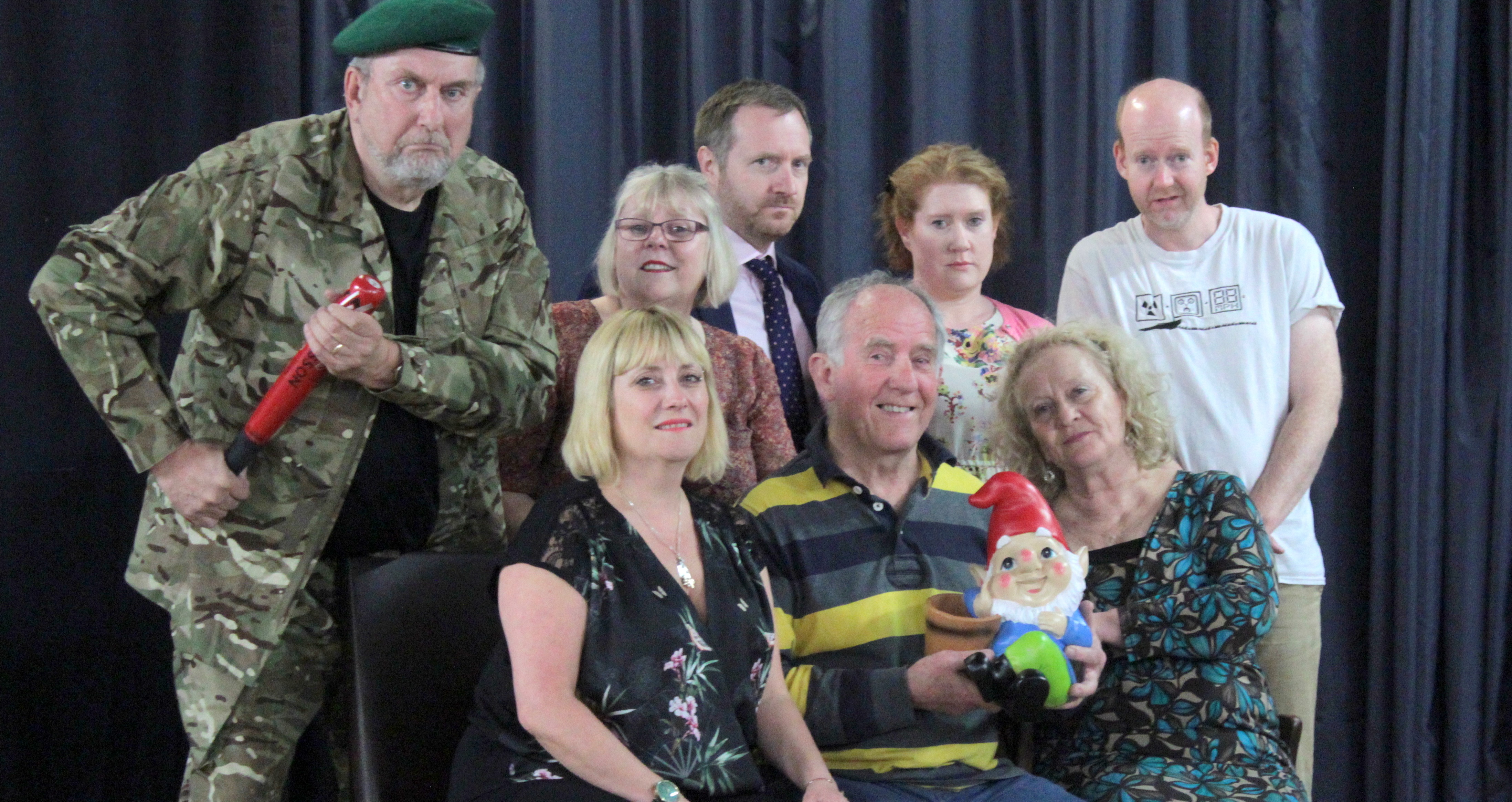
    Fancy a bit of Ayckbourn? Fellow members of Woking Writers Circle have kindly allowed me to use this website to promote the latest play being performed soon by Send Amateur Dramatic Society. It’s Neighbourhood Watch by Alan Ayckbourn, his 75th and one of his more recent plays; it was premiered in Scarborough in 2011. Back then the Guardian’s chief theatre critic Michael Billington wrote: “The piece is highly ambitious, biliously funny and right on the button.” If anything, issues that Ayckbourn touched on back in 2011 as examples of suburban paranoia – or justified fears? – are even more relevant today. Basically, the decapitation of a garden gnome leads to sex, violence, arson and acrimony, after a vigilante scheme goes somewhat out of control. In the cast photo, maybe you can spot me as the retired security guard? We’re performing at the Lancaster Hall, Send, on Thursday to Saturday June 6-8. Tickets are £8. Box office 07542 107815 or email sendamateurdramatics@hotmail.co.uk

  • Cherry blossom time: how WWC members bloomed in response to a homework theme

    Cherry blossom time: how WWC members bloomed in response to a homework theme

    cherry blossom carla

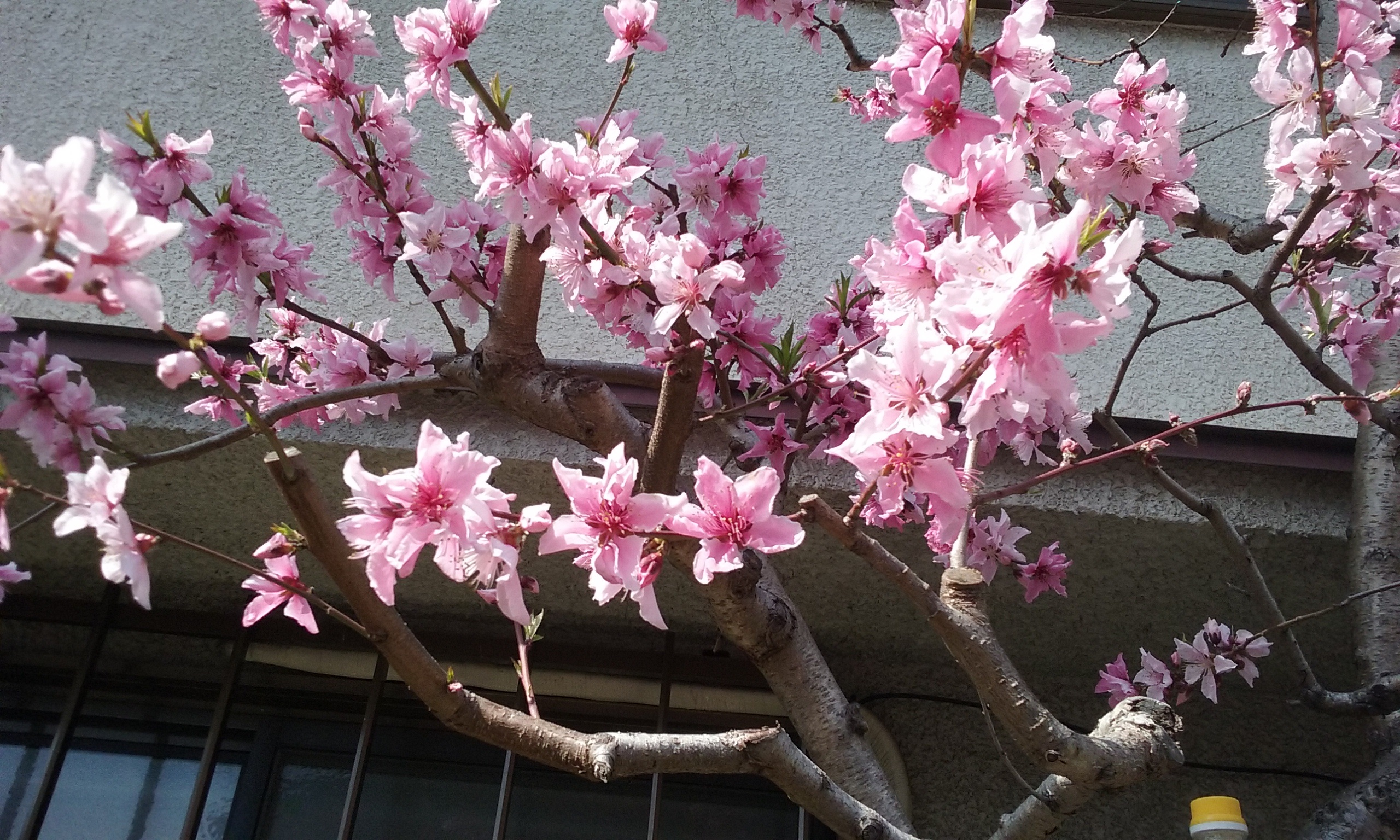
    Each month members of Woking Writers Circle respond to a “homework” subject set the previous month by producing a piece of work with the subject as the theme. Some more than others, it has to be said. It’s not compulsory, of course! But in April Carla Scarano D’Antonio’s offerings on haiku and the Japanese haiku master Basho inspired the homework theme of “cherry blossom”, one of Japan’s national symbols. And that in turn resulted in a remarkable amount of work read out at our May meeting. So much so, that we thought we’d like to share the results on our website.


    The first poem is by Carla herself. Although she did not read it out at May’s meeting, it does mention cherry blossom. Carla says: “It is a sequence I was working on for a while and completed at a workshop with Jean Sprackland at the Poetry School a few weeks ago. She gave us a map (mine was from north Devon) and told us to choose some landmarks and write about it in a sort of journey.”


    MENTAL MAPPING, LANDMARKS

    by Carla Scarano D’Antonio


    Locked crocuses, blade petals

    Lower Slade stretching

    in the frost.


    Daffodil bulbs

    in Homebase plastic nets

    crave for the moon.


    Purple and white hyacinths

    in flower pots

    along the rage of the pool.


    Holiday Village hosts

    scarlet camellia bush,

    unreliable desire.


    Fanciful magnolia tree

    rooted at the Industrial Estate

    like a scarecrow.


    Wisteria grips

    at the Green Park Farm walls,

    starving love.


    Antique hawthorn

    snow flakes freezing in the sun

    frogs chanting in the Moor.


    Lee Hills melting in rain

    cherry blossoms

    fading in glory.


    The violated rose bush

    grew wider at Ilfracombe College,

    its perfume thicker.


    Higher Slade paved with

    chemical blue hydrangea

    rainbow colours.


    Tricia Mcnamee’s ‘Cherry Blossom/Broken Hearts’ comes in two versions. Both comprise four haiku plus a final couplet. The phrase ‘mono no aware’ – a sensitivity to ephemera – features in both.


    CHERRY BLOSSOMS/BROKEN HEARTS (1)

    by Tricia Mcnamee


    Song of young Japan

    Winter Sakura, flowering

    Painted on war planes


    Drunk, toxicity

    Blooms like life ephemeral

    Kamikaze flights


    Nepal to Iran

    Exquisite beauty rises

    As warriors fall


    Karmic cherry blossom clouds

    Abundant petals tinged pink

    Mono no aware


    As the seasons set apart

    Tree that stole a nation’s heart


    ‘Mono no aware’ is a Japanese term for a sensitivity to ephemera, and the awareness of impermanence


    CHERRY BLOSSOMS/BROKEN HEARTS (2)

    by Tricia Mcnamee


    Karmic cherry blossom clouds

    Abundant petals tinged pink

    Painted on war planes


    Drink, eat like green tea

    Blooms ephemeral as life

    Kamikaze flights


    Nepal to Iran

    Exquisite beauty rises

    As warriors fall


    Song of young Japan

    Winter Sakura, weeping

    Mono no aware


    As the seasons cycle starts

    Women folk with broken hearts


    Greg Freeman’s poem also mentions kamikaze pilots. There are also references to Cherry Blossom shoe polish in the shining boots of first world war soldiers and the rough leather of the GIs’ boots, to which the Americans attributed their lack of success at impressing Japanese girls.


    cherry blossom 3CHERRY BLOSSOM

    by Greg Freeman


    Unknown soldier abandoned in the mud

    and blood; his boots, miraculously,

    still gleaming. Leather guarded

    against weather. Demand

    blossomed on the western front.


    Boots on the ground. GIs found

    that Tokyo girls they took a shine

    to weren’t swept off their feet.

    Blamed their lack of polish,

    their rough, scuffed look.


    But it was much, much more than that,

    not just what it said on the tin, its

    fish-plate opener, the superficial sheen.

    Occupying Japanese soldiers

    often planted cherry trees.


    Temperate zone of the northern

    hemisphere. Drinking sake under

    the branches. Militaristic plotters

    assumed the name. Suicidal pilots

    painted them on the sides of planes.


    The blossoms symbolised clouds

    in a nation’s culture. O, what

    a cloud. And such brightness.

    Just shadows left on walls.

    The ephemerality of lives.


    Heather Cook has two poems relating to the cherry blossom theme. The first, ‘Cherry Blossom’, seeks to capture a fleeting memory of her mother sitting under cherry trees. The second poem, ‘The Virgin of El Panecillo’, tells of tourists visiting a huge aluminium statue above Quito and being disenchanted. The statue was upstaged by a man polishing shoes – you’ve guessed – with Cherry Blossom polish!


    CHERRY BLOSSOM

     by Heather Cook


    I leave her sitting on the bench,

    small and fragile in her floral dress.

    Above her head the blossom froths,

    releasing petals in confetti drifts.

    She’d wanted me to go,

    but as I climb the hill

    I sense her worrying,

    her thin hands fluttering.

    I wave. For moments all I see

    Is blossom, pale and shifting,

    but then a doll’s hand lifts;

    I cannot see her face,

    but know she’s smiling.

    A sense of endings overwhelms

    and I return, to gather memories

    while there’s time.


    THE VIRGIN OF EL PANECILLO –

    A WOMAN CLOTHED WITH THE SUN

    by Heather Cook


    cherry blossom 5Coaches click, tick and cool by dusty trees.

    We have been disgorged to seek the Virgin

    and be back by twelve.

    Up close, the woman clothed with the sun

    cannot be seen, cannot be understood.

    Our guide is fraught: we must not stray;

    we must stay in our groups.

    She flares at rivals, waves them off:

    ‘Only blue stickers! You are stickered red!’

    We are blue stickered. There is comfort in belonging.

    Unable to see more than the snake the Virgin treads on,

    attention wanders; splinter groups rebel

    and shuffle off in search of plastic Virgins.

    Below, in leafy shade, an old man polishes shoes,

    watched by a boy and a sandy dog.

    The man’s hand moves in slow circles,

    massaging the leather; he spits, buffs, smiles.

    He has no teeth.

    ‘Best Cherry Blossom!’ he calls, ‘best in the world!’

    Sun strikes the dancing Virgin

    and the sky flashes. It’s five to twelve.


    Liz Lennie used an intriguing approach at our WWC meeting, writing individual lines of a poem, ‘Sakura for Carla’, on separate strips of paper. These were handed out and put together in different configurations by those present. Each line contained a complete thought, so each poem ‘worked’. This is Liz’s own version:


    SAKURA

    by Liz Lennie

    for Carla


    Cherry blossom time!

    Bare twigs burst with bright bloom

    My heart lifts – and flies


    Petals fall, my thoughts rise

    And I write in gratitude

    For life and for love


    These words, me to you

    Ripple over a deep pool

    To reach every shore


    Alan Dale’s short story ‘Signed Off’ features cherry trees and a couple under threat from bailiffs. There is humour  but also sadness in this story.


    SIGNED OFF

    by Alan Dale


    “They look lovely at this time of year, don’t they?” Stifling a sob, Jill glanced at Matt.

    “I know, love.”

    They contemplated the rows of cherry trees, their trunks beckoning, like ballerinas’ legs, under a wind-teased billowing of pink.

    Matt sighed, placing a hirsute, brawny arm around her shoulders. “We did our best, love. We can’t sell cherries at Stoughton’s new price and they’re the only important customer now, ‘cos of the volume they take.”

    “Matt, I feel those trees are calling to us. It’s as if they know what’s going to happen to them, once we’ve gone.”

    “Folk’ve got to live somewhere. I’d do anything to stop all this, but…”

    Gravel scrunched, tyres squealed, a car door clumped. Rapid footfalls pounded. The kitchen door exploded open.

    “Liam – we weren’t expecting you ‘till Thursday,” said Matt. Everything OK?” Liam opened his mouth to reply, saw his mother’s devastated expression and swallowed. Matt felt the silence smothering them all.

    “I’m OK,” said Liam quietly,  “and once you’ve heard this, both of you will be – trust me.”

    “Go, on,” said Matt.

    “I’ve found a company who’ll give you a loan, keep you afloat and sort the debts.”

    Matt and Jill gaped at each other.

    “Guy I work with, on the equities desk – turns out his uncle’s a director of Fructigro.”

    “Isn’t that one of the big agribusiness outfits?” said Matt. His wife grimaced.

    “No, Dad, you’re thinking of Futurecitrus. They’re massive, but Fructigro’s a relatively small company – they’re growers, like you. Anyway, we talked and I explained, without going into too much detail, if you get my drift, where you were, financially. Now, what they need is a reliable source of really class, established rootstock, for grafting. Bottom line – you let them have grafting stock, you get the loan. I mentioned the sum you’ve both been after – no problem.”

    “Thanks, son. I really appreciate that.” Matt gulped. “I know we haven’t always seen eye to eye, since you chose the city rather than following me, here.”

    “Forget it.” Liam shrugged.

    “When can I meet their boss, to discuss details, so we could sign up to this?”

    “He’s in Hawaii for three weeks. I could fix something after that.”

    “Yeah, the only thing is, I really ought to…”

    “Matt, the bailiffs’ll be here at eight o’clock tomorrow.” Jill’s face was becoming crimson. “For God’s sake, think. Someone must be able to deal with this, if he’s away.”

    “Give me five with Rupert, Dad.” Liam was already jabbing at his phone. “Rupes – Liam – how goes it? Did she – told you, didn’t I? They always go for that. About this Fructigro thing – it’s now balls out, mega urgent, yeah?”

    Gill winced. Matt gave a spluttering snigger.

    “Right, email me the contract and declaration, he’ll sign and give bank details. I’ll scan and patch it straight back. No they haven’t. Don’t go there, mate, OK? And could you then get Tobes to transfer the cash, so’s they can stall these bastards off? Top man. Go.” He hung up, grinning at his parents.

    “All sorted – Dad, you sign and include your bank details, you’ll have the cash in the morning. You can tell the bailiffs its coming and stall them.”

    “Matt, do you think we should give these people our bank details like that – email’s not secure, is it?” Jill had calmed to a cherry red, but her brows were drawn right down, a sign Matt recognised from years of marriage.

    “You said think – I think we’ve no choice.” He turned to Liam. “Thank you, son. What was that declaration I heard you mention?”

    “Oh, all that says is ‘we only supply traceable British products, cultivated for Fructgro’.” Liam shrugged.

    “You know what these lawyers are like – still, it looks good and covers you, I guess.”

    “Oh, I see – that’s OK, isn’t it?” said Jill, looking up at Matt.

    “Yes, that’s fine. It’ll be true, so no harm done, far as I can see.”

    *

    A week passed, in which the bailiffs were dealt with, while creditors were mollified. The following Monday, a van and lorry arrived, as arranged. Several men got out and unloaded hacksaws, gloves and various other tools. Matt greeted the florid, portly foreman, and led them all into the orchard, to take their first grafting cuttings. Matt noticed that they all wore jackets with a cherry tree logo, but no wording. He went back indoors, glad of a chance to sit down. Several hours later, their laden lorry had departed.

    *

    That weekend, he and Gill went away for a weekend break. “Let’s have a walk over that field – look, there’s a public footpath,” said Matt. Woods to their right led to a chain link fence.

    Matt stopped in his tracks. A path led off the main track, to a set of high, barbed wire-topped gates. A huge cherry tree logo, identical to those on the visiting Fructigro staff’s jackets crowned one of the extensive, white concrete buildings that stretched away into the distance.

    “What the hell?” muttered Matt.

    “Oh, my God,” whispered Jill.

    “What?”

    “That logo…”

    “Yes, I noticed that – the men wore it, the other day, didn’t they?”

    “Yes, but Matt, look, this place is huge – Liam said it was only a small company – small growers, he said, that’s right – you remember.”

    “Probably their offices and stores.”

    “I don’t think so. Look at all those glass cabinets and all that stainless steel piping in there.” Jill was breathing heavily now. “Hang on, what’s that, over there?”

    She walked over to the gate and picked up what looked to Matt like the remains of an estate agent’s ‘For Sale’ sign.

    “What’ve you got there?” he called.

    Silently, Jill turned the tattered, splintered sign board to face him.

    Fructigro Out – NO GM Cherries! he read.


    PICTURES OF CHERRY BLOSSOM TREES BY CARLA SCARANO D’ANTONIO


    Copyright remains with the authors


  • A glimpse of Woking’s musical past – at a gig to support its grassroots music future

    A glimpse of Woking’s musical past – at a gig to support its grassroots music future

    IMG_6870

    by Greg Freeman

    There was a fascinating glimpse into Woking’s musical past on Saturday night when Steve Brookes – the man who formed The Jam with Paul Weller at Sheerwater school in 1971, and then quit it four years later, just as the band was about to hit the big time – appeared at the Fiery Bird live music venue in Woking to talk about those olden days.

    Steve had suggested the gig as a fundraiser for the Fiery Bird, which is currently in temporary premises in the former Quake night club in the centre of Woking. The building is due to be demolished in a year or so, as part of the redevelopment of a larger area in the centre of Woking. Which will leave the Fiery Bird without a home, unless the council can help find them a new, permanent one.

    He talked about meeting Paul Weller at school in Sheerwater, and quickly beginning to learn and write songs together – after being impressed that when they performed in the music room at the school one lunchtime by the fact that nearly all those that came to watch them were girls. Encouraged by Paul’s dad John, they performed their first gigs on weekday nights at Woking Working Men’s Club, just as a duo.

    Why did he leave The Jam? They had been playing together for four years, almost inseparable from the ages of 13 to 17: “Paul and I just started to drift apart … it was time to go.” They were “great mates” again now, though, and Steve has played on a couple of Paul Weller albums. He also told how he persuaded Paul to join him at a charity gig a few years ago at Woking’s HG Wells Centre in aid of Woking Hospice. Steve wanted to maintain the element of surprise, so hatched plans to smuggle Paul in via the adjoining hotel. It helped that the young hotel receptionist – told that someone famous would be coming in – had no idea who Weller was when he arrived.

    I could see some of Paul Weller’s mannerisms in Steve Brookes as soon as he appeared on stage –  or maybe Weller has some of his. After all, they were close companions for four years in their teens. Formative years. Brookes has a fine voice and guitar style, and entertained us with a number of tunes, covers and originals, that he and Paul played together in those early Jam years, as well as a couple of more recent ones of his own. As his website says , after a long break from performing, Steve is back playing music again.  It was an inspirational and informative evening for those who take pride in Woking’s music heritage.

    Also on the bill were singer-songwriter Rebecca Jane, pictured below, with a nice line in country-influenced tunes, and the band Phoenix Chroi, headed by Elaine McGinty, pictured above, the moving spirit behind the Fiery Bird and the Phoenix Cultural Centre, along with her partner Joe Buckley, who plays bass in the band. Woking Writers Circle has strong ties with the Phoenix. I’ve read my poems at the open mic on a number of occasions over the years, and fellow WWC member Cathy Rogan has played there with her band The Ukeaholics, and more recently as part of a new ukulele duo Mother of Order.

    What the Phoenix has always been about, is trying to provide a grassroots space for music and community arts in the town. The people that run Woking, the council and its officers, sometimes give the impression that they are not interested in allowing things to grow from the bottom up, but only in directing everything from the top down. As the first of Woking’s series of towers start to rise, The Jam is an example of something that grew from below, even if their Town Called Malice has seen fit to commemorate them with three giant lumps of wood. But don’t get me started …

    The Fiery Bird centre remains something worth supporting, encouraging and preserving. Keep the flame alive!

    IMG_6846

  • All right on the night! Confessions of a local am-dram performer

    All right on the night! Confessions of a local am-dram performer

    Sads 2

    by Greg Freeman

    Woking Writers Circle gives proper prominence and support to our splendid New Victoria theatre by regularly reviewing their productions – and it’s right that we do. But spare a thought, too, please  – and your support – for the local amateur dramatic scene as well.

    The Woking area has a number of thriving am-dram groups. I belong to Send Amateur Dramatic Society – but we are not in the least sad, despite our acronym. I joined the group only two years ago, after nursing an ambition to tread the boards for most of my life. Unfortunately my work in the evenings made that impossible until I retired a few years ago.

    So, rather late in the day – but better late than never – I turned up for an audition for Goodnight, Mr Tom in January 2017. To general surprise – not least my own – and encouraged by my wife Gillian (a far more experienced am-dram performer) I landed the part of Mr Tom, a grumpy old chap, alongside rising star Evan Huntley-Robertson, who played young William.

    For those that don’t know the story, it’s a heart-warming tale of wartime community spirit, although it certainly has a dark side as well. It was a great joy to perform it at Woking’s Rhoda McGaw theatre in June of that year with a number of our junior members, who acted with cheery confidence and brio and played a big part in the show’s success.

    Since then I have been cast as Friar Tuck in Send’s annual village panto, plus a cameo King Richard; a dying husband with dementia in a one-act play with Gillian that we took to Woking drama festival; and I now have a part in an upcoming one-act, comedy whodunnit that we will be performing at our usual home of Lancaster Hall in Send on 14-16 March at 7.30pm.

    Our play is called Over My Dead Body! I play a rather insubordinate butler (that’s me, second from left, next to his lordship). But I’m not telling you whether I did it. There’s another comic one-act play on the bill as well, Bride Before a Fall. And if that isn’t enough, there’s a Joyce Grenfell monologue, Nursery School Flowers, which in my book should be worth the £8 admission price alone.

    Maybe you too have nursed similar ambitions to become involved in local am-dram? They are a lovely, friendly crowd at Send – no divas or egos – with a thriving junior section as well. But we are always on the lookout for new members. You don’t have to perform if you don’t want to – there are plenty of backstage jobs as well, including set-building for the DIY-handy. One of the pleasures of am-dram for me is feeling part of a group working towards a common purpose – a group buttressed by a number of dedicated, long-standing, unsung heroes. That collectivism that we tried to convey in Mr Tom, perhaps? It’s relaxing, despite the line-learning – and it’s almost always fun.

    So why not come along and see for yourself, on one of those 14-16 March dates? The box office is 07542 107815 or email Sendamateurdramatics@hotmail.co.uk – or you can just turn up on the night as well. Hope to see you there!

  • Carla Scarano and Greg Freeman in South poetry magazine

    Carla Scarano and Greg Freeman in South poetry magazine

    South mag cover

    Congratulations to Woking Writers Circle members Carla Scarano – pictured at the mic at Write Out Loud Woking at the Lightbox – and Greg Freeman, who both have poems in the latest issue of South poetry magazine. Carla’s poem is called ‘Janet’ and is one that she read at a WWC meeting back in May. Greg’s two poems in South, which is published twice a year, are ‘The show’ and ‘Churchill in Madeira’. The latest issue, South 58, will be launched with readings by included poets at Bournemouth library on Wednesday 10 October at 7.30pm.

  • GREG FREEMAN

    GREG FREEMAN

    GREG FREEMAN is a former newspaper sub-editor, and now the news and reviews editor for the Write Out Loud poetry website. His first full collection, Marples Must Go!, and a pamphlet collection, ‘The Fall of Singapore’, are available to UK buyers from Guildford poetry publishers Dempsey & Windle, and from the author for overseas buyers (email gregfreem62@gmail.com).  His debut pamphlet collection, Trainspotters, was launched in the pub at King’s Cross station, and was published by Indigo Dreams in 2015.  In 2018 he read two of his poems at a Richmond literature festival event of poetry and music to commemorate the centenary of the Armistice. He co-hosts the monthly Write Out Loud Woking open mic poetry night at the Lightbox art gallery in Woking on the last Thursday of each month (also on Zoom earlier in the month). He has been a member of Woking Writers Circle since 2002.

    Watch the ‘Four Statues’ film by Dominic James, featuring Greg Freeman’s poems about four of the Sean Henry statues in Woking that are included in his collection Marples Must Go!