
Redressing the Balance: Women Artists from the Ingram Collection
11 August–20 September 2020
The Ingram Collection: The Art of Watercolour
11 August–4 October 2020
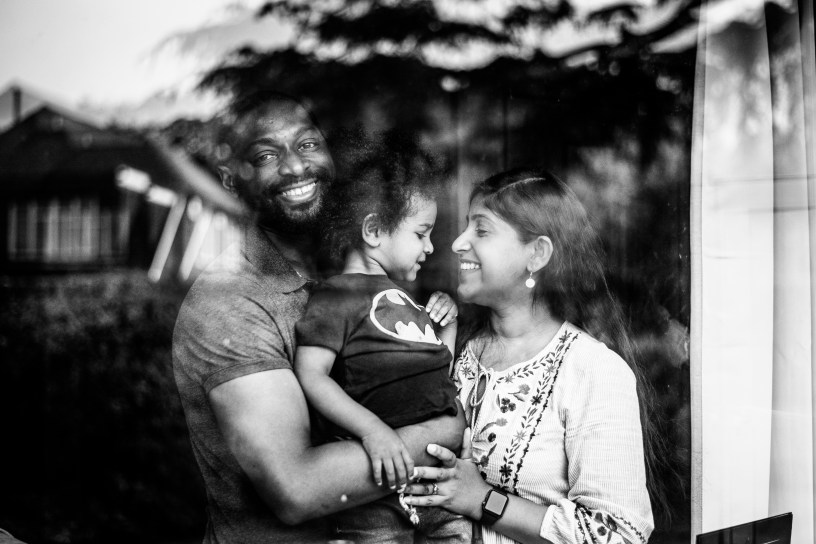
Stay Home Superheroes by Jo de Magneval
11 August–27 September 2020
by Carla Scarano D’Antonio
The Lightbox in Woking town centre finally reopened on 11 August and features three new exhibitions. Two will last until towards the end of September and the third runs into October, allowing time for local visitors and occasional tourists to book a slot to visit, which is required to fit with the Covid-19 regulations. Three time slots are available, 10.30–12.30, 12.30–2.30 and 2.30–5.00 pm. Hand sanitiser and face masks are provided, and guided paths are signalled in order to make the visit easy and safe.
The exhibitions in the Upper Gallery and in the Main Gallery are from the Ingram Collection, one of the most important collections of modern British art in the UK, founded in 2002 by the entrepreneur and philanthropist Chris Ingram. Redressing the Balance: Women Artists from The Ingram Collection intends to give space to women artists who, apart from some rare exceptions such as Barbara Hepworth and Elizabeth Frink, remained at the margin of the art world. The exhibition aims to address this inequality. The works make up an interesting and comprehensive display of women’s artwork that ranges from abstract to figurative and spans the 20th century until today. Some of the work of famous award-winning artists is included, but that of less well-known artists who, nevertheless, explore the female role in society in a remarkable way is also displayed.
The work of Barbara Hepworth is represented by four pieces, three pictures and her famous sculpture ‘Sculpture with Colour and Strings’, cast in 1961. It is a bronze piece with an oval shape, a hollow egg of sorts with strings inside. When she conceived the piece, she had just moved to Cornwall with her husband, Ben Nicholson, in the late 1930s, where they co-founded the St Ives school. The tension between the external round polished shape and the internal more complex and troubled space is explored; it suggests a female space, a uterus.
Two sculptures by Frink are on display, ‘Bird’ (1958) and ‘Eagle’ (Lectern, 1962), which was commissioned for Coventry cathedral. They represent predatory birds expressed in humanised forms that resemble the planes that bombed Britain during the war. Their menacing power is represented in the black patina of the bronze pieces and in the outstretched wings that cut through the air.
Another interesting work is the paper cutting installation by Chloe Wing, ‘Paper Cage’ (2014), which is made of black cotton paper supported by wooden frames; it is like a journal that communicates issues relating to LGBTQ identities and reflects the feelings of anxiety and alienation that some LGBTQ people may experience. The thin material conveys vulnerability, and, at the same time, the exquisite nature of the paper cuttings testifies to the complexity and richness of the images.
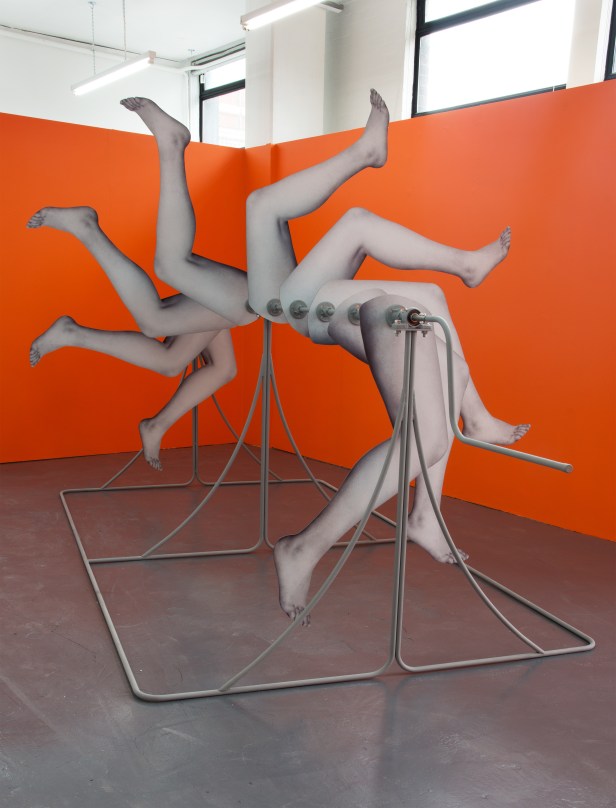
Artworks by Wilhelmina Barns-Graham, Laura Knight, Winfred Nicholson, Sybil Andrews and Nicola Anthony are also included, revealing different approaches from watercolour to oil painting and calligraphy on paper. A kinetic sculpture by Lucy Gregory, ‘Images have Legs’ (2018), can be activated by the audience turning the handle slowly clockwise after sanitising their hands. The visitor therefore participates in the artwork, engaging in this way with its significance, which questions the objectification of the woman’s body in the exposed legs and, at the same time, frees them from the constriction of clothes. Influences of famous sculptors can be found in ‘Women with Children’ (2015) by Rosemary Young, which is reminiscent of Alberto Giacometti’s work, and Henry Moore’s work is reflected in Emma Woffenden’s ‘Elephant Revenge’ (2012), where human and animal shapes merge. ‘The Tempest’ (2013) by Aleah Chapin is just outside the gallery; it is a huge oil picture depicting a naked woman sitting on a stone. Her body is not perfect, and although she is ageing, she looks healthy and self-confident. According to Chapin, the artist needs to show “all sorts of bodies, so we can accept every size and shape”, and she does this by putting women’s bodies at the centre of her research.
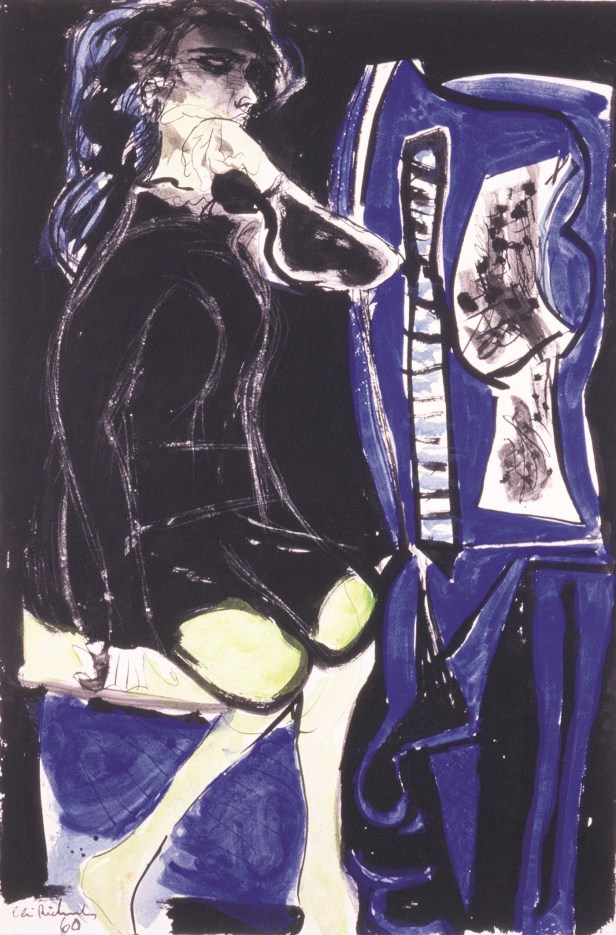
The exhibition in the Upper Gallery, The Ingram Collection: The Art of Watercolour, displays an excellent selection of watercolour paintings by different artists who have different approaches to this versatile media. Influences of Picasso and Matisse can be seen in Ceri Richard’s ‘Girl at the Piano’ (1960), while it is clear that John Tunnard’s ‘Arena’ (1959) takes inspiration from Klee and Miro. Some paintings are more descriptive while others are looser, exploring the potential of the watercolour technique in an almost abstract way, such as in Terry Frost’s ‘Sun, Sea and Boat’ (1952), Elizabeth Frink’s ‘Lying Down Horse’ (1977) and ‘Running Man’ (1976), Jacob Epstein’s ‘Sunita Reclining’ (1930) and Edward Burra’s ‘Figure Composition’ (1976); the last painting features a crowd in which figures overlap in a way that makes them look like ghosts. The skilful layering of watercolour hues gives the painting fascinating transparencies.
On the ground floor, the one-room exhibition, Stay Home Superheroes, displaying photographs by Jo de Magneval, showcases the Covid-19 period and the consequences of the lockdown that we are still in part experiencing despite the easing of rules. The photographs depict family stories in an everyday environment which nevertheless looks unusual from the perspective of the isolation element of daily life. According to the photographer, the approach she adopted is a way of sharing the experience and communicating that we are not alone in our individual quarantine. The close-ups and details captured by Magneval’s camera highlight the wish to feel part of a community despite the challenging times.
So the Lightbox is open again, including the welcoming spaces of the cafe and the shop. The exhibitions offer inspiring new displays of engaging artworks from the Ingram Collection that always surprise and fascinate the viewer with their excellent selection of paintings, sculptures and installations. A day pass or a membership subscription gives visitors the opportunity to experience art and culture in a friendly and comfortable environment.
 Woking Writers Circle