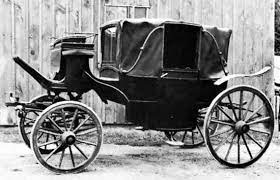
A couple staying in a hotel; an article about superstition; a creaking window; flickering candles; the sound of horses approaching; a headless coachman. Alan Dale is recognised by fellow Woking Writers Circle members as a masterly exponent of flash fiction, and The False Note is a fine example of his craft. Settle back and listen to Alan reading his spooky tale – the link comes from Alan’s own website – set at a hotel that may not receive the best ratings on Trip Advisor … !
Category: Fiction
-

Alan Dale is runner-up in international short story competition
Congratulations to Woking Writers Circle member Alan Dale, who has won second prize in an annual short story competition organised by the British Czech and Slovak Association (BCSA). The BCSA was launched by Alexander Dubcek in 1990 and aims to be “a major British, Czech and Slovak platform where awareness is raised and ongoing dialogue promoted about Britain, the Czech and Slovak Republics and their cultures. This includes the history, arts, literature, economies, science, and contemporary socio-political matters that affect British, Czech and Slovak relations.”
Alan’s story is titled ‘To the Vacillator: A Scythe’. He said: “It’s about a nuclear design engineer who’s too afraid to blow the whistle, having discovered a potentially lethal design flaw in the Hradec nuclear reactor [in the Czech Republic] … Meanwhile, his wife is dying a slow, agonising death, from an as yet undiagnosed illness.”
Alan has also recently written a blogpost for The Writers Bureau, in which he outlines his own writing methods and offers some tips for getting ideas. “I often start by simply looking around the lounge. My gaze once fell on a lampshade that bore a reproduction of an ancient map of the oceans. It gave me the plot idea for a piece of flash fiction about the quest for a new navigational passage. On another occasion, my glance rested on a miniature Persian rug brought back from our earlier travels. Suddenly, the patterns seemed subtly to alter. Could those patterns actually conceal the printed circuit for a timing device? A story called ‘The Devil’s New Rug’ resulted.
“My second method is commonplace and no less effective for that. Step away from the desk or keyboard, go for a walk and don’t even consciously try to plot or resolve anything. Just absorb impressions, dialogue, cloudscapes (probably best from the safety of indoors, that one), smells, music, atmosphere (chemical or psychological). Keep pen and paper to hand at night. Many ideas have come to me via dreams.”
You can read Alan’s full blogpost here. His recently published debut novel, Theta Double Dot, is available here.
-
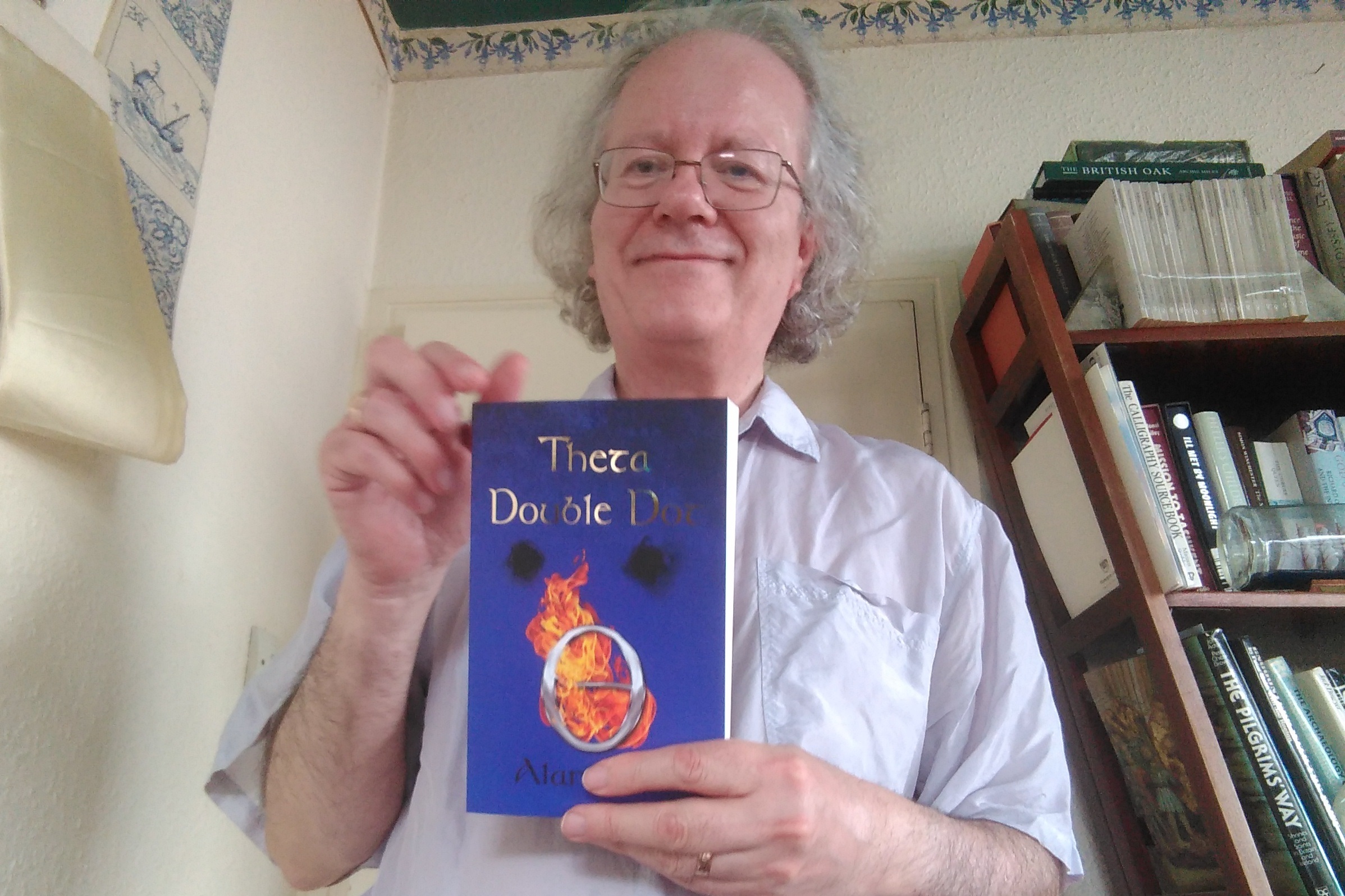
Thrilling moment for Alan Dale as he publishes his first novel
Many congratulations to Woking Writers Circle member Alan Dale, who has just published his first novel. The title of his thriller is Theta Double Dot, and publishers Austin Macauley describe it thus:
“Saddled with the project everyone dreaded, Mark Hammond finds himself ensnared in a nightmare that threatens his marriage, career, sanity and, finally, his life. Who are the increasingly violent activists, wreaking havoc, with attacks on petrochemical plants across the UK? Ministerial frustration increases with mounting evidence of police bewilderment. Mark’s problems expand to include an Alaskan community facing annihilation as the Arctic Sea threatens to overwhelm their homeland. Desperate for time and managerial support, he finds himself enmeshed in the ultimate horror; a race against time, to a potentially suicidal showdown. Not even he envisages the terrible endgame.”
We know Alan fairly well, of course, but it’s always useful to read the publisher’s biog: “Alan Dale is a graduate mechanical engineer, with project management experience in the petrochemical industry. He began writing a few years ago, in his fifties, by enrolling on the Writers Bureau Comprehensive Writing Course. Alan has since had short stories, articles and features published in magazines and online. He lives in Surrey and is a member of the Woking Writers’ Circle.”
Alan explained further: “When I first received the Writers Bureau prospectus, I looked at all the modules on the Comprehensive Writing Course and noticed the one headed Novel Writing. I thought – dream on! Then I saw something about not having to tackle every subject. Right, I thought, that gets me out of ever having even to try to write a novel. A warm glow of relief suffused me at this point, as it always does when I think I’ve got out of a corner. Loads of assignments down the line, I actually chose …’or write the first chapter of a novel …’ I can’t remember what the alternative was … must have been something about which I knew even less, if that’s possible, like lads’ mags. Anyway, I completed the course, obtained my certificate, then started submitting articles etc. I finally got going on the plot and development a few years later, having plucked up the courage to revisit it. About seven-eight years, one tantalising expression of interest in the first three chapters from an agent and five drafts later, I received an email acceptance from Austin Macauley, offering me my contract. As I subsequently wrote to Peter [WWC chairman], ‘I did what anyone would do in the circumstances – I went out to buy some ant powder!’ (True – I had ants in the kitchen and my mad sense of humour couldn’t resist that one.)
“The title came about when I was sitting in a dynamics lecture, years before any of this, at uni. The lecturer wrote a differential equation of motion on the board, including theta double dot. As he did so, I had the vision of those two dots above the Greek letter being bullet holes, with the bullets coming out towards me. This lay dormant for about 35 years …” Asked how he felt about being a published novelist, Alan added: “If anyone had told me, as I began the course, or before, that I would one day have a novel published, I’d have asked them what they were on!”
You can get hold of a copy of Alan’s novel here
-
Cherry blossom time: how WWC members bloomed in response to a homework theme

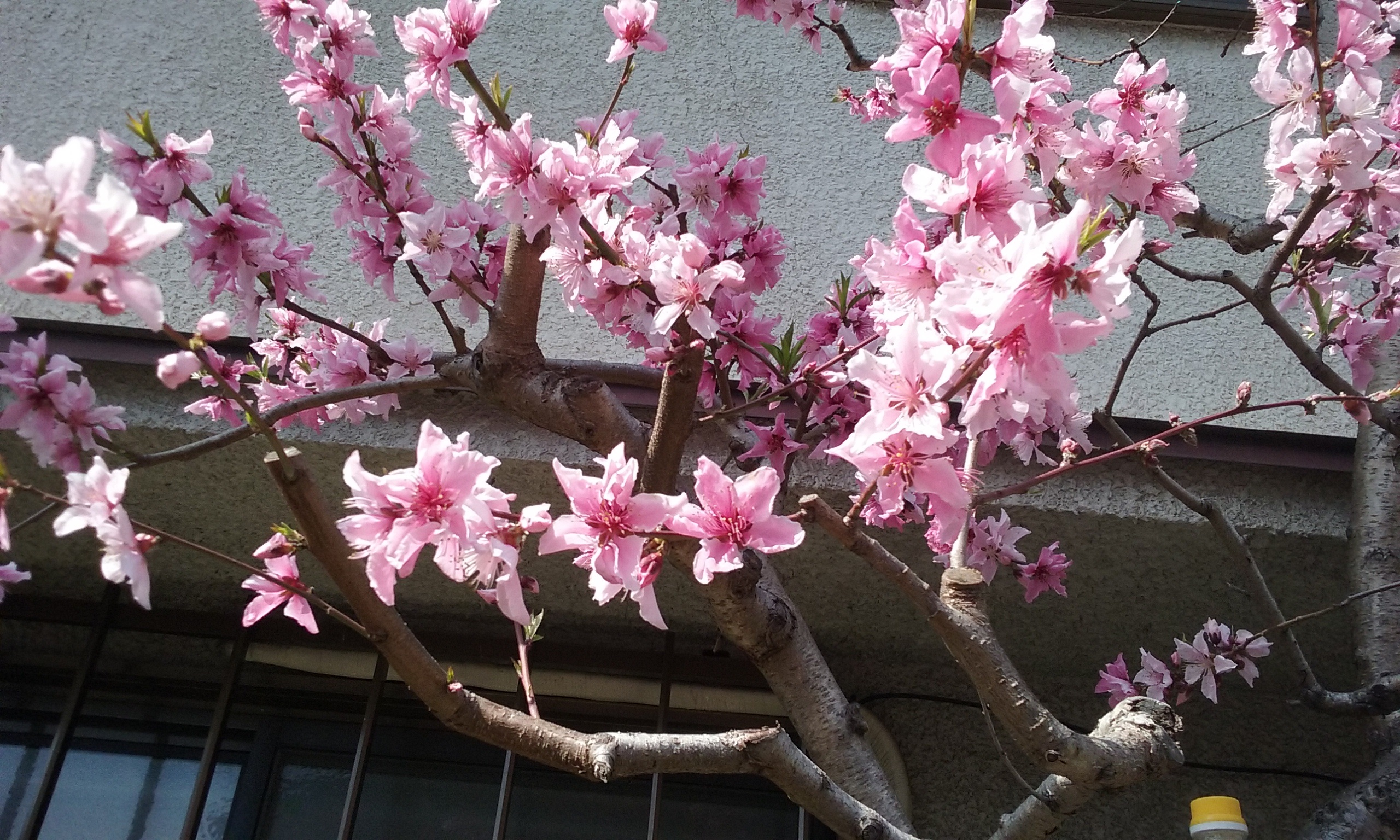
Each month members of Woking Writers Circle respond to a “homework” subject set the previous month by producing a piece of work with the subject as the theme. Some more than others, it has to be said. It’s not compulsory, of course! But in April Carla Scarano D’Antonio’s offerings on haiku and the Japanese haiku master Basho inspired the homework theme of “cherry blossom”, one of Japan’s national symbols. And that in turn resulted in a remarkable amount of work read out at our May meeting. So much so, that we thought we’d like to share the results on our website.
The first poem is by Carla herself. Although she did not read it out at May’s meeting, it does mention cherry blossom. Carla says: “It is a sequence I was working on for a while and completed at a workshop with Jean Sprackland at the Poetry School a few weeks ago. She gave us a map (mine was from north Devon) and told us to choose some landmarks and write about it in a sort of journey.”
MENTAL MAPPING, LANDMARKS
by Carla Scarano D’Antonio
Locked crocuses, blade petals
Lower Slade stretching
in the frost.
Daffodil bulbs
in Homebase plastic nets
crave for the moon.
Purple and white hyacinths
in flower pots
along the rage of the pool.
Holiday Village hosts
scarlet camellia bush,
unreliable desire.
Fanciful magnolia tree
rooted at the Industrial Estate
like a scarecrow.
Wisteria grips
at the Green Park Farm walls,
starving love.
Antique hawthorn
snow flakes freezing in the sun
frogs chanting in the Moor.
Lee Hills melting in rain
cherry blossoms
fading in glory.
The violated rose bush
grew wider at Ilfracombe College,
its perfume thicker.
Higher Slade paved with
chemical blue hydrangea
rainbow colours.
Tricia Mcnamee’s ‘Cherry Blossom/Broken Hearts’ comes in two versions. Both comprise four haiku plus a final couplet. The phrase ‘mono no aware’ – a sensitivity to ephemera – features in both.
CHERRY BLOSSOMS/BROKEN HEARTS (1)
by Tricia Mcnamee
Song of young Japan
Winter Sakura, flowering
Painted on war planes
Drunk, toxicity
Blooms like life ephemeral
Kamikaze flights
Nepal to Iran
Exquisite beauty rises
As warriors fall
Karmic cherry blossom clouds
Abundant petals tinged pink
Mono no aware
As the seasons set apart
Tree that stole a nation’s heart
‘Mono no aware’ is a Japanese term for a sensitivity to ephemera, and the awareness of impermanence
CHERRY BLOSSOMS/BROKEN HEARTS (2)
by Tricia Mcnamee
Karmic cherry blossom clouds
Abundant petals tinged pink
Painted on war planes
Drink, eat like green tea
Blooms ephemeral as life
Kamikaze flights
Nepal to Iran
Exquisite beauty rises
As warriors fall
Song of young Japan
Winter Sakura, weeping
Mono no aware
As the seasons cycle starts
Women folk with broken hearts
Greg Freeman’s poem also mentions kamikaze pilots. There are also references to Cherry Blossom shoe polish in the shining boots of first world war soldiers and the rough leather of the GIs’ boots, to which the Americans attributed their lack of success at impressing Japanese girls.
 CHERRY BLOSSOM
by Greg Freeman
Unknown soldier abandoned in the mud
and blood; his boots, miraculously,
still gleaming. Leather guarded
against weather. Demand
blossomed on the western front.
Boots on the ground. GIs found
that Tokyo girls they took a shine
to weren’t swept off their feet.
Blamed their lack of polish,
their rough, scuffed look.
But it was much, much more than that,
not just what it said on the tin, its
fish-plate opener, the superficial sheen.
Occupying Japanese soldiers
often planted cherry trees.
Temperate zone of the northern
hemisphere. Drinking sake under
the branches. Militaristic plotters
assumed the name. Suicidal pilots
painted them on the sides of planes.
The blossoms symbolised clouds
in a nation’s culture. O, what
a cloud. And such brightness.
Just shadows left on walls.
The ephemerality of lives.
Heather Cook has two poems relating to the cherry blossom theme. The first, ‘Cherry Blossom’, seeks to capture a fleeting memory of her mother sitting under cherry trees. The second poem, ‘The Virgin of El Panecillo’, tells of tourists visiting a huge aluminium statue above Quito and being disenchanted. The statue was upstaged by a man polishing shoes – you’ve guessed – with Cherry Blossom polish!
CHERRY BLOSSOM
by Heather Cook
I leave her sitting on the bench,
small and fragile in her floral dress.
Above her head the blossom froths,
releasing petals in confetti drifts.
She’d wanted me to go,
but as I climb the hill
I sense her worrying,
her thin hands fluttering.
I wave. For moments all I see
Is blossom, pale and shifting,
but then a doll’s hand lifts;
I cannot see her face,
but know she’s smiling.
A sense of endings overwhelms
and I return, to gather memories
while there’s time.
THE VIRGIN OF EL PANECILLO –
A WOMAN CLOTHED WITH THE SUN
by Heather Cook
 Coaches click, tick and cool by dusty trees.
We have been disgorged to seek the Virgin
and be back by twelve.
Up close, the woman clothed with the sun
cannot be seen, cannot be understood.
Our guide is fraught: we must not stray;
we must stay in our groups.
She flares at rivals, waves them off:
‘Only blue stickers! You are stickered red!’
We are blue stickered. There is comfort in belonging.
Unable to see more than the snake the Virgin treads on,
attention wanders; splinter groups rebel
and shuffle off in search of plastic Virgins.
Below, in leafy shade, an old man polishes shoes,
watched by a boy and a sandy dog.
The man’s hand moves in slow circles,
massaging the leather; he spits, buffs, smiles.
He has no teeth.
‘Best Cherry Blossom!’ he calls, ‘best in the world!’
Sun strikes the dancing Virgin
and the sky flashes. It’s five to twelve.
Liz Lennie used an intriguing approach at our WWC meeting, writing individual lines of a poem, ‘Sakura for Carla’, on separate strips of paper. These were handed out and put together in different configurations by those present. Each line contained a complete thought, so each poem ‘worked’. This is Liz’s own version:
SAKURA
by Liz Lennie
for Carla
Cherry blossom time!
Bare twigs burst with bright bloom
My heart lifts – and flies
Petals fall, my thoughts rise
And I write in gratitude
For life and for love
These words, me to you
Ripple over a deep pool
To reach every shore
Alan Dale’s short story ‘Signed Off’ features cherry trees and a couple under threat from bailiffs. There is humour but also sadness in this story.
SIGNED OFF
by Alan Dale
“They look lovely at this time of year, don’t they?” Stifling a sob, Jill glanced at Matt.
“I know, love.”
They contemplated the rows of cherry trees, their trunks beckoning, like ballerinas’ legs, under a wind-teased billowing of pink.
Matt sighed, placing a hirsute, brawny arm around her shoulders. “We did our best, love. We can’t sell cherries at Stoughton’s new price and they’re the only important customer now, ‘cos of the volume they take.”
“Matt, I feel those trees are calling to us. It’s as if they know what’s going to happen to them, once we’ve gone.”
“Folk’ve got to live somewhere. I’d do anything to stop all this, but…”
Gravel scrunched, tyres squealed, a car door clumped. Rapid footfalls pounded. The kitchen door exploded open.
“Liam – we weren’t expecting you ‘till Thursday,” said Matt. Everything OK?” Liam opened his mouth to reply, saw his mother’s devastated expression and swallowed. Matt felt the silence smothering them all.
“I’m OK,” said Liam quietly, “and once you’ve heard this, both of you will be – trust me.”
“Go, on,” said Matt.
“I’ve found a company who’ll give you a loan, keep you afloat and sort the debts.”
Matt and Jill gaped at each other.
“Guy I work with, on the equities desk – turns out his uncle’s a director of Fructigro.”
“Isn’t that one of the big agribusiness outfits?” said Matt. His wife grimaced.
“No, Dad, you’re thinking of Futurecitrus. They’re massive, but Fructigro’s a relatively small company – they’re growers, like you. Anyway, we talked and I explained, without going into too much detail, if you get my drift, where you were, financially. Now, what they need is a reliable source of really class, established rootstock, for grafting. Bottom line – you let them have grafting stock, you get the loan. I mentioned the sum you’ve both been after – no problem.”
“Thanks, son. I really appreciate that.” Matt gulped. “I know we haven’t always seen eye to eye, since you chose the city rather than following me, here.”
“Forget it.” Liam shrugged.
“When can I meet their boss, to discuss details, so we could sign up to this?”
“He’s in Hawaii for three weeks. I could fix something after that.”
“Yeah, the only thing is, I really ought to…”
“Matt, the bailiffs’ll be here at eight o’clock tomorrow.” Jill’s face was becoming crimson. “For God’s sake, think. Someone must be able to deal with this, if he’s away.”
“Give me five with Rupert, Dad.” Liam was already jabbing at his phone. “Rupes – Liam – how goes it? Did she – told you, didn’t I? They always go for that. About this Fructigro thing – it’s now balls out, mega urgent, yeah?”
Gill winced. Matt gave a spluttering snigger.
“Right, email me the contract and declaration, he’ll sign and give bank details. I’ll scan and patch it straight back. No they haven’t. Don’t go there, mate, OK? And could you then get Tobes to transfer the cash, so’s they can stall these bastards off? Top man. Go.” He hung up, grinning at his parents.
“All sorted – Dad, you sign and include your bank details, you’ll have the cash in the morning. You can tell the bailiffs its coming and stall them.”
“Matt, do you think we should give these people our bank details like that – email’s not secure, is it?” Jill had calmed to a cherry red, but her brows were drawn right down, a sign Matt recognised from years of marriage.
“You said think – I think we’ve no choice.” He turned to Liam. “Thank you, son. What was that declaration I heard you mention?”
“Oh, all that says is ‘we only supply traceable British products, cultivated for Fructgro’.” Liam shrugged.
“You know what these lawyers are like – still, it looks good and covers you, I guess.”
“Oh, I see – that’s OK, isn’t it?” said Jill, looking up at Matt.
“Yes, that’s fine. It’ll be true, so no harm done, far as I can see.”
*
A week passed, in which the bailiffs were dealt with, while creditors were mollified. The following Monday, a van and lorry arrived, as arranged. Several men got out and unloaded hacksaws, gloves and various other tools. Matt greeted the florid, portly foreman, and led them all into the orchard, to take their first grafting cuttings. Matt noticed that they all wore jackets with a cherry tree logo, but no wording. He went back indoors, glad of a chance to sit down. Several hours later, their laden lorry had departed.
*
That weekend, he and Gill went away for a weekend break. “Let’s have a walk over that field – look, there’s a public footpath,” said Matt. Woods to their right led to a chain link fence.
Matt stopped in his tracks. A path led off the main track, to a set of high, barbed wire-topped gates. A huge cherry tree logo, identical to those on the visiting Fructigro staff’s jackets crowned one of the extensive, white concrete buildings that stretched away into the distance.
“What the hell?” muttered Matt.
“Oh, my God,” whispered Jill.
“What?”
“That logo…”
“Yes, I noticed that – the men wore it, the other day, didn’t they?”
“Yes, but Matt, look, this place is huge – Liam said it was only a small company – small growers, he said, that’s right – you remember.”
“Probably their offices and stores.”
“I don’t think so. Look at all those glass cabinets and all that stainless steel piping in there.” Jill was breathing heavily now. “Hang on, what’s that, over there?”
She walked over to the gate and picked up what looked to Matt like the remains of an estate agent’s ‘For Sale’ sign.
“What’ve you got there?” he called.
Silently, Jill turned the tattered, splintered sign board to face him.
Fructigro Out – NO GM Cherries! he read.
PICTURES OF CHERRY BLOSSOM TREES BY CARLA SCARANO D’ANTONIO
Copyright remains with the authors
-
My Friend, The Enemy
This short story by Woking Writers Circle member Hilary Hughes won the David Lodge trophy in a 2017 competition run by the National Association of Writers Groups:
I am the running man.
That’s me, the man who runs up mountains, across deserts and rivers, through marriages – you get the picture. But then, that’s all I’ve ever been good for…running.
“Running away, you mean.”
Thanks, Mum. Dead twenty-six years but she still can’t let up.
“Won’t let up. And, if I don’t say it, who will? Always relying on those legs of yours to get out of trouble. If I’ve told you once, I’ve told you a million times…”
“Tea or coffee, Terry?”
This is the lovely Bina. She’s a breath of fresh air anytime but with Mum at full throttle, she’s twice as welcome. And she smells good too – always a bonus in this place – sort of flowery but with a hint of something naughty underneath.
I point with my good hand, the one that still works.
“Sugar?” she asks and raises an eyebrow when I hold up two fingers. “Still not sweet enough?” She gives the tea a cheeky stir and leaves it on the locker. It’s just out of reach but I forgive her anyway.
“Eyes front, son. And put that tongue away.”
Me and the young lad in the bed opposite follow Bina’s departure. The other two in here see nothing. Old boys, laid out on their beds like corpses – the machines beeping; feeding stuff in, or sucking it out, with the nurses measuring the difference – honest to God, it gives me the willies.
If I could, I’d be out of here. Hop off the bed when no one’s looking and saunter along the corridor to the stairs – never use lifts, don’t like the way they shut you in – down three flights to the glass doors at the front of the hospital. I can hear them now, whispering the word, “Freedom,” every time they open. Then out the gates and off down the road – never mind that I’m still in pyjamas – arms pumping, legs breaking into a canter as I find my stride.
“Mr Steel, hello.”
A new face has appeared at the end of my bed. In her fifties – greying hair, no wedding ring – she has that look in her eyes I’ve seen before. It’s the one that arrives a few months before the divorce papers.
“I’m Kim, your physiotherapist,” she says and I suspect this is going to hurt.
The lad opposite has a visitor. She appears in the doorway and I can’t help noticing. Tall and graceful, dressed in a black suit but with the nice touch that she’s wearing five-inch red stilettos. My sort of gal, she shimmies across to his bed with her clipboard. He’s almost asleep, lying back against a mountain of pillows, and she strokes his arm to get his attention. Lucky bugger.
Kim pummels my good leg and I groan.
She sits on the edge of his bed and speaks to him. He nods and his thin face shines as if he’s under a spotlight. The next moment she’s gathering her papers and taking her leave. At the door she pauses, turns towards me and… Hallelujah! What a smile.
“Concentrate, Mr Steel.” Kim tweaks my arm, concertinas it up in a way that can’t be natural. “I need your full attention while we’re working.”
The doctors arrive and Kim scuttles off. I hope that means I’m done for the day. I certainly feel as if I am. Every part of my body, at least the bits I can still feel, has been pulled and stretched until it twangs like an old trampoline There’s no chance of me moving anywhere until well after Christmas.
“Dense right hemiplegia, complete aphasia…” I wonder if they’re talking to me then, because I can’t understand a bloody word, realise they aren’t. “…Right homonymous hemianopia. MRI scan shows extensive damage to the left cerebral cortex including, as you would expect, the language and motor areas. Morning, Mr Steel.”
They nod and pass on. As they leave the bay, one of them pushes a pen behind her ear. It reminds me of a geisha I once knew in Tokyo.
5.05am, Thursday the 2nd of May. Today is my birthday and in another sixty-four minutes, I will be exactly seventy-one years old.
“Happy birthday, son.”
Thanks, Mum. Thanks for remembering.
“It’s not something I’m likely to forget, now is it? Did I tell you, you were born at home?”
Yes, Mum.
“Almost had you on the kitchen floor, you were in such a hurry to arrive. And you’ve been the same ever since, always running off and getting into mischief.”
I’m not now, I think to myself.
I watch the sun rise over the city. Actually, it’s half a sun rising over half a city. The other half, the right-hand side, along with half of everything else has gone – forever, the doctor said when he came back later – along with that half of my body. He said it was to do with the stroke I’d had and that he didn’t know if I even understood what he was saying, on account of me not being able to speak. I started to cry, so he knew then and took the time to find one of the nurses to sit with me for a while and hold my hand.
The half-sun climbs into the sky. Fiery red against a vast expanse of blue, it takes me back and makes me think of Africa. The heat of it, like a metal bar laid against my neck. The sheer weight of it – the smell of it, like burnt paper – pressing down when I was running; training for my first solo attempt to cross the Nubian Desert. That’s what I remember, the heat and the fear and the excitement – the sense of doing something epic – as I covered the miles. All this at a time before any fancy equipment like GPS and lycra, when it was just a map, a compass and my will to survive. And when I lost my way, that was the best feeling ever – clean, simple, no arguments – just me and the legs on our own. Even when I thought I’d had my lot, I kept going: outrunning the enemy and staying alive, cheating him one more time.
There’s a loud crash. It’s on my blind side, away from the window, so it takes a moment – more than a moment – to haul myself round and take a look.
It’s one of the nurses. “Sorry,” he whispers as he picks up the pieces of a broken plate. Nice little chap, he’s making up the bed across from me. Neat and precise in the way he flaps open the sheet and tucks it into place then arranges the pillows.
I see the young lad has gone and when I point to the bed, the nurse smiles. He has perfect teeth and a face so young, so eager to please, it’s almost painful. I beckon him over and point to his notepad. He frowns, so I point again and mime writing.
“Oh,” he says. “Okay.”
The pen is awkward. It slips from my hand and needs to be found and put back between my fingers. Cack-handed, because this is not my hand for writing, I labour away. The words slither across the paper and my breathing feels ragged. I feel as tired as I used to after running a full marathon.
DID HE MOVE? I manage.
He looks at it. I know, from his name badge and the careful way Sylvestra reads my message through for a second time before answering, that English is not his first language.
“No.” He shakes his head. “No, he gone.”
Slowly, tediously, I write again. WHEN DID HE GO?
“Last night, very late.” Sylvestra’s face is serious. “You asleep, not notice.” He smiles. “Now, he gone.”
Lucky Bugger. Getting out of here, I think and begin to cry. My chest is so full of tears that it rattles and heaves with the weight of them. I try to cough but I can’t.
My birthday passes and Bina is back with her trolley.
“Not thirsty today?” she asks as she collects the un-drunk cups of tea from my locker. She puts a fresh one in their place and, again, it’s just out of reach.
“You must drink,” a nurse reminds me. And in the corner of the half-a-world I now live in, I see the young lad’s visitor from yesterday. She’s walking along the corridor with her clipboard and turns to nod in my direction, as if she thinks this is sound advice.
The doctor is back. He coasts past the end of my bed, “Afternoon, Mr Steel,” and is off, humming under his breath, to do something more valuable.
Kim returns. This time she doesn’t bother with arms and legs; just rolls me over like a piece of meat on a slab and goes to work on my back. For such a small woman she’s remarkably strong and there’s a lot of anger in there. My chest bubbles in protest and she pounds away until I can hardly breathe. When we’re finished, she tucks me under the covers. It’s far too warm for this and I wish I’d the strength to push them away.
I sleep for a while and dream about the young lad opposite. The two of us are out for a night on the town and the smell of curry, hot chips and beer is so strong my mouth is watering. I’m the one at the front, all dressed up and ready for some fun, determined to find us an adventure.
“Wait,” he shouts. “Where shall we go?”
“Anywhere. Anywhere in the world. It’s your call.”
He’s standing there, smack in the middle of the road, chest heaving. The lights from the Golden Chicken Good-luck Palace just behind him flicker as one of the bulbs goes. He shakes his head.
“Come on, Dean,” I yell. “We haven’t got all night.”
“Look at us, man.” He shrugs, shoulders so fragile they’re almost a shadow. His eyes are closed and his face is shining, shining with tears. “We’re both wrecked. Totally, fuckin’ wrecked. We ain’t going nowhere.”
“Terry…?” Someone’s calling my name. “Terry…?” Soft, but it’s enough to pull me back and I open my eyes.
There’s no one here, just the dark scape of the sky outside my window and I remember where I am. My chest is on fire, a hot furnace inside this useless scrapheap of a body.
“Terry… This side.” It’s a gentle whisper. “I’m here.”
And, when I get my head to finally turn, there she is. It’s late, well past ten, and she’s still here – her dark suit just as sassy and perfect as first thing this morning – she certainly puts in the hours.
What time is it? I wonder.
“It’s time.” She sits on the side of the bed and touches my arm.
For what? I wonder.
“To stop running. I’ll be back tomorrow.”
What time?
She looks at me. “Sunrise, I think. Will that do?”
-
The birthday party
To mark the Shakespeare 400 anniversary, Dermot Hoare takes a light-hearted look at the Bard’s 40th birthday celebrations
 It was a hive of activity in the kitchens of The New House on the High Street in Stratford-on-Avon that morning. The date was Saturday, 23rd of April 1604, and it had only been a few weeks since, largely due to the success of his last play Macbeth, that the Shakespeare family had bought and moved their family from the cramped cottage in which they had been living with their three children into this larger and well-appointed house in the High Street. Today was a special occasion and Anne had been busying herself since five-thirty in the morning preparing a feast to celebrate her husband’s 40th birthday and the forthcoming production of his next play, Julius Caesar. Even little Judith was helping but, as for Susanne, although at fifteen you would think that she would have been a real help to her mother she had recently fallen madly in love with the young John Hall from down the street, so her mind was elsewhere and Anne had to keep chiding her for forgetting what she was meant to be doing. The guests had been invited for lunch at 12.00: A capon, a turkey and a duck were all bubbling away on the range and Anne was preparing bowls of pottage from her Mother’s recipe. Lissette, the maid, had already been dispatched to the bakers to get ample supplies of bread, the vintner had arrived with casks of beer, plenty of mead and a bottle of malmsey for the toast and the fishmonger’s boy had delivered a half-barrel of oysters. All was seemingly well under control while William as usual, was working away in his study on his latest play when the first guest arrived unexpectedly.
Lisette was dispatched upstairs to tell William they had a visitor and, as she entered the study, William put down his pen and put his arms round her waist ‘Come here you buxom wench’ he quipped, ‘Shall I compare thee to a summer’s day?’ ‘You can if you want to’, replied Lisette brushing his hands away, ‘but not now, I’m busy. All I’ve come up to tell you is that Francis Bacon has arrived early and says he’s got the outline of a couple of new plays you might like to write’.
‘Better three hours too soon than a minute late,’ William said, thinking as he said it, what an excellent line that would be for his next play. ‘Tell him I’ll be down directly. Meantime, give him a glass of mead but only one mark you and don’t let him fondle you – he can’t handle his drink. The last time he was here, after a couple of glasses, I noticed he was all for having you behind the settee in the withdrawing room.’
No sooner had she gone back downstairs that Hamnet knocked on the door. ‘Enter’ William called out and on seeing his son continued, ‘My son, What ho, what ho, what ho’ reminding himself of a line from his play Othello. ‘Father, I need a couple of groats’, Hamnet explained, ‘there’s a girl in the village I’d like to take to the cock fight this evening.’ ‘Certainly not,’ replied William ‘if you want some money go and earn some by working on your grandmother’s farm. Money doesn’t grow on trees you know and how many times have I told you neither a borrower nor a lender be’ – the words were hardly out of his mouth before he jotted them down as another good line to bring into one of his plays. ‘Now, be off with you for I must make myself ready and join your mother downstairs and, Hamnet, before you start throwing your money around, a word of caution, don’t waste your love on somebody who doesn’t value it. No decent girl wants to see a cock fight.’
‘Is this a dagger I see before me?’
‘No,’ chided Anne, ‘it’s just the cake knife.’
With that he went down to the kitchen and clasping his wife by the hand whispered into her ear. ‘From fairest creatures we desire increase.’ ‘Judging by the number of children we already have William, we’ve increased enough as it is,’ admonished Anne in reply, ‘now be off with you and leave us alone while we finish getting the meal ready. Our guests will be here soon and there’s still much to do. Meantime, go and talk to Francis. And, with a brief ‘methinks the lady doth protest too much’, William took himself off. So, leaving Anne, Lisette, Susanna and Judith busying themselves in the inside kitchen he poured himself a glass of beer and went in to talk to Francis. ‘The play’s the thing, eh Francis? Have you something good for me?’ ‘This is a humdinger Will,’ promised Francis, ‘it’s set in Denmark and has a ghost and a young girl committing suicide and lots of people stabbing each other in the back.’ ‘Sounds like our king’s court, Francis,’ said William with a laugh, ‘but I like it. I could bring in an idea I had the other day. Someone standing up and saying ‘To be or not to be, that is the question’.’ ‘That’s good, Will, what was the question?’ asked Francis. ‘I haven’t quite decided that’, answered William, ‘but I think spoken by the right person it will be a showstopper.’
‘You certainly have a way with words.’ Francis couldn’t keep the admiration out of his voice. ‘When are you next off to London?’ ‘Tomorrow and tomorrow and tomorrow,’ replied William. ‘Good’, said Francis, ‘meantime any chance of some more of this excellent mead, Will?’ But before he could pour his guest another glass the other guests started arriving; Adrian Quiney was the first, then William’s mother Mary from the farm with a basket of eggs, then Ben Jonson, then Thomas Greene, then John Hall, at the sight of whom Susanna’s face went all pink as he kissed her on the lips and slid his hands over her blouse, then Thomas Russell, then some friends of Hamnet’s and, finally, a crowd from the theatre. When they were all gathered Anne came out and announced: ‘Luncheon is ready, come through into the kitchen.’
The first thing they saw as they made their way in was a decorated cake with forty candles on it sitting in the middle of the table. ‘Right, let’s cut the cake and sing ‘happy birthday’,’ she told them as she handed William a knife. ‘Is this a dagger I see before me?’ he said – never one to miss quoting a line from one of his plays. ‘No’ chided Anne,’ it’s just the cake knife’ and they all had a good laugh.
So the meal progressed and as more of the beer and mead were consumed so did the talk get more raucous and at times rather crude, so much so that eventually Anne had to tell Judith to go up to her room. Later Anne declared, ‘Right, it’s time for the toast’ as glasses of malmsey were handed round and a toast to William was proposed. After that someone called out ‘Speech’ and William got to his feet. ‘Friends, Romans and countrymen’. ‘Who are you calling Romans?’ called out Ben Jonson. ‘I know you’re not Romans, idiot,’ responded William, but I’ve just written that line into my new play and I wanted to see how it sounds.’ ‘Enough of speeches’, exclaimed Adrian, downing about his tenth goblet of beer, ‘let’s have a song. Susanna, sing us one of your dad’s songs.’ So Susanna got up and said she’d sing ‘Oh Mistress Mine’ from Twelfth Night. ‘Well, if music be the food of love play on,’ murmured John to no one in particular, ‘give me excess of it’. ‘That’s very good John,’ acknowledged William, ‘may I use it?’ ‘Yes, of course’, agreed John and Susanna got up and sang a few songs and the party continued in happy mood until well past five o’clock. ‘Haven’t you all got homes to go to?’ taunted Anne as by then it was getting dark and most of the food had gone. With that, the guests gathered their cloaks and made their way out.
‘Thank you sir, thank you Anne’ John said as he left and blowing a kiss to Susanna, ‘parting is such sweet sorrow’. ‘You’re certainly coming out with some good lines tonight John,’ said William at the door, ‘’I must write that down before I forget it. Now be off with the lot of you. Not you Francis, I want to hear some more of your ideas for this Danish murder play. I might call it Hamnet, after my son. Hamnet, Prince of Denmark. No, that’s not right. I’ve got it, Hamlet. Hamlet, Prince of Denmark. Yes, Francis, Hamlet it shall be.”