
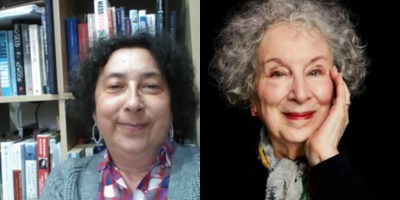

Congratulations to WWC member Carla Scarano D’Antonio. After completing her PhD on the renowned Canadian writer Margaret Atwood at the University of Reading last year, she has now had an article, The Handmaid’s Tale: An Intertextual Transformation through Storytelling, published in a high-profile academic review.
Carla said: “Studying Margaret Atwood’s work was enthralling. When I started to put together my PhD proposal, I was aware I was stepping into a new world, until then almost unknown to me but already attractive and utterly involving. After reading The Blind Assassin and Negotiating with the Dead, I could not stop delving into her work and decided it was time to dig deeper and develop my knowledge of her oeuvre.
“At the University of Reading the PhD course included attending seminars on Virginia Woolf and Margaret Atwood as well as courses on research and criticism. It was all so formative, absorbing and engrossing that I cannot measure the amount of understanding and experience in research I gained over the three years. As soon as I completed my PhD in April 2021, I started revising extracts from my thesis with the aim of having them published as academic articles in journals.
“Here is the link to an article that has been published in the American Review of Canadian Studies. And here is the article’s abstract:
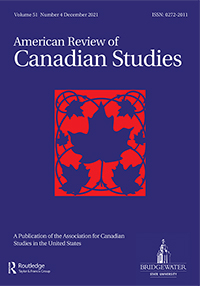
‘This article analyses how Offred, the protagonist of The Handmaid’s Tale, reconstructs her fragmented self through storytelling in a dialogic thought process that is connected to the intertextual references. She recollects her memories and engages in a parodic critique of Gileadean propagandistic discourse. This implies a process of transformation that involves both her body and her mind and critically deconstructs the role the regime has assigned to her. The readers are invited to take a stand if this is not the world they want to live in. The novel challenges the narrative of Gilead in an attempt to rewrite it from a female point of view. This process is connected to the disruptive and heterogeneous disposition of the novel, which Kristeva calls semiotic and links to the maternal chora. The dichotomous view is therefore denied at the root and a multifaceted perspective is proposed.’
“I wish to thank my fellow writers who are members of Woking Writers Circle for their ongoing support and appreciation of my work and all the people, academics and editors who have given me the opportunity to publish my articles and essays.”
 Woking Writers Circle