
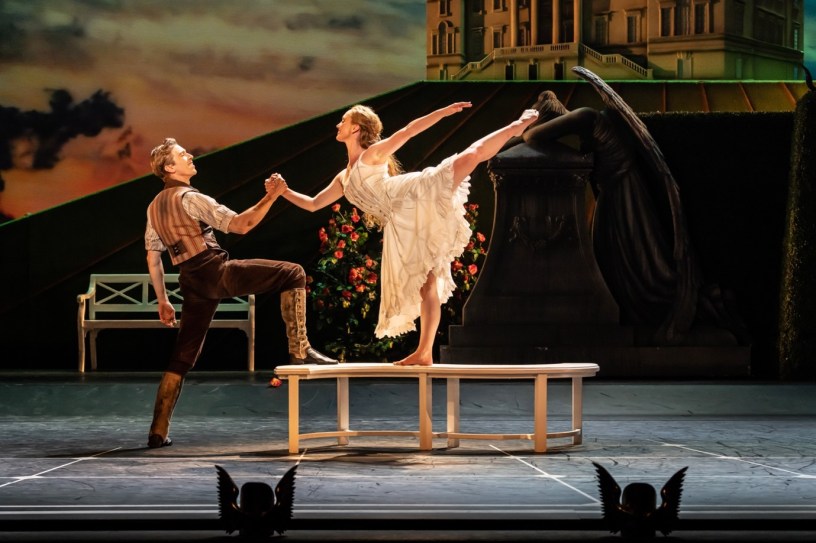
Even before Disney cast his magical spell on all things fairy, Tchaikovsky brought the tale of Sleeping Beauty to life in his 1890 ballet set in a supernatural world of fairies, princesses and princes. It is fait accompli then, that Matthew Bourne has revived this ballet, completing the Tchaikovsky trilogy, after his much-loved interpretations of The Nutcracker and Swan Lake. The pairing of Tchaikovsky and Bourne is as perfectly matched as Cinderella’s slipper or Aurora’s awakening kiss.
As he always does, Bourne reimagines and reinvents, whilst maintaining core elements of the original production. In Sleeping Beauty, Bourne uses Tchaikovsky’s score and many of the classical dance scenes but presents them with versatility and, always, sensuality. Act 1 is set in 1890, the year of Aurora’s birth, and incidentally the year of the Tchaikovsky premier. Act 2 is set in an Edwardian summer of 1911, the year of her coming of age. Acts 3 and 4 are set in 2011 and thereafter – 100 years after her enchanted sleep began and the awakening begins. The costumes and set reflect these eras, as well as the period dance styles and influences; credits go to Les Brotherston for the stunning designs. The fairies and setting in the 1890 Victorian era are dark and gothic; by contrast, the 1911 Edwardian era is bright and almost Gatsby-esque in lightness and style. 2011 presents a contemporary club-like feel with neon lights and movement that is free and bold.
The tale begins with Princess Aurora’s arrival at the palace, after a deal had been made by the childless King and Queen with Carabosse, the dark fairy. The new baby is a lively creature, delightfully animated by a puppeteer, keeping the nanny and the palace staff on their toes. The baby is visited by the good fairies one night, each of them bestowing on her their gifts. They are then joined by the uninvited dark fairy Carabosse, furious at the lack of gratitude shown by the King and Queen, who then curses Aurora to die by the thorn of a rose when she is sixteen. Count Lilac, the powerful good fairy, assuages the curse by transforming death to a hundred-year slumber, along with all those in the palace.
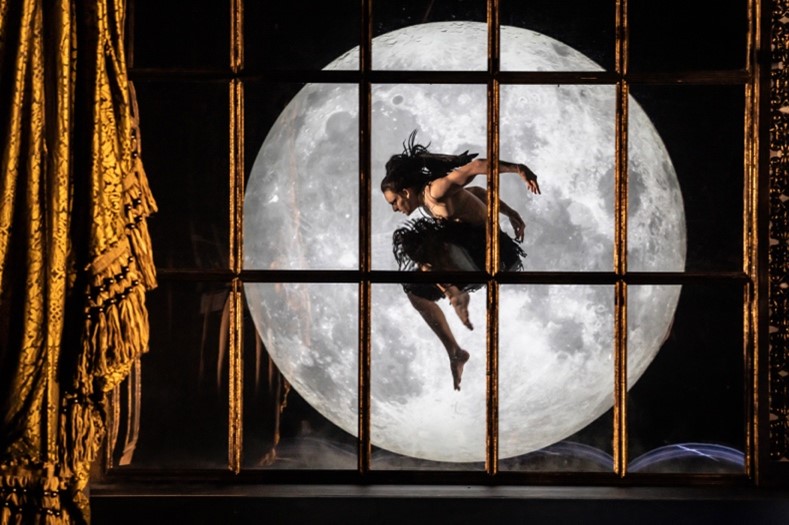
As the young Princess grows, so does her love for Leo, the Royal Gamekeeper. Their playful and innocent secret courtship is expressed beautifully by dancers Katrina Lyndon and Stephen Murray. Aurora’s charm is much admired, and she is the midst of gently rejecting the advances of several suitors when she is beguiled by Caradoc, Carabosse’s son, danced by Paris Fitzpatrick, to accept the fateful rose that sets off his mother’s curse.
Count Lilac, Dominic North, bewitches everyone with sleep and a vampiric embrace for Leo, before masking the palace in a dark forest, keeping outsiders out, until the 100-year spell is ready to be broken and fate sealed by Aurora’s awakening by love’s kiss.
Bourne surprises us by moving away from the traditional wedding scene at the finale, but certainly does not disappoint, leading us to a heart-warming conclusion. The auditorium was full on opening night – a popular choice for Valentine’s Day – and it was clear from the audience’s response that they thoroughly enjoyed this charming love story and timeless tale of good vs evil, told with Bourne’s sumptuous, creative genius. On a cold February night, it certainly warmed the soul.
Sleeping Beauty is playing at the New Victoria Theatre, Woking, from 14th-18th February.
[Amanda Briggs, February 2023]
 Woking Writers Circle