
SELF-PUBLISHING
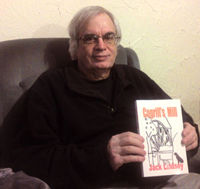
By Keith Jahans
People write a book with the idea that their work will be published but to get their manuscript taken up by a mainstream publisher is extremely difficult unless they are a celebrity or have contacts in the publishing industry. If they self-published they will be published. However, there is no guarantee that their work will be read. Most professional writers make little money and very few become rich so before you embark on your self-publishing project it is wise to consider who you would like to read your book, how concerned you are about their reactions to your efforts and how concerned you should be about quality.
New technologies in printing have made it possible to produce books in small quantities at low cost. Authors can be their own boss, have editorial freedom, be responsible for pricing and advertising and keep all the profits. The disadvantage of this means that as they have no track record in the publishing industry they become a small fish in a big pond and their publications thought of as “vanity publishing” and inferior. They can make basic editing errors and are responsible for all losses.
I have set up a limited company, Peatmore Press Ltd, to publish my books. The advantage of doing this is that the company is registered at Companies House and no one else can use the name. The disadvantage is that a registered company is legally obliged to submit annual returns to Companies House and accounts to HM Revenue and Customs for corporation tax purposes. I do not make a profit and it is unlikely that I will so I pay no tax. But if you do not want the hassle, do not register the company and take the risk that no one else will want to use the company name you have dreamt up.
Avoiding pitfalls
Network with other writers and ask three to five of them to critique your work. Make sure that they read your work independently. If one or perhaps two are critical of some point in your draft then it may be possible to ignore it, but if three or more share the same opinion then you should seriously consider changing that part of the manuscript.
Points to consider
1. Wait until you have three completed manuscripts before setting up on your own as a publisher. If you only want to produce one or two books think about using a professional print on demand (POD) service but make sure you know what you get for your money.
2. Form your own company to give you control over, printing, design, and distribution. It will mean more work but will be cheaper.
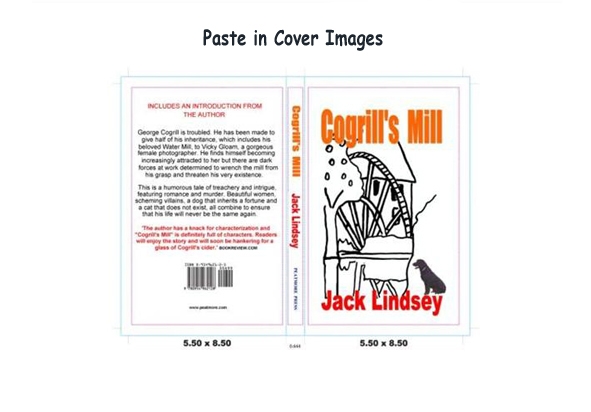
3. Employ a professional book jacket designer for your covers. Doing it yourself will cut the cost, but will it look good enough? Remember that it should reflect and advertise the content. Market test some samples and observe people’s reactions.
4. Get an ISBN number and print a barcode price on the cover as both are required if you are to sell through bookshops or Amazon.
5. Make the most of your finished manuscript by publishing it in different formats such as ebook (kindle, epub and pdf), audio book, podcast, video, Braille and online (blogs, websites, social networks – Facebook, Myspace, Twitter etc.)
6. Support fellow independent writers by attending their book launches and link to other self- publishers’ websites to help market their books.
7. Start at the last page when editing. Read your manuscript aloud or have your computer read your draft out loud (there is plenty of free software online to do this).
8. Employ a professional editor to review your final draft. I used the Jacqui Bennett Writers Bureau (JBWB) for my books but there are many other professional writers advertising editing services online or in writing magazines. Find someone you are happy to work with.
Print on demand (POD)
Peatmore Press uses a company called Lightning Source (LS) that is used by many POD services to print its books. It provides guides and tutorials and handles distribution. However it will not deal directly with authors so you will have to convince them you are a publisher.
There are other online printers that may also handle distribution so check out the internet and see what’s out there. High street printers may be cheaper but you will probably have to handle your own distribution. Overseas printers are cheaper and often located in eastern Europe, Singapore, and China, but distribution may be a problem.
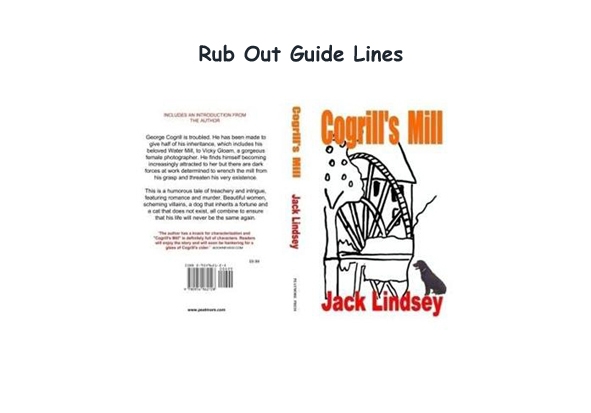
The printing process for book jackets with LS is as follows:

Required POD Software:
Adobe Acrobat – must include distiller to embed pdf files
Adobe Photoshop or Adobe Photoshop Elements , to manipulate images.
Pages entail little problem.
Ebooks
There are no material or distribution costs but unlike printed books they are subject to VAT if you sell through a commercial company such as Amazon. Decide on format: Epub, Mobi (Kindle), pdf etc. There are a number of companies that will convert your manuscript for you. This can be expensive but there are some which will do it for free such as Smashwords (smashword.com) and Amazon (kindle format only). It is possible to convert your manuscript yourself and there are free programs available online (Calibre, Open Office, writer2epub plugin, Atlantis Word Processor) to help you to do this. Epub can be complicated to format but you can use the free online program Sigil to tweak appearance. It is not possible to sell ebooks through Amazon UK unless it is in Kindle format.
Audio books, podcasts, video, Braille
There are companies that will produce these for you for a price. However, it is possible to do this yourself for little cost as many computers now come equipped with microphones and video cameras to record your work. If not they can be bought cheaply. There is inexpensive software available (sometimes free) online to help you edit your recordings. I use Audacity for sound files (free online) and Windows Live Movie Maker for video (free with my PC). Both are easy to use and give results of good quality. There are podcast sites and websites where your customers can obtain your audiobooks and videos can be imbedded into websites via YouTube (I do not go as far as making feature length films but produce video trailers for all my books). I have yet to translate my texts into Braille but this is something I feel worth considering as software to do this is also available online. Make sure you use copyright free music, for background and signature tunes, and copyright free pictures for book jackets and video images.
Marketing
It is worth considering using a professional PR company such as PR Web or paying for advertising on line (eg Google Adwords) or in the printed press. However, the following resources can be utilised for little cost:
Websites; social networks – Facebook, Myspace, Twitter etc; blogs; news releases – radio, newspapers, magazines; media interviews – radio, newspapers, magazines; book launches and signings; word of mouth.
See blog, Seven Ways to Get Your Book Discovered on Amazon
1. Use key words in the title and subtitle of your book; 2. Tag your book with key words; 3. Post reviews of other products; 4. Publish in Kindle format; 5. Enhance your personal profile on Amazon; 7. Participate in Amazon customer communities
Publication plan
Treat your self-publishing enterprise like a business and have a business or publication plan so that you are aware of the costs. I have attached a template below as a guide and have listed examples of resources I have used with their prices. Fill in the gaps with your own estimates (the costs quoted are approximate and are correct at time of publication) and research the market yourself for a better deal or to find services more suited to your needs.
|
Example |
Cost/Time | |
| Company Name & Logo | Peatmore Press | |
| Publication Title | Cogrill’s Mill | |
| Editorial Services | JBWB | £400.00 |
| Format | Paperback | £4.00 each |
| Software | Adobe Acro, Photo.S | £300.00 |
| Cover Design | Illustrator | |
| POD Company? | Lulu, AOL etc | |
| ISBN numbers | Nielsen | £126.00 for 10 |
| Printer | LS | |
| Distribution | LS, Mail Order | |
| Print Run | 20 | £80 |
| Publication Date | 2013 | No. of days to publication |
| Launch Date – | 2013 | No. of days to launch |
| Launch Venue | Bookshop, hall | |
| Advertising | Google, press release | |
| Budget | £ | |
References
AKM Music (Royalty Free Music); Audible Books; BookSurge (publishing tools and services); Braille Converter; Dreamstime (royalty-free stock photos, illustrations and images); Free Sound Editor; JBWB (editorial services); Lightning Source; Marketing tips; Nielsen UK ISBN Agency; Podcasting Website –http://apple.com/iTunes; Podcasting Website – http://podbean.com/; Podcasting Website – http://www.podiobooks.com; Self Publishing Advocate; Self Publishing Magazine; Self-Publishing Review; Selfpublishing reviews also at – http://www.indiereads.co.uk; Shoestring Marketing; Social Networking for Rookies – Tina Bettison, Marshal Cavendish Ltd; Windows Live Movie Maker; Writers News; YouTube
Keith Jahans is a writer and microbiologist. He formed Peatmore Press as an online magazine in 1996 to publish and promote his writing. In 2008 he left his microbiology job at Defra’s Veterinary Laboratories Agency and established Peatmore Press as a limited company the following year. Further information can be found by visiting his website
 Woking Writers Circle