
by Carla Scarano D’Antonio
The Scottish landscape as a place of inspiration and the Scottish people as subjects of art are the objectives of the exhibition at The Lightbox. The display offers artworks of diverse Scottish artists from the 19th century until today. It proposes different views of how visual art has been interpreted by artists who were born, lived or were trained in Scotland, with works drawn from the Ingram and Fleming collections of Modern British Art.
Scottish art experienced controversial periods. During the Reformation medieval and renaissance artworks were destroyed by Protestant believers in the Second Commandment: “You shall not make for yourself idols and worship them.” An artistic revival followed in the 18th and 19th centuries, with people’s daily lives and social issues depicted, such as in ‘The Last of the Clan’ (1865) by Thomas Faed, which conveys the tragedy of economic and political crisis in the Highlands, and the land clearances that led to population decline. Works describing today’s crises, such as the problem of refugees and issues of immigration which are symbolically and realistically depicted, are displayed next to historical pictures. Iman Tajik’s ‘Can You Hear Me I’ (2015) and Barry McGlashen’s ‘Painting in Defence of Migrants’ (2021) re-imagine and explore with different media the sufferings and hopes of displaced people whose situations are caused by wars, persecutions and unemployment, and who are looking for a better life in Scotland.
Rural life is depicted in the works by the painters of The Glasgow School in which the Scottish landscape and storytelling are to the fore. The style of the pictures is realistic, influenced by Gustave Courbet and by the Impressionists. ‘Field Workers’ by Flora McDonald Reid (1883) and Alexander Roche’s ‘Early Autumn, Grez’ (1883) show interesting compositions that balance colours and shapes well.
Two important artists saw Scottish art progress in a more mature and internationally connected way. Samuel John Peploe and John Duncan Fergusson, members of the Scottish Colourists group, worked and exhibited in Paris. Their paintings expressed their feelings and impressions in bright colours, such as in Peploe’s ‘Luxemburg Gardens’ (1910), and reflect a modern urban society in a new vision that gave different perspectives to Scottish art and improved techniques and styles.
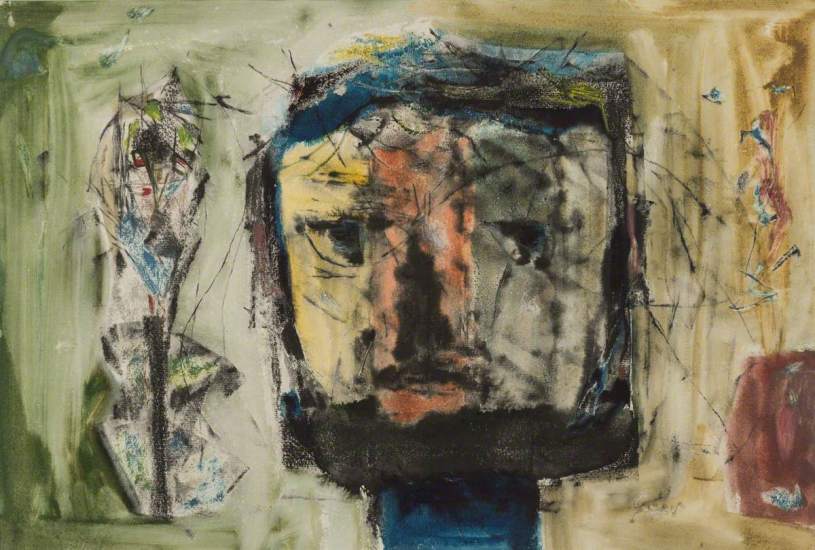
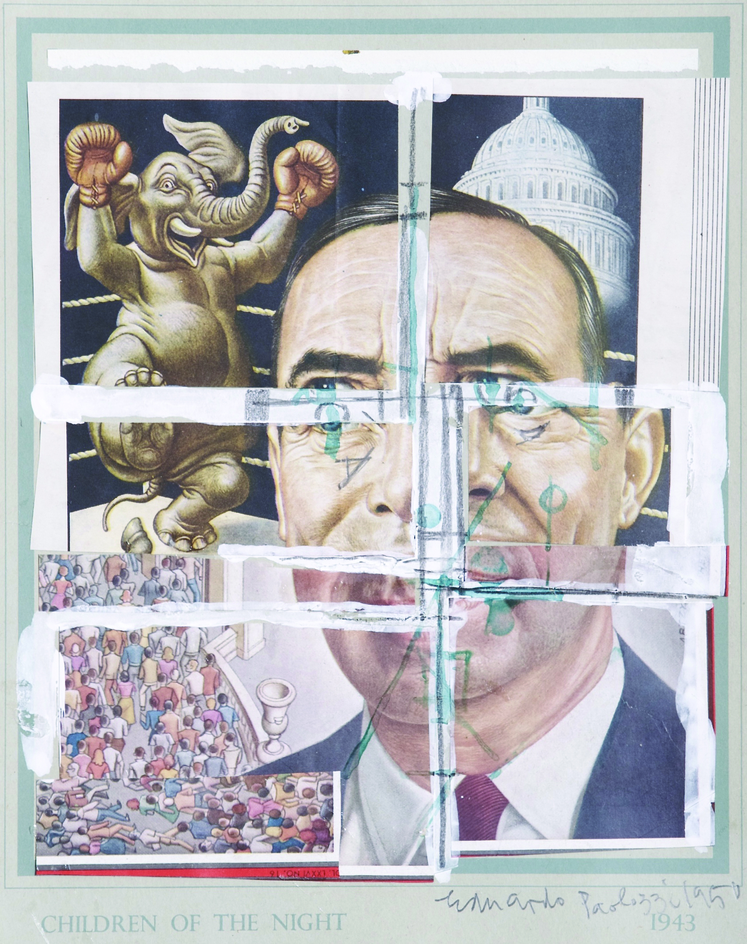
More variegated approaches were defined after the second world war by William Gear, William Turnbull and Eduardo Paolozzi. They worked in Paris too and were influenced by avant-garde movements such as Surrealism as well as by artists such as Giacometti, Brancusi, Picasso and Dubuffet. Gear’s ‘Figures’ (1946) and Paolozzi’s ‘Children of the Night’ (1950) convey the destructive effects of the war and the consequent fragmentation, expressed in their pictures with strong marks and broken figures.
The exhibition also displays works by Ian Hamilton Finlay such as ‘Classical Neoclassical’ (1993), a sandstone sculpture acknowledging the legacy of classical culture but also a modern independent vision. The final mesmerising pictures by the Zimbabwean-Scottish artist Sekai Machache give the sense of a place that is real and magical at the same time. She pictures the merging of water and earth in which the human figure floats in a surreal setting that makes us feel at home in a dreamlike reality. It is an unsettling sensation that nevertheless opens up to imaginary landscapes.
A Window into Scottish Art is an effective glimpse of Scottish painters displaying different influences and international connections and innovations over the course of more than two centuries. They present various styles and personal, sometimes unusual, approaches that reveal a profound understanding of Scottish society and landmarks.
A Window into Scottish Art: The Ingram & Fleming Collections, The Lightbox, Main Gallery, Woking, until 3 July
 Woking Writers Circle