
by Carla Scarano D’Antonio
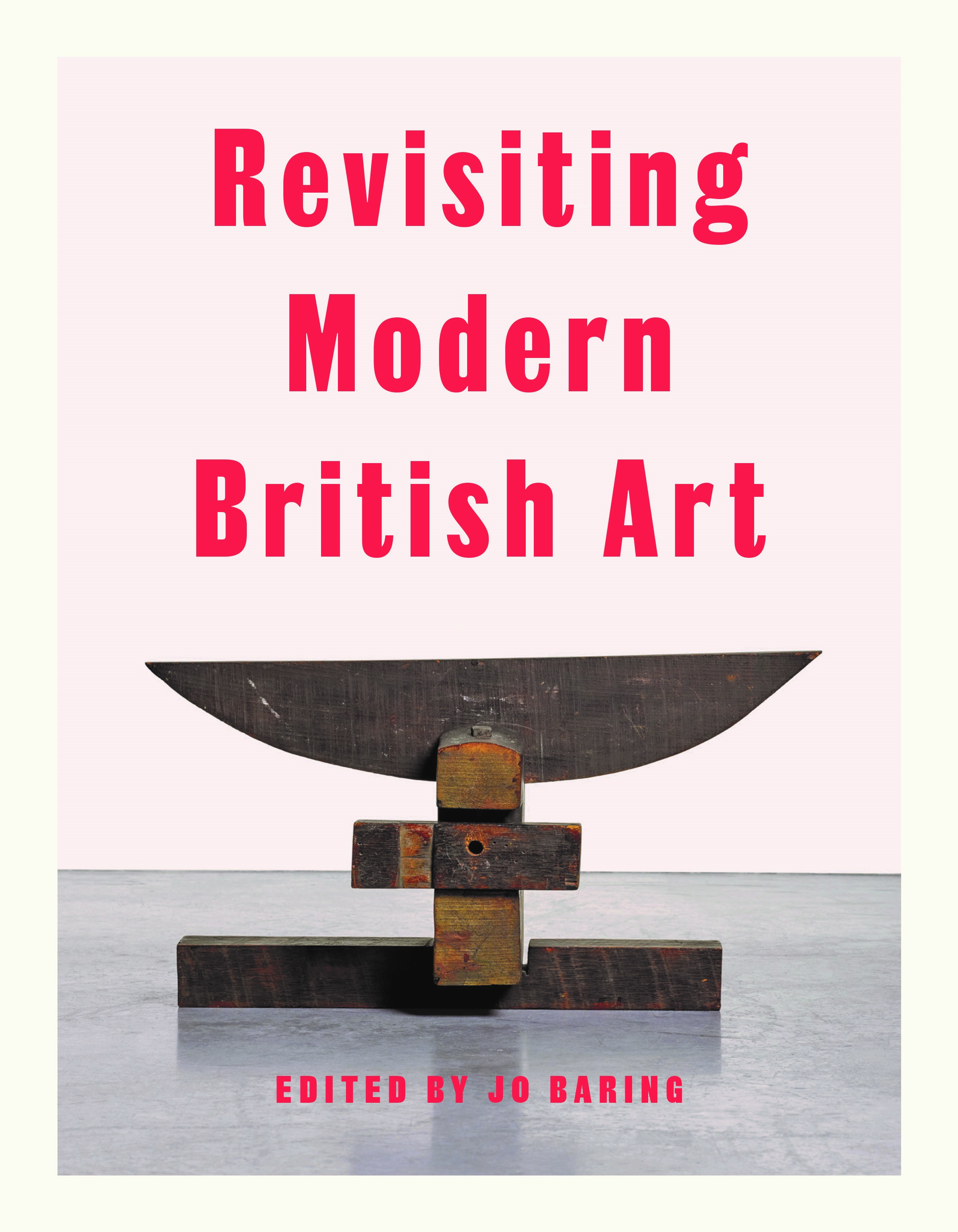
The opening of the new exhibition of The Ingram Collection in the Upper Gallery of The Lightbox coincided with the launch of the book Revisiting Modern British Art (Lund Humphries, 2022) edited by Jo Baring and published in association with the Ingram Art Foundation. Chris Ingram, an entrepreneur and philanthropist who began collecting in 2002, was present at the launch and signed copies of the book.
British art is popular, and comes in a variety of styles. The turn of the 20th century saw more diverse and challenging artworks using all kinds of materials, and presented in different ways and from different social and political angles. The book and the exhibition are intended to “start conversations, engage further debate and inspire more research”, as stated in the book’s foreword. The publication Revisiting Modern British Art gives many examples of the key moments of British artwork and its production and the different movements that exist.
The Ingram Collection exhibits hundreds of its artworks every year. Supported by the Ingram Art Foundation, a registered charity, the collection now holds over 600 artworks and aspires to promote new artistic talents as well as to take art to a wide audience.
The Ingram Collection also aims to re-affirm well-known artists, such as Henry Moore, Paul Nash, Edward Burra, Barbara Hepworth and Eduardo Paolozzi, and give space to works by women, and artists with diverse backgrounds. The influences of avant-garde and post-impressionist movements on British art was certainly paramount in the 20th century. Artists went to London from Russia after the revolution and from Germany when the Nazis seized power, while others travelled to Britain from colonies and former colonies of the British empire, especially in the 1950s and 1960s. This gave a wide range and wide breadth to the cultural context of the capital’s art world that pushed the boundaries and broke down barriers, promoted diversity and expanded horizons.
The book discusses and explains some of the artworks on display. They are not intended to provide an exhaustive show in the limited space of the Upper Gallery, but it is a comprehensive one that gives examples though does not cover all the artistic movements and ideas present in the book. British identity in art is therefore considered multifaceted and open to revisitations of past works and renewals in the present as well as envisaging further developments in the future.
The years of the second world war are significantly described in the works of John Minton, ‘Deserted Garrison’ (1947), and Keith Vaughan, ‘Industrial Landscape III, Morton Mill’ (1943), in which apparently conventional arrangements of buildings reveal the scars of the war in fragmented pieces of stones or objects in the foreground. The compositions look isolated in an almost metaphysical atmosphere which evokes Giorgio de Chirico’s paintings. They are monochrome bleak scenes reflecting the years of conflict. A more dramatic approach is revealed in David Bomberg’s ‘Bomb Store: Study for Memorial Panel I’ (1942), which depicts highly explosive bombs stacked in piles. The clashing shades of reds, yellows and browns convey menace and bloodshed.
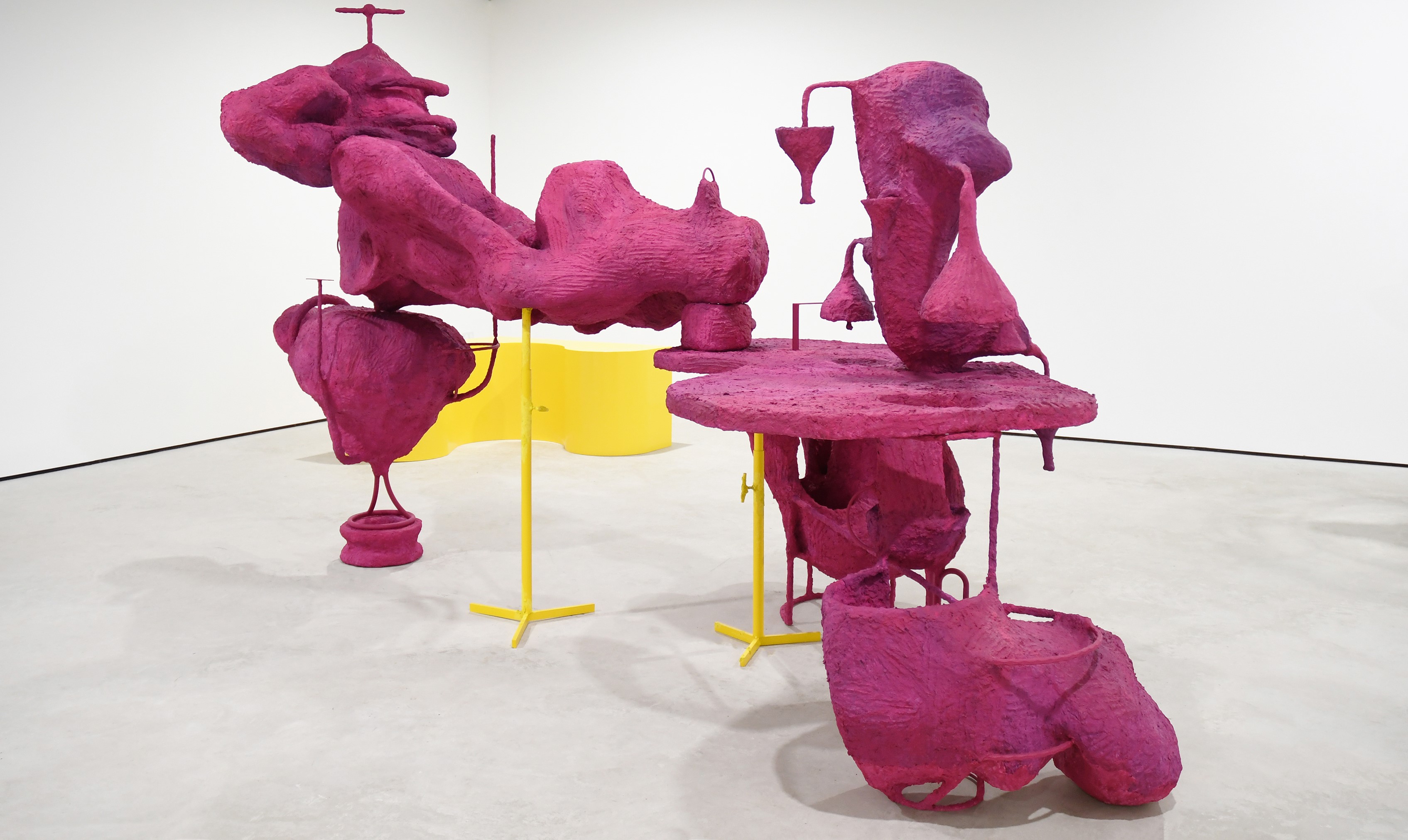
Eduardo Paolozzi’s works are the most impressive pieces on display. His collages on paper such as ‘Discobolus of the Castello Porziano’ (1946) and ‘Children of the Night’ (1950) refer to cut-outs of Dada and to the Surrealists’ ideas as well as to classical artworks. Allusions to social issues are present too, giving the pieces a comprehensive perspective that comments on society and on art. Other important works are Graham Sutherland’s ‘Tin Mine, Various Aspects’ (1942) and Edward Burra’s ‘Ropes and Lorries’ (1942-43) that also comment on the war by using dark tones and disturbing crowded figures. The sculptures ‘Second Girl Sitting on a Bench’ (1988) by Lynn Chadwick, Anthony Caro’s ‘Redoubt’ (1988-90), Leon Underwood’s ‘Birth of Eve’ (1929) and ‘Maternity’ (1913) explore different ways of using bronze. On the ground floor, ‘Kingpin’ (2020) by Olivia Bax, in steel, polystyrene, chicken wire, foam, plaster and paint, is a large and stimulating composition of isolated forms that connect to each other from quite a distance. They have the shape of cavities, tubes and funnels that are perhaps linked vessels in a network of relationships.
The exhibition illustrates the different phases of British artworks with interesting pieces that are examples of the variety and diversity of British modern and contemporary art. The book is a useful complement that can be used to understand and appreciate the diverse artists and offers a renewed and thought-provoking vision that is in conversation with today’s cultural and social ideas. It is a process of discovery that is ongoing, prolific and involving.
The Ingram Collection: Revisiting British Art, The Lightbox, Woking, 15 October 2022 – 8 January 2023
 Woking Writers Circle